Sun, Wind, Cyclones
Climate
To the west of Hawke's Bay, the Kaweka Range and Ruahine Range stand like a wall, catching the moist westerly winds before they ever reach the vineyards. That's why the region ranks among New Zealand's sunniest and driest. Around two thousand two hundred hours of sunshine a year face off against just about eight hundred millimeters of rain.
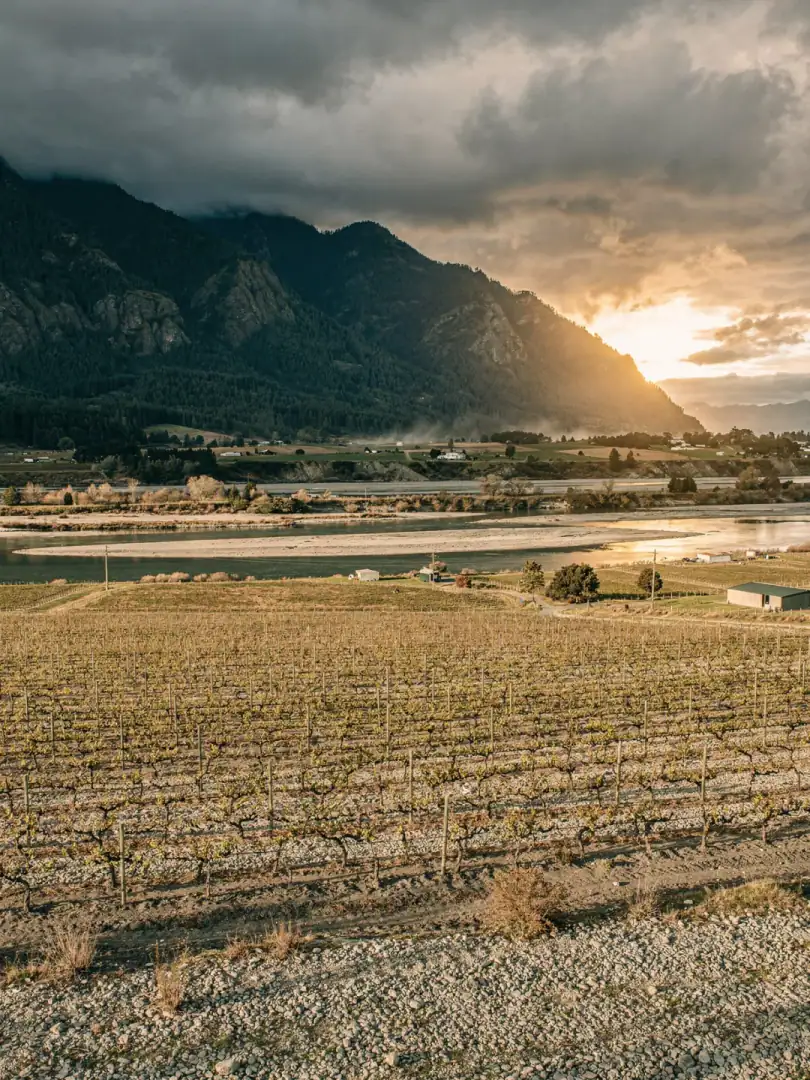
Even so, the climate isn't uniform everywhere. Inland, over the bare stony flats of Gimblett Gravels and Bridge Pa Triangle, the ground heats up during the day and releases that warmth at night, an oven effect that reliably ripens Cabernet and Syrah. At the coast, it's different. Near Te Awanga and Cape Kidnappers, a steady sea breeze cools the afternoons, and that's exactly where the tauter, citrusy Chardonnay grows.
In January, the warmest month, temperatures in Napier average twenty-five degrees Celsius, dropping to fifteen at night. In July, daytime highs stay around fourteen degrees. Nights fall to six, mild enough that frost rarely becomes an issue at all in the lowlands.
This calm has its limits, though. On February 14, 2023, Cyclone Gabrielle hit the region and dumped as much rain in a few days as normally falls in half a year, with consequences still felt today. Six percent of vineyard land suffered serious damage. In Esk Valley, Puketapu, and Pakowhai, river and mud buried entire vineyards under meters of sediment.
Winemakers now plan more cautiously. They string their wires higher, keep more distance from riverbeds, and watch every weather forecast in February especially closely.