A Shape for Pinot
Glassware
A glass doesn't change the wine, but it does change what reaches you from it. With a Martinborough Pinot Noir, that's no side note: the wine carries taut acidity from the cool nights and a firm tannic core from wind-toughened skins. Both call for a particular shape.
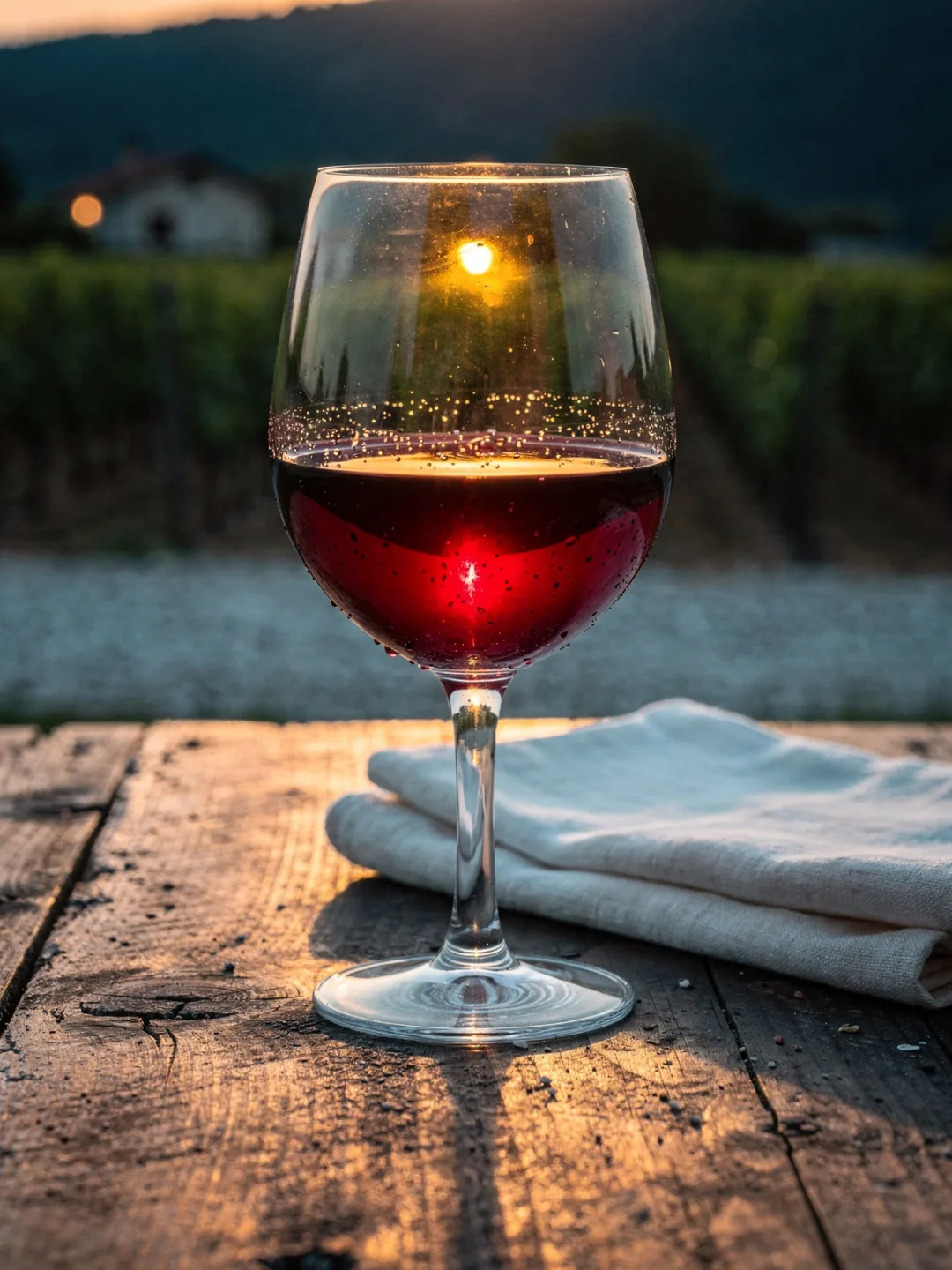
A wide, tall bowl narrowing toward the rim — the same Burgundy glass used for Sangiovese or Spätburgunder. It gives the wine enough surface area so the acidity doesn't come across as sharp. The narrow opening, meanwhile, gathers what rises: red cherry, dried herbs, sometimes a hint of suede leather, which stands out especially in the savory, earthy wines of Dry River or Ata Rangi.
Temperature is where most people go wrong, even with this wine. Fourteen to sixteen degrees Celsius is correct, noticeably cooler than room temperature. The wind dries the grapes during the day. In the evening, it also cools the wine cellars of the Wairarapa, and that same coolness should carry through into the glass. At twenty degrees, the wine loses its freshness and suddenly tastes of alcohol rather than fruit.
A young Martinborough Pinot Noir rarely needs a decanter; its tannin is fine enough to open up right away. It's different with wines built for long aging, such as those from Dry River. After ten years in the cellar, the cork is a bit like a shuttered window that only half an hour of air can pry open again.
Finally, the amount poured. Fill to the widest point of the glass, no higher. In a standard red wine glass, that's about a hundred and fifty milliliters. The rest of the glass stays empty, so the aroma has room to gather there before it reaches the nose.