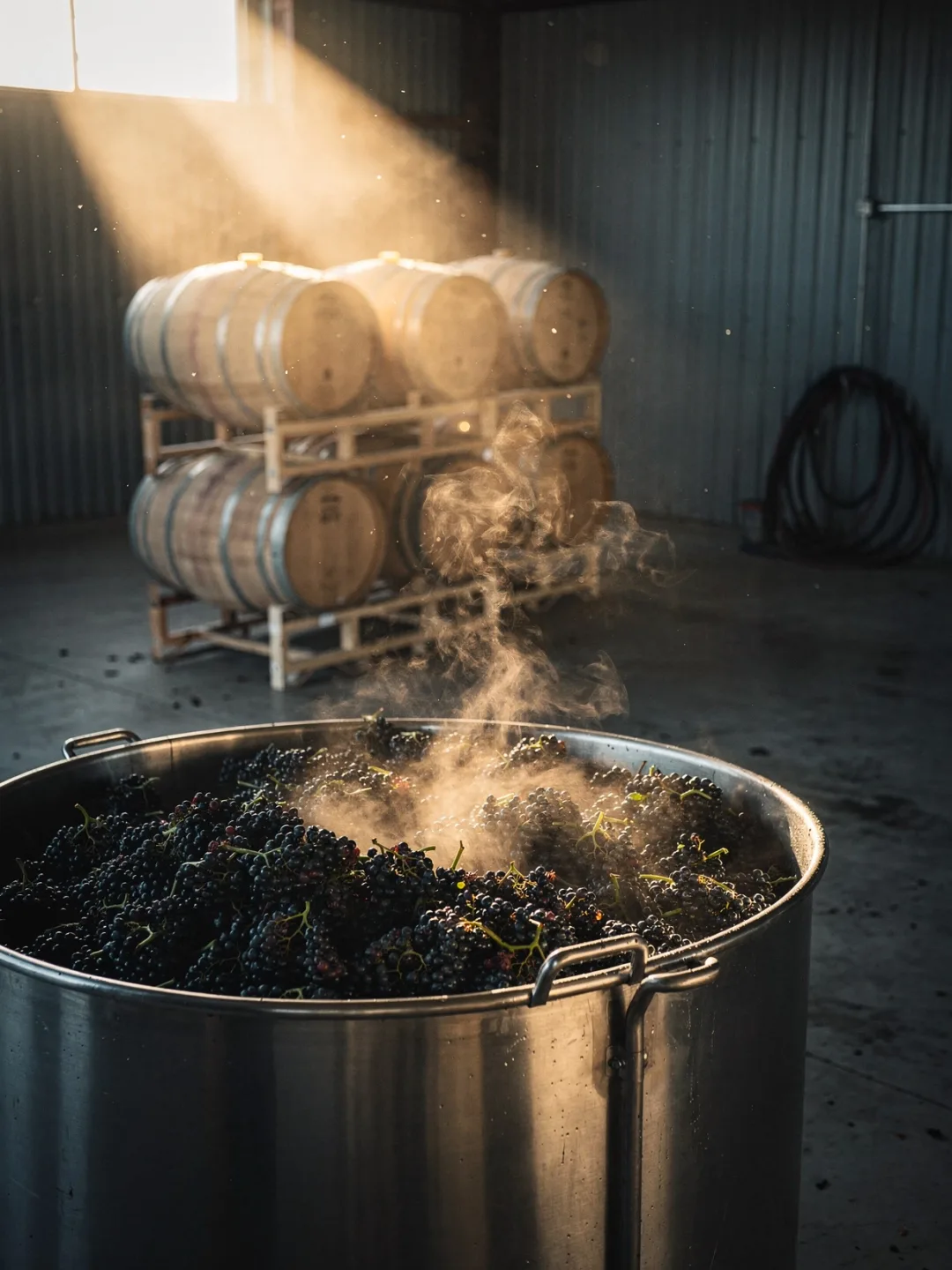
Whole Clusters in the Tank
Production
Most vineyards in Martinborough are small, often just a few hectares and worked by hand. There's a simple reason for this: the region's old gravel terraces were developed in small parcels, by individual families rather than corporations, and that structure has persisted to this day. Harvest is therefore done by hand almost everywhere. It usually happens early in the morning, while the berries are still firm from the cool night.
In the cellar, the decision is then made about how many whole clusters, stems and all, will go into the fermentation tank. Few regions take this question as seriously as this one. Larry McKenna arrived at Martinborough Vineyard as winemaker in 1986 and founded his own winery, Escarpment, in 1998. He'd picked up this technique during a stint working at Domaine Dujac in Burgundy. In particularly good years, up to seventy percent whole clusters go into his tanks — more than almost any other winemaker in the country. The stems add structure and a spicy, slightly peppery note, but demand grapes that are truly ripe, or else the wine tastes green and bitter.
Fermentation itself takes place in open vats. Often this happens with wild yeasts carried in on the skins, rather than purchased cultured yeasts. The result is less predictable, but more complex in flavor. After two to three weeks, the wine goes into wood. These are French oak barrels, mostly used or only partly new, since fresh wood would otherwise overpower the delicate aroma of Pinot Noir.
Unlike in Europe, no law dictates how long a Martinborough Pinot Noir must age in barrel or bottle before it can be sold. New Zealand has no regulations of this kind governing élevage. In practice, most wines still spend ten to eighteen months in wood. At the most ambitious estates, like Ata Rangi, it sometimes takes even longer before bottling happens at all.