Rain Shadow and Wind
Climate
Between Martinborough and the Tasman Sea lies a mountain range that shapes almost everything. The Tararua Range intercepts the moist westerly winds off the sea and wrings the rain out of them before they reach the Wairarapa basin, and on the western flank of the range, up to six thousand millimeters of rain fall each year. In Martinborough itself, at the dry end of this shadow, the annual average is under 770 millimeters.
What's left is one of the driest stretches on New Zealand's North Island. Summer days grow pleasantly warm, rarely above thirty degrees Celsius, but at night the temperature drops by ten to fourteen degrees. This swing preserves the acidity. Meanwhile, the daytime sun ripens the aromas. Add to that over two thousand hours of sunshine a year, more than in most of the country's other wine regions.
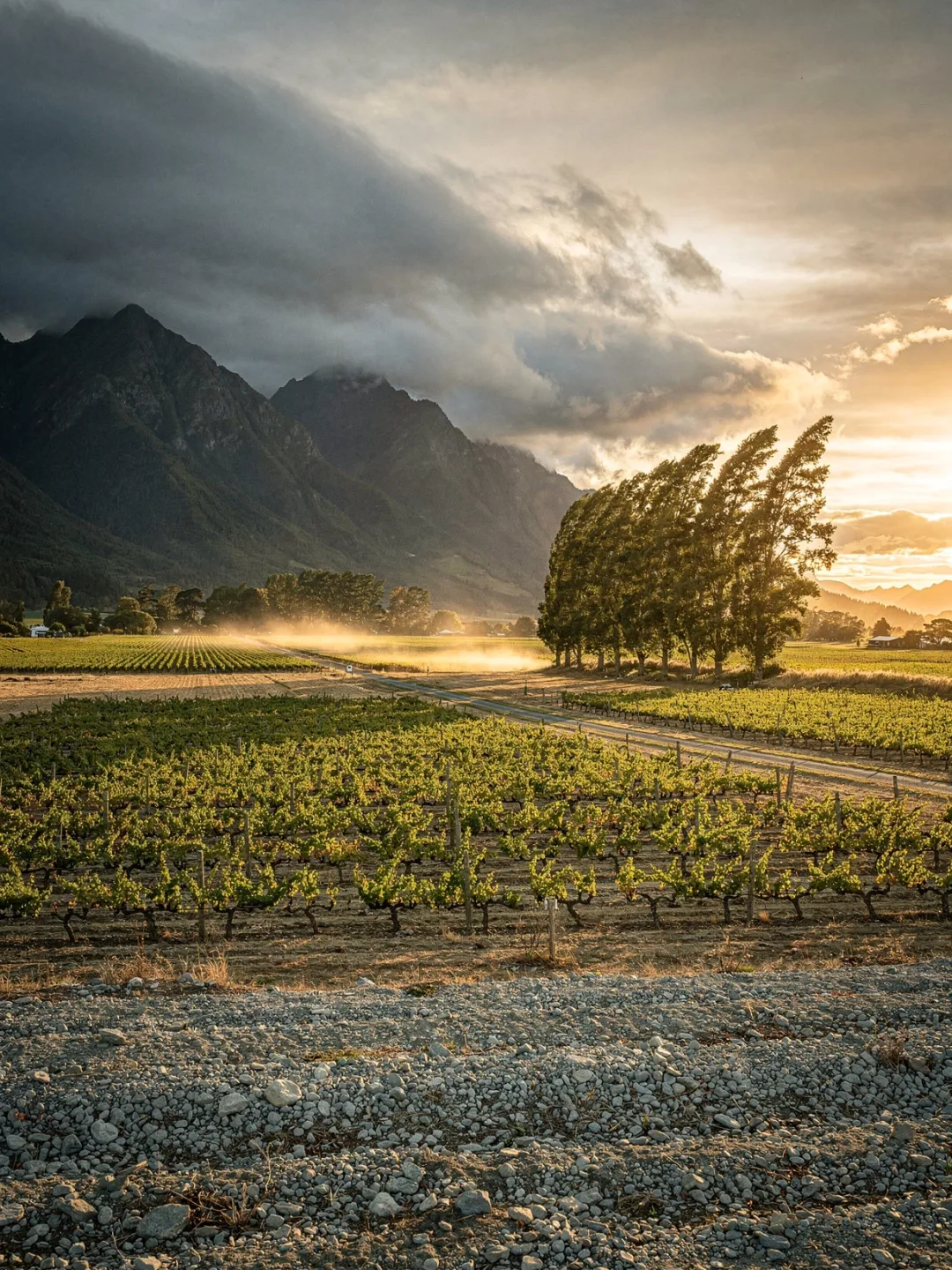
Then there's the wind, for which the Wairarapa is notorious. Especially in spring, it blows steadily from the northwest across the open plain, drying the grapes in no time after rain. In doing so, it keeps fungal diseases like downy and powdery mildew in check. For the vines, this means less need for spraying, but also more work: young plantings need protection, while mature vines develop thicker, more resilient skins on their own. These thicker skins are exactly what later give Martinborough Pinot its firm tannic structure.
Even within the region there are differences. The Te Muna Valley lies seven kilometers east of the town and around fifty meters higher. This delays harvest there by up to ten days. In cool years, this extra time on the vine means winemakers hold their breath — in warm years, on the other hand, it means the grapes build more complexity before they're picked.