Pinot & the Abel Clone
Grape Varieties
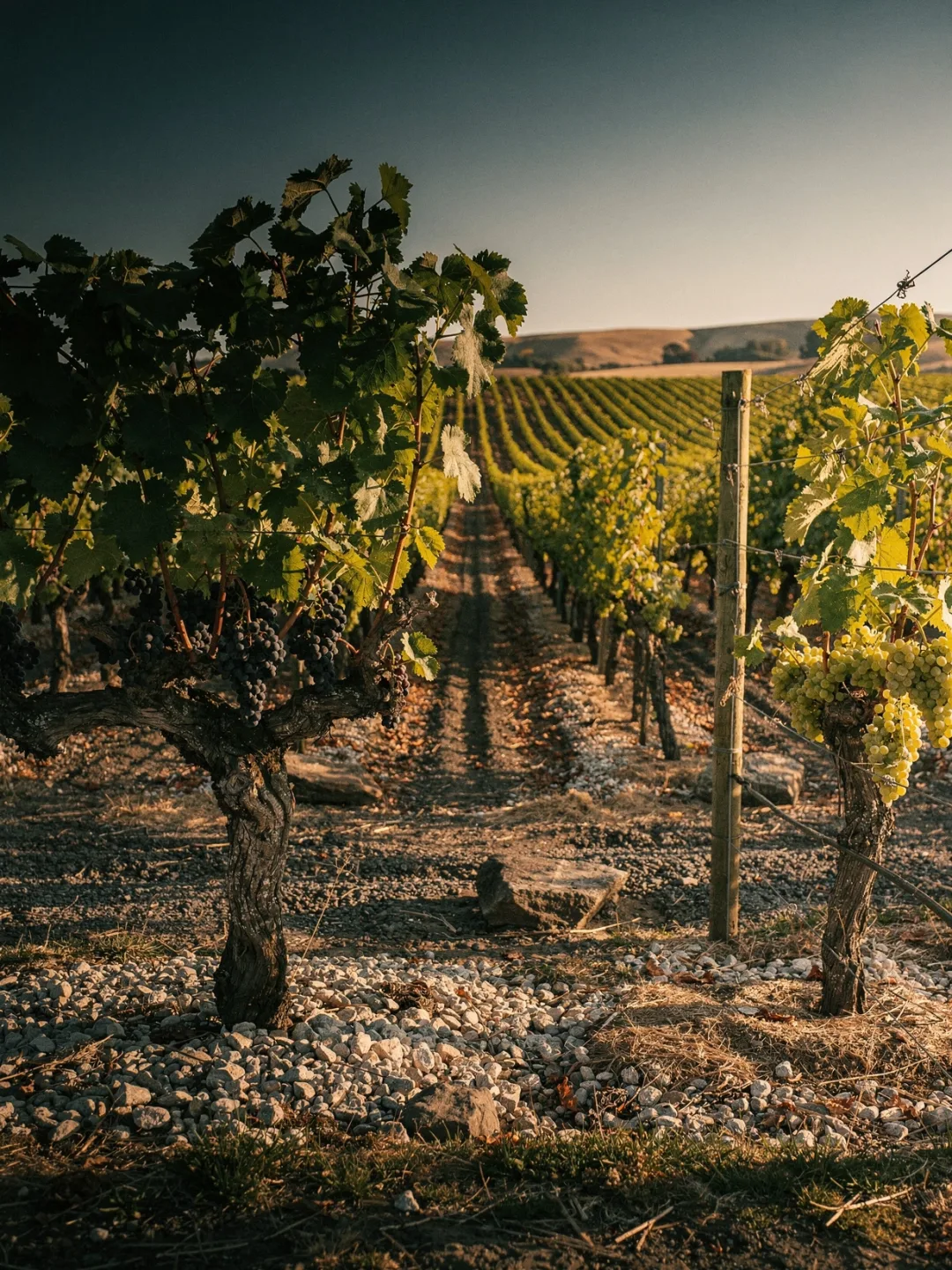
Ask in Martinborough about the grape variety, and one name comes up immediately: Pinot Noir. Over half of the wines listed under the region's name are pressed from this single grape, far ahead of Sauvignon Blanc, Chardonnay, and Pinot Gris. That's remarkable for such a small patch of land. Martinborough supplies barely one percent of New Zealand's wine — but it's the wine everyone's talking about.
The wine itself differs markedly from its more southerly relative in Central Otago. There, Pinot Noir often tastes lush and fruit-forward. In Martinborough, it's leaner, spicier, and more savory — earthy, with herbs rather than pure sweetness. The reason lies in the constant wind and cool nights. They give the berries thicker skins and, with that, more tannin — that furry sensation you feel on your gums after swallowing.
A genetic variant of Pinot Noir, known as a clone, has a particularly crooked backstory. In the late seventies, customs officer Malcolm Abel finds vine cuttings in a traveler's gumboot at Auckland Airport. The man then vanishes without a trace, and his story is never confirmed. Abel plants the cuttings in his own small vineyard near Kumeu. The traveler is said to have claimed they came from La Tâche, one of Burgundy's most famous single vineyards. This has never been proven. A 2022 genetic analysis links the so-called Abel clone to a group of Swiss clones, though it doesn't rule out a connection to Burgundy either. In 1980, Clive Paton of Ata Rangi buys young vines of this clone. His first varietal Pinot Noir, from 1985, is made entirely from Abel clone grapes.
Sauvignon Blanc and Pinot Gris share the rest of the planted area, mostly on the younger, cooler gravel soils of Te Muna. There, the higher terrace sits nearly fifty meters above the town; harvest begins up to ten days later than down in the town itself, and it's precisely this extra ripening time that gives the white wines their tension. Riesling and Chardonnay grow in smaller quantities alongside them, mostly at individual estates like Dry River, which were already experimenting with unusual varieties back in the seventies.