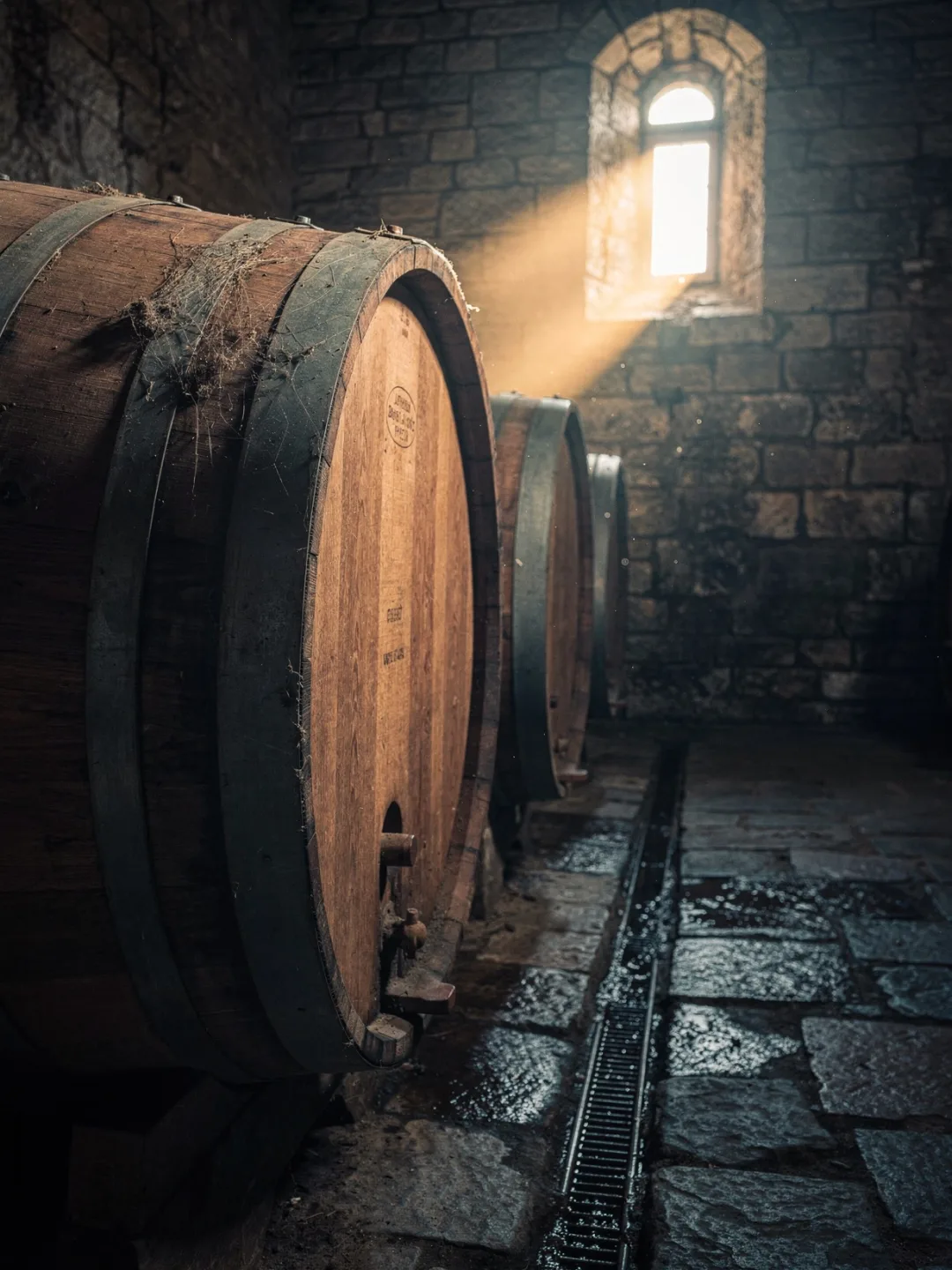
Large Oak Cask Before Barrique
Production
Blaufränkisch has thick skins and plenty of tannin within them, more than most native red grape varieties. Maceration time — how long must and skins ferment together — therefore has a particularly strong influence on the resulting wine. Ten to twelve days produce approachable, fruit-forward wines. Three weeks or more extract additional tannin and color, which only softens after years.
The region's DAC rules reflect this in the cellar. A Mittelburgenland DAC Klassik usually ages in stainless steel tank or in a used large oak cask, so it reaches the market fruity and free of toasty notes. For the Reserve tier, new oak is also permitted, and the wine stays in the cellar longer until fruit and tannin come together. It's similar at Eisenberg: Klassik wines stay between twelve and a half and thirteen percent alcohol and come across as straightforward. The Reserve ages in larger or smaller casks and may only be sold from the second year after harvest.
At the Leithaberg, winemakers go even further. The DAC regulations there explicitly require aging in large, used oak casks. New barriques aren't forbidden, but they're discouraged. Vanilla and toasty aromas from fresh oak would mask the subtle differences between limestone and schist sites. Leithaberg DAC wines are classified as Reserve regardless, and may not go on sale until at least a year after harvest — for Blaufränkisch, even two years.
Entirely different rules apply to the sweet wine from Rust. Only berries affected by botrytis and shriveled into raisins on the vine are hand-harvested individually, over several passes across several weeks, and traditionally their sugar was poured over with fresh must of Auslese quality and thus broken out of the mash — hence the name (Ausbruch means 'breaking out'). A minimum must weight of thirty degrees KMW is required. Simply harvesting the grapes in Rust isn't enough: the finished wine must also be produced and bottled there.