Pepper in the Glass
Glassware
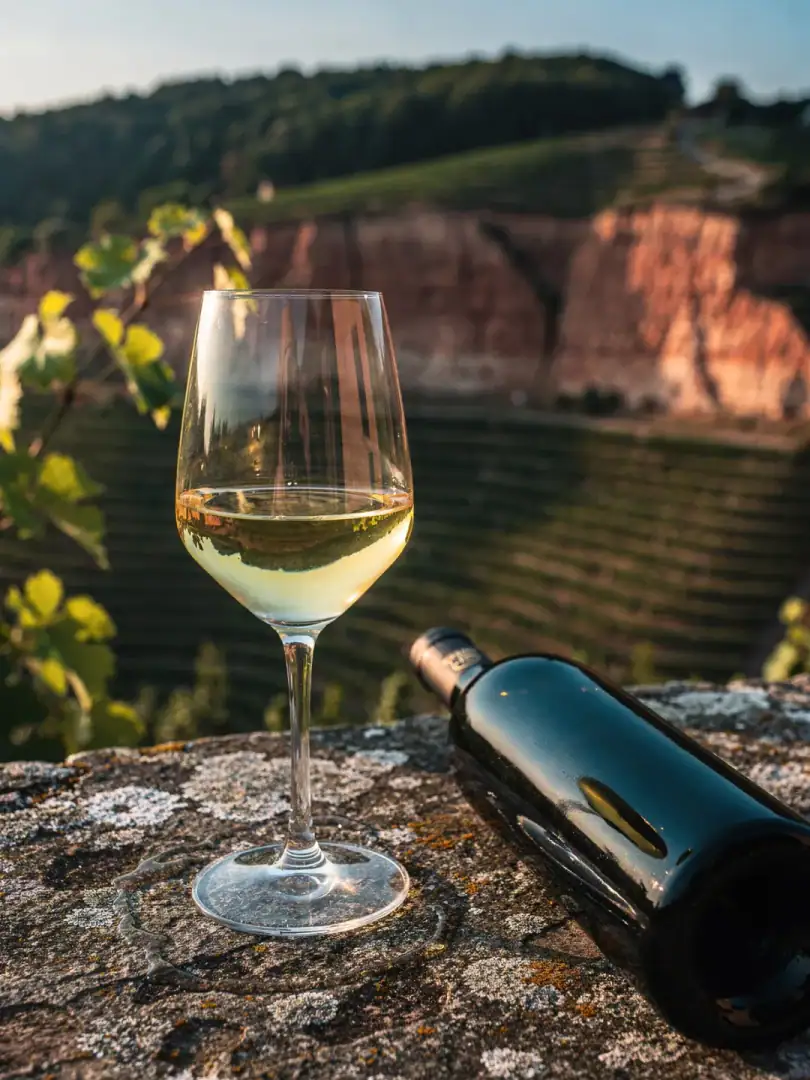
A glass decides how much of a wine actually comes through. With Grüner Veltliner and Riesling from the Kamptal, it really comes down to one thing: enough surface area for aroma, but not so much that the alcohol rushes ahead. Both varieties carry subtle, often fleeting aromas, and too wide a glass lets them dissipate before the nose ever catches them.
A slender, slightly tapered tulip-shaped glass works best for that reason. The bowl gives the wine room to breathe, while the narrow opening concentrates whatever rises up — and the peppery note of Veltliner in particular is otherwise quickly lost in the air before it's even noticed. For Riesling from the Heiligenstein, the glass can be a touch smaller still. Its aromas are denser and more concentrated than those of most Grüner Veltliners.
Temperature is where a lot goes wrong, in both directions. Regional and village-level wines taste best cool, between 8 and 10°C (46–50°F), straight from the fridge. A single-vineyard wine or a Reserve, on the other hand, can handle a few degrees more, around 10 to 12°C (50–54°F). Otherwise its finer nuances disappear beneath the chill. Served too cold, any wine tastes like nothing but acidity; too warm, and it tastes of alcohol, losing all its freshness.
A young Kamptal wine barely needs decanting. Only an aged single-vineyard wine of ten years or more benefits from half an hour of air, especially if it carries a subtle oak note from large-format casks that first needs to open up. Swirling a very young wine mainly just brings the peppery note to the nose faster than it would arrive naturally.
And then there's the pour. Fill only up to the widest point of the bowl, no higher, or there's no room left for the aroma to gather above the wine. Pour all the way to the brim, and in the end you're just drinking liquid with no aroma at all.