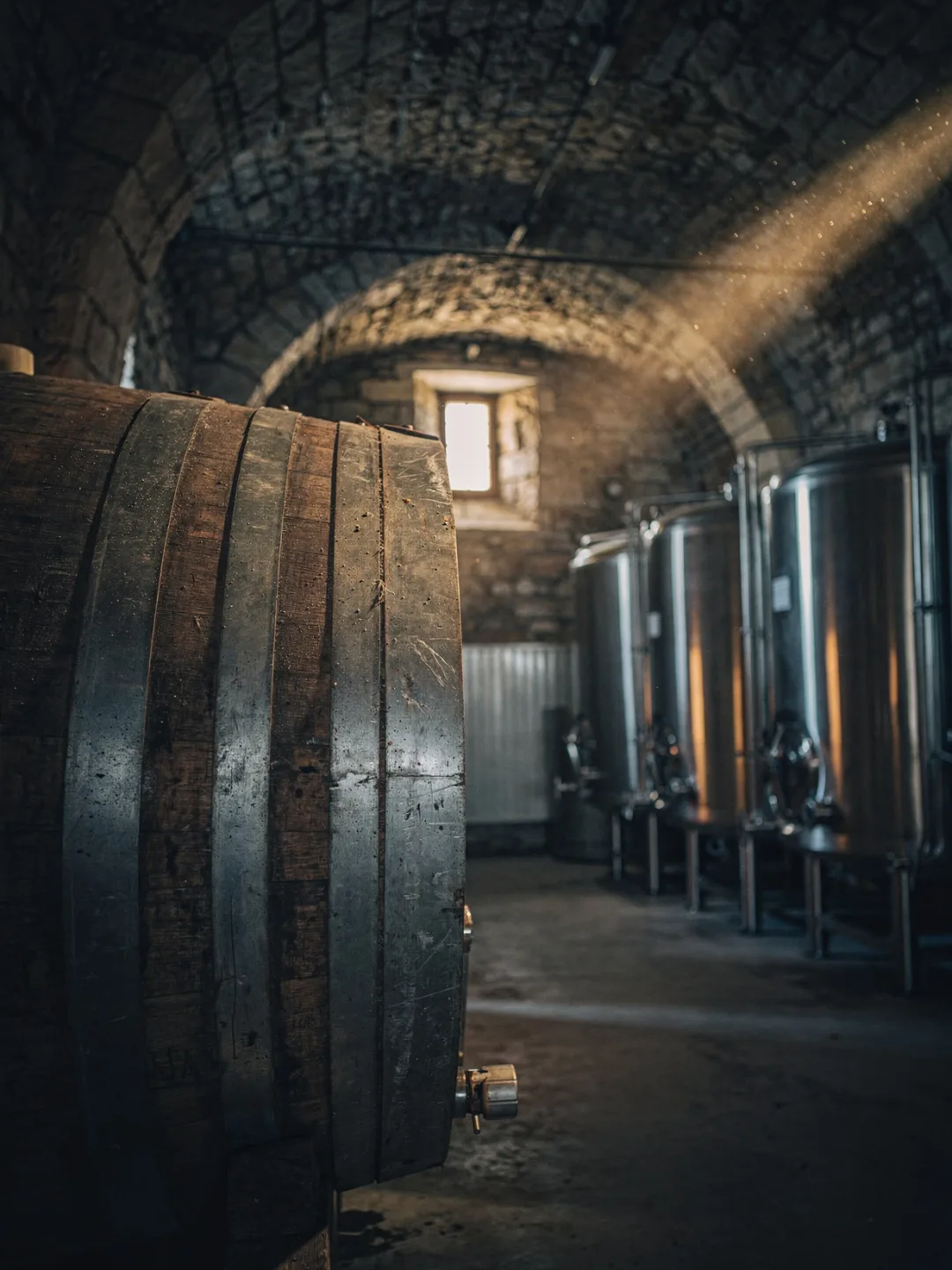
Steel Tank Meets Large Oak Cask
Winemaking
The real sorting begins in the cellar, long before a bottle ever carries a label. Since 2016, Kamptal DAC has been structured in three tiers: Gebietswein (regional wine), Ortswein (village wine) and Riedenwein (single-vineyard wine), similar to the system in Burgundy. A Gebietswein may come from anywhere in the region and must have at least 11.5 percent alcohol, no more than 12.5. Ortswein comes from one of the twelve designated winegrowing municipalities, such as Langenlois or Zöbing, while Riedenwein comes from a single, legally defined vineyard site. Both require at least 12 percent alcohol.
The style is precisely prescribed, almost like a recipe. Gebietswein should taste light to medium-bodied, without botrytis and without noticeable oak. Ortswein may be somewhat fuller-bodied, but must likewise show ripeness typical of its origin. Only Riedenwein is allowed a light to medium oak character. It's meant to reflect the particularities of its site — rock or loess, cold or warmth. "Dry" here doesn't mean roughly dry. The residual sugar may not exceed the acidity, measured in grams per liter — a stricter rule than for ordinary Austrian quality wine.
Timing is regulated too. A Gebietswein may receive its official quality control number starting January 1st after harvest. An Ortswein follows from February and goes on sale from March, a Riedenwein from April. Anyone wanting to put "Reserve" on the label must wait until July 1st of the year after next and prove at least 13 percent alcohol.
In the tank, not much drama happens at most estates, since Grüner Veltliner and Riesling ferment cool and controlled in stainless steel tanks, often at low temperatures, to preserve the delicate fruit aromas. Some estates take a different route. Bründlmayer lets part of its Veltliner age briefly in old acacia-wood casks, while Schloss Gobelsburg ages wine in both large oak casks and steel tanks, depending on the desired style. Even how long the must sits on its skins before pressing influences how strongly the peppery note later comes through in the glass.
Starting with the 2025 harvest, the origin of the grapes themselves will matter too. Only producers certified organic or as "Nachhaltig Austria" (Sustainable Austria) will be allowed to call their wine Kamptal DAC — making it the first wine region in Austria to impose such a requirement.