Warm Meets Cool
Climate
Two weather systems collide in the Kamptal, and neither yields easily. From the southeast, the warm, dry Pannonian lowlands push in. From the northwest, cool air from the forested Waldviertel pushes south along the Kamp, through a valley narrow enough to act like a funnel. Days begin hot and end cool.
This range is no minor detail — it's the real story of the region. According to climate data from the Bründlmayer winery, the mean annual temperature in the Kamptal is around ten degrees Celsius. Rainfall stays just under 550 millimeters a year, notably less than what most wine regions further west receive. The vineyards themselves lie between 215 and 380 meters in elevation, high enough that nights cool noticeably — even after a day with thirty degrees Celsius in the shade.
Toward the south, the valley opens up. Near Straß, Grafenegg and Stratzing, close to the Danube, deep loess dominates the soil. There it gets warmer, and the wine gains in fullness. Further north, around Gobelsburg, Zöbing and Schönberg, the Kamptal narrows between forested hills. It's exactly there that the nightly chill hits hardest. Riesling and Grüner Veltliner from these tight sites ripen more slowly, retain more acidity, and often need years before showing their full aromatic potential.
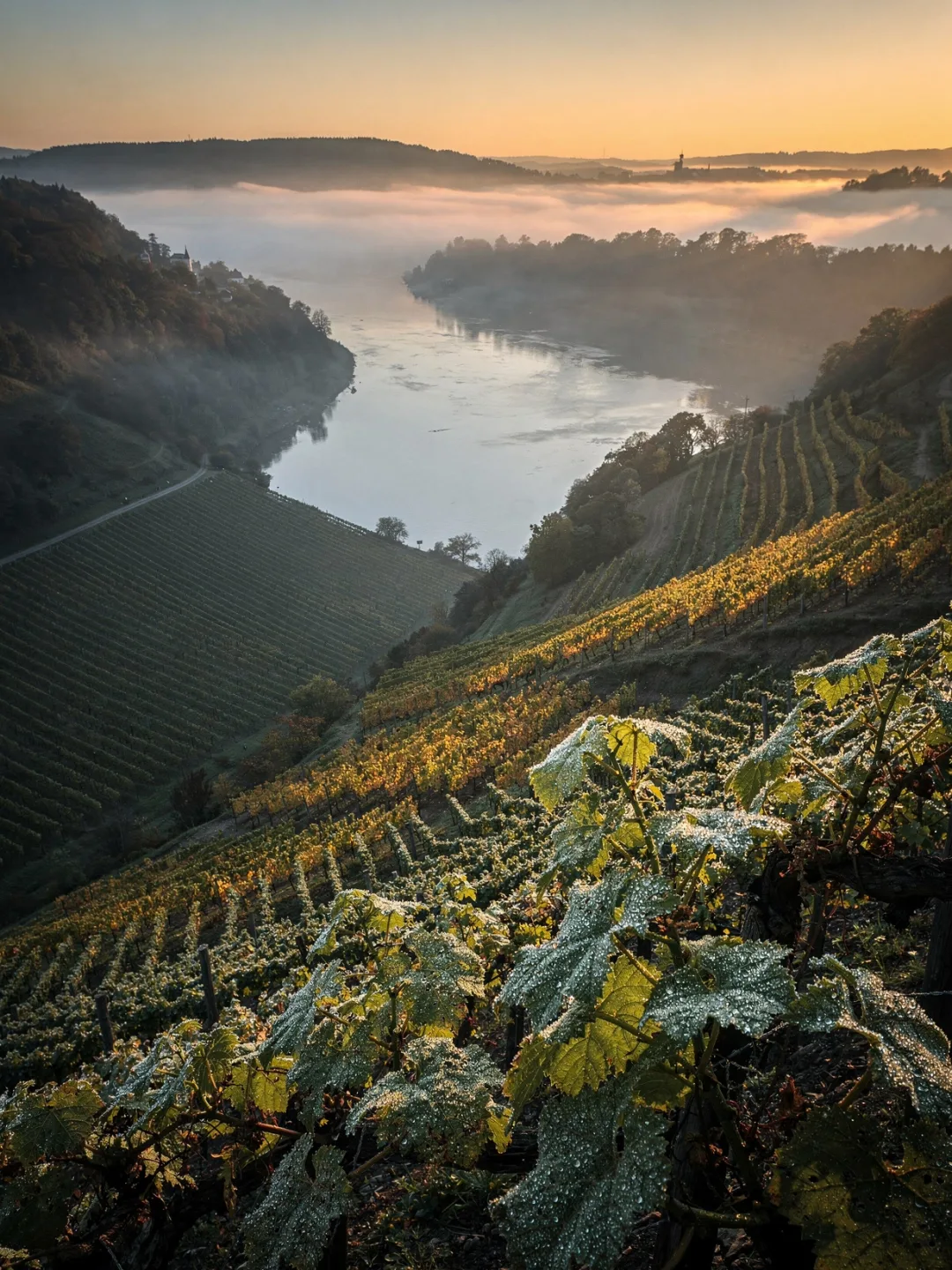
Fog often lingers over the river in the morning. Especially in autumn, as temperatures start to drop, it delays ripening for grapes close to the river while also keeping humidity low enough that rot rarely becomes a problem. A sun-facing slope can feel, at midday, like an entirely different country from the forest just twenty paces away. It's exactly that difference you end up tasting in the glass.