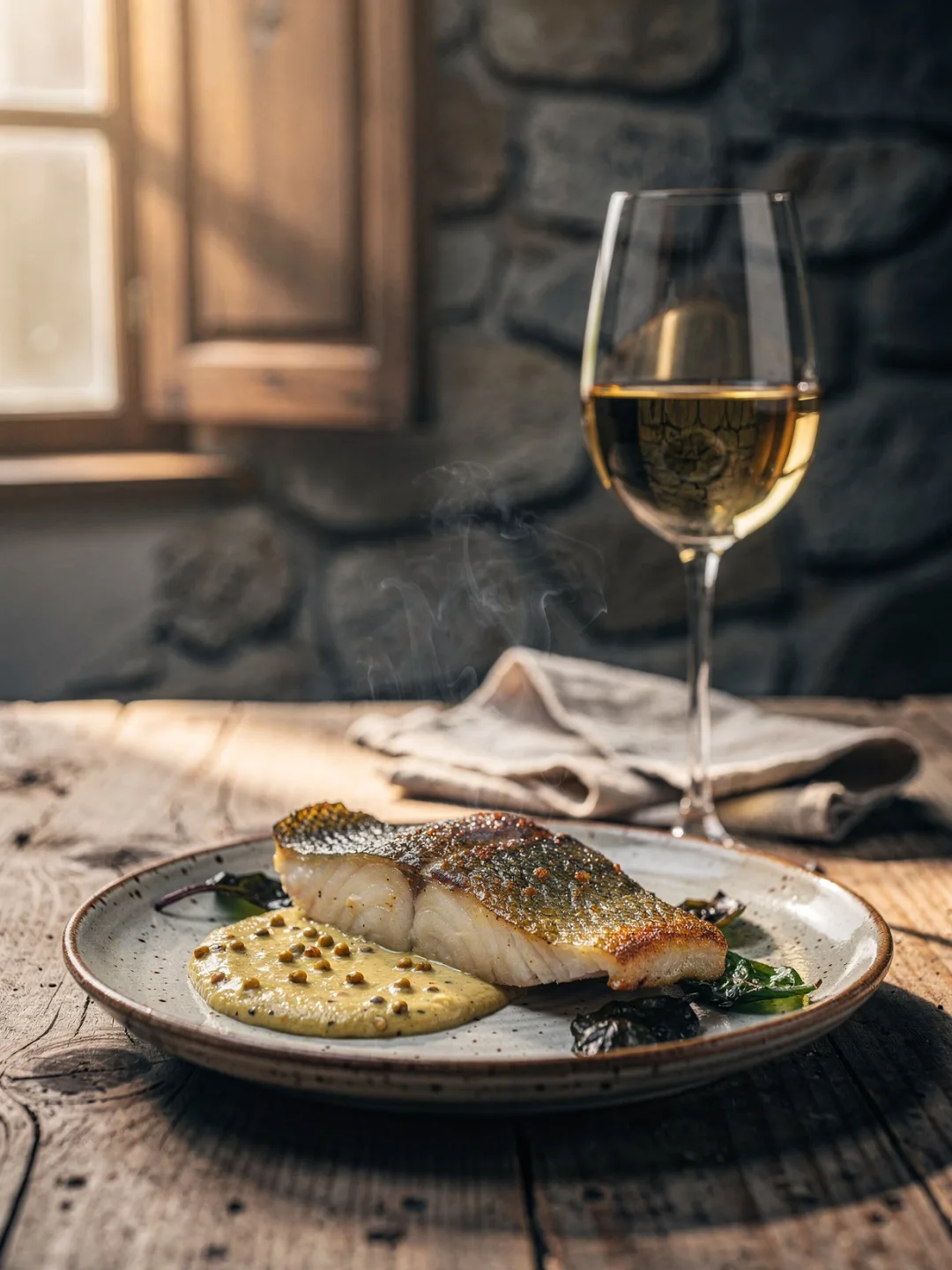
Fish, mustard, poppy seed
Wine & Food
Krems has its own mustard specialty, and it explains a lot about the wines of the town: Kremser Senf is stirred together from coarsely ground mustard seeds, sugar, and unfermented grape must, mild and slightly sweet, quite unlike sharp tarragon mustard — and it's precisely that mildness that looks for its counterpart in the glass. With a pork roast served with this mustard, a Grüner Veltliner with a bit more power works well. Its acidity balances the mustard's sweetness without overwhelming it.
The Danube supplies the second pillar of the local cuisine: fish, above all pike-perch, often called Fogosch here, either pan-fried or poached. Grüner Veltliner is almost a classic pairing. Its freshness doesn't overpower the delicate flesh, and the wine's pepper note provides a counterweight to a pale butter sauce.
Heading north, in the Waldviertel just behind the Kremstal, poppy seed is grown. Its noodles regularly turn up on plates in Krems too. Waldviertler Mohnnudeln are thick potato-dough dumplings, tossed in browned butter and dusted with ground poppy seed and powdered sugar. A dry wine doesn't work here. What's needed is a Riesling with noticeable residual sweetness, or a touch of botrytis, as some Reserve bottlings show.
With smoked fish, such as smoked char, salt works much the way it does with cheese. It softens the acidity and makes a still-young, slightly sharp wine taste smoother. An Ortswein from the Stein vineyard site suits this better than a more reserved Gebietswein, since it brings enough character of its own.
Two rules are enough to remember. Hearty and mildly sweet dishes get along well with the acidity and pepper of Grüner Veltliner. Truly sweet dishes, on the other hand, need a wine that's sweeter itself — otherwise even the best Riesling will suddenly taste thin and sour next to poppy seed and sugar.