On a Veltliner
Tasting
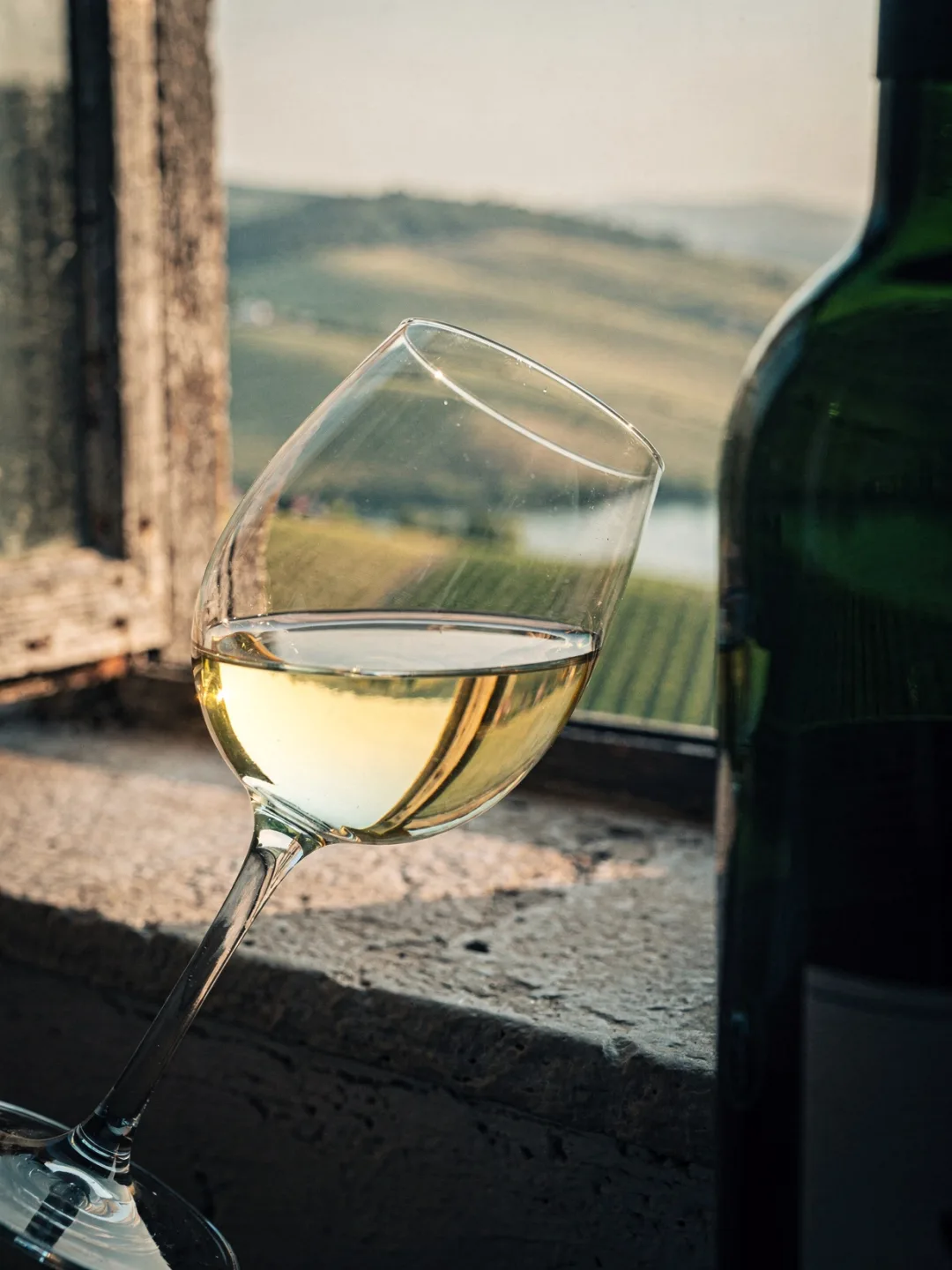
Take a glass of Grüner Veltliner and look at the color first. Young, it's pale yellow with a hint of green; after a few years in the cellar, it turns a rich gold. This color shift alone often reveals whether a bottle was intended for the Reserve category or for quick, easy drinking.
Then smell it, twice. First calmly, with the glass standing still — you'll usually pick up green apple with a bit of citrus peel — then again after a vigorous swirl, when the spice comes through that Kremstal wines are famous for. White pepper joins in. Sometimes there's a hint of tobacco too, which comes from the grape variety itself and has nothing to do with oak.
On the palate, pay attention to two things separately: the acidity and the wine's body. You feel acidity along the sides of your tongue, making your mouth water, while body reveals how heavy or light the wine feels. A Gebietswein usually comes across as lean and straightforward. A Riedenwein from the terraces brings more pressure, almost saline, along with that stony note people like to call mineral.
You taste Riesling in a similar way, only the fruit shifts. Instead of apple, you taste peach, often with a hint of honey even when the wine is completely dry. The acidity is usually even higher than in Veltliner, so it's worth waiting a few minutes for that initial sharp impression to settle.
Finally, count the finish: how long does the flavor linger after you swallow? With a simple Gebietswein, it's a few seconds. With a good Riedenwein from Wachtberg or Pfaffenberg, it can stretch into a full half minute, as pepper, stone, and fruit slowly fade one after another.