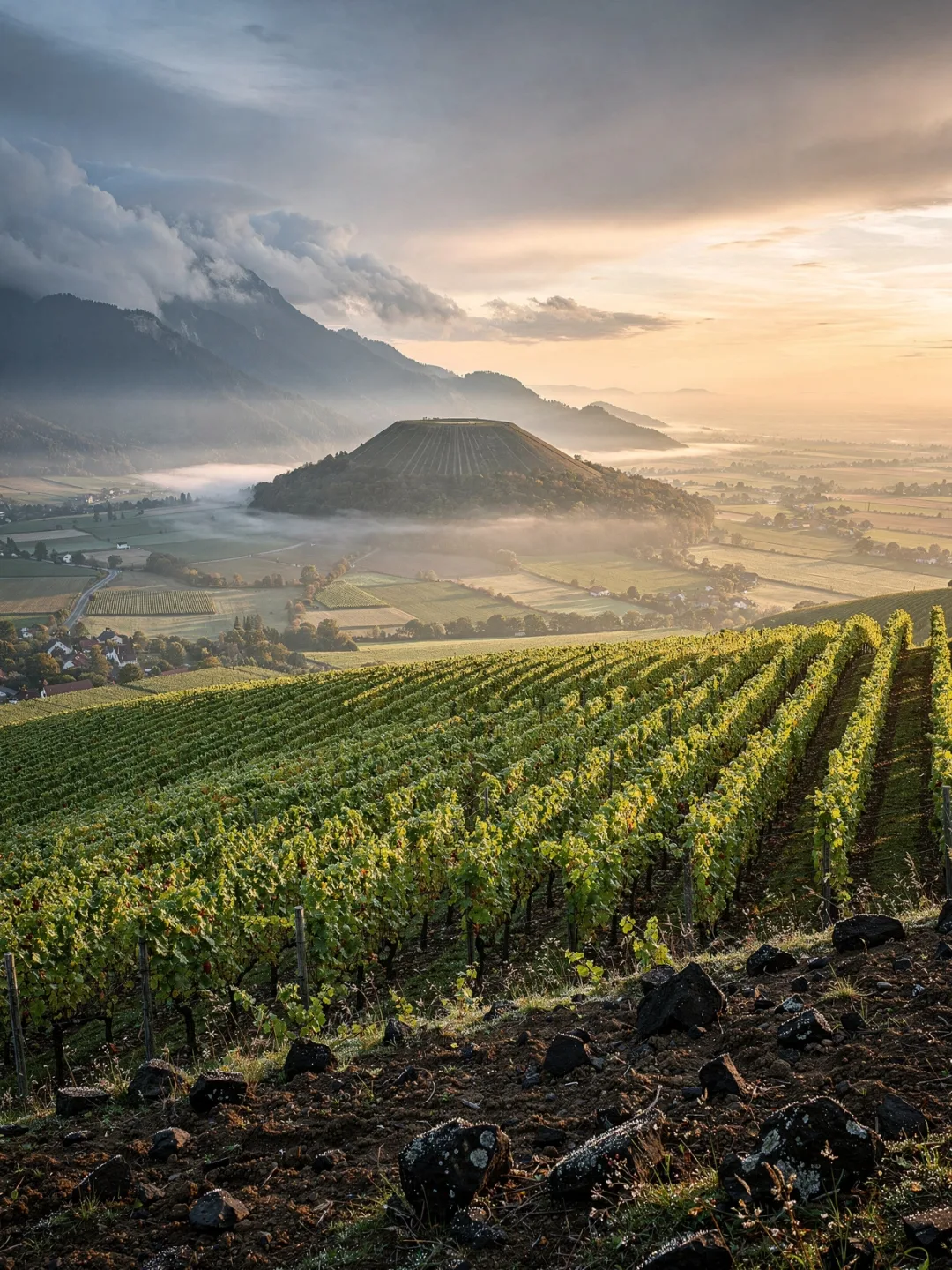
Pannonian meets Illyrian
Climate
Two weather systems collide in Styria, and the boundary between them runs straight through the vineyards. From the east, the Pannonian climate pushes in, hot and dry like the Hungarian plain beyond it. From the south comes warm, humid, almost Mediterranean air rising from the Adriatic — meteorologists call this Illyrian. Right at this crossover point lies Vulkanland, which is why it's considered Austria's warmest wine region.
In South Styria, altitude is what decides things instead. The vineyards sit between 380 and 570 meters, and in Sausal even above 650. There, the steepest vineyard sites in Austria reach gradients of up to ninety percent. Harvesting there means doing it by hand, since no tractor can get a grip. Kitzeck in Sausal sits at 564 meters, making it Austria's highest-altitude wine village.
Altitude costs warmth, but brings back something more valuable: cool nights. Around Leutschach, temperatures drop noticeably after dark, with hardly any fog rolling in. It's exactly this day-night temperature swing that keeps acidity fresh in the grape — without it, Sauvignon Blanc here would taste flat instead of like gooseberry and green bell pepper.
West Styria lies southwest of Graz, a touch cooler than the other two regions, set on rolling hills around Deutschlandsberg, Stainz and Eibiswald. This relative coolness explains exactly why Blauer Wildbacher develops an acidity here that makes even seasoned tasters wince — a wine that could never emerge this way in warmer sites.
Steep slopes mean hard labor. But they're also the reason these three regions taste so different, despite being only a few hours' drive apart. Warmth and humidity pressing in from two directions, with slope gradients in between that would be considered unworkable anywhere else — the climate here makes no compromises, and neither does the wine.