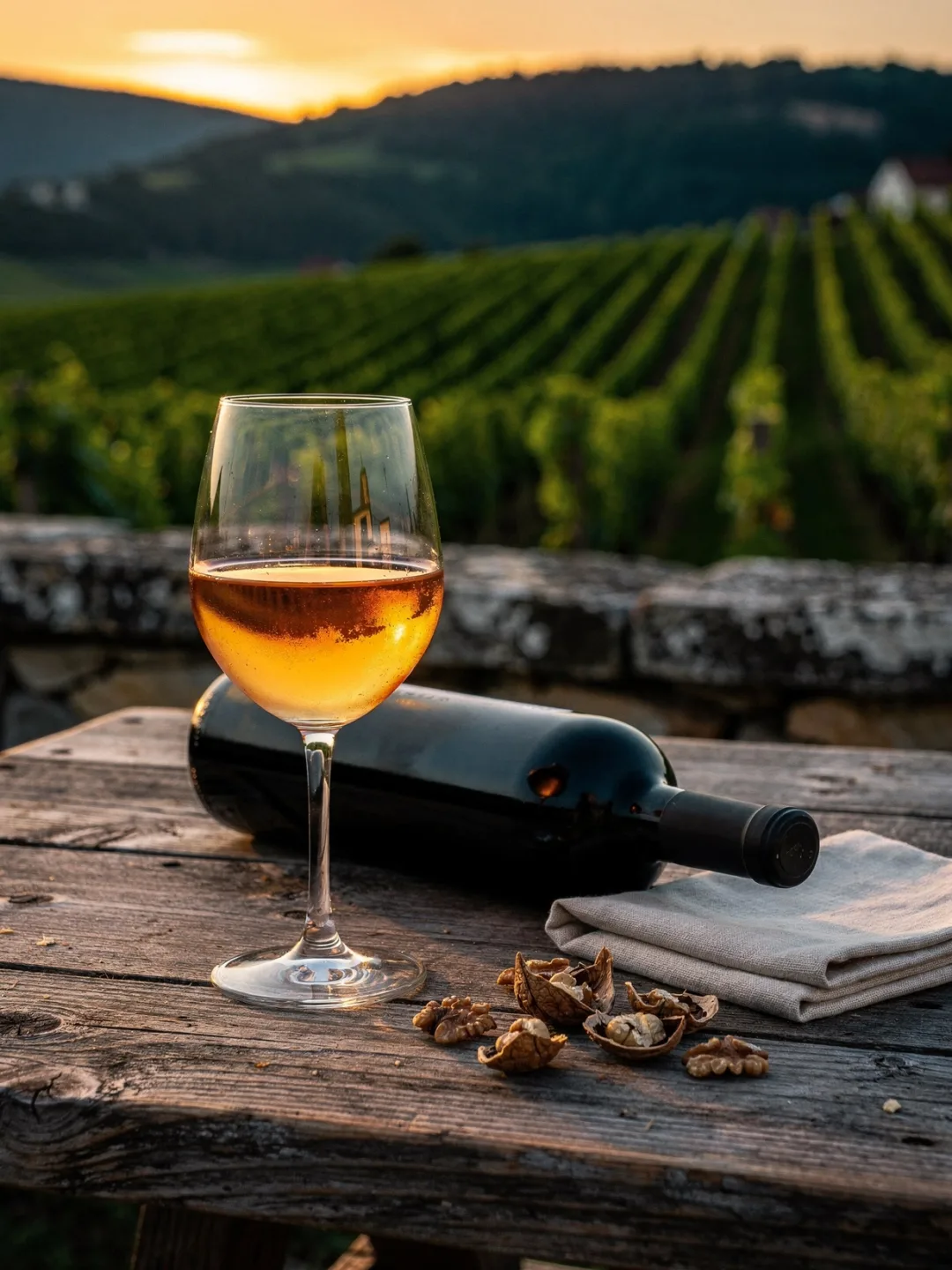
Round-Bowled for Nutty Notes
Glassware
Zierfandler and Rotgipfler are not light, zippy white wines. That's why a narrow glass simply won't do them justice. Their aromas sit deep: pistachio, almond, ripe pear, alongside a high alcohol level that only steps back once the wine has had enough air in the glass. A wide, round-bowled glass with ample surface area gives these heavy aromas the room they need to unfold, rather than bursting out all at once from a cramped glass.
With Spätrot-Rotgipfler, there's another factor at play. Young, this blend is often closed and only opens up after ten to fifteen minutes in the glass. Drink it too soon, and you'll miss the second half of its aroma. A larger glass speeds up this process, since more of the wine's surface comes into contact with air.
St. Laurent, by contrast, calls for a more restrained glass. Its fruit is dark, but its tannin is as fine as a Pinot Noir's, and too wide a bowl pulls both apart instead of holding them together. A medium-sized glass that narrows slightly toward the top instead concentrates the cherry fruit and the delicate spice that St. Laurent often carries on the nose.
When it comes to temperature, white and red are closer together here than you might expect. Zierfandler and Rotgipfler taste best at 50–54°F (10–12°C) — any colder locks in the nutty notes, any warmer and the alcohol becomes too dominant. St. Laurent can take two or three degrees more, around 57–61°F (14–16°C), so its fine tannins don't taste harsh.
Anyone opening a mature single-vineyard (Ried) wine should reach for a decanter. After years in the cellar, the powerful Rotgipfler wines in particular are often quite closed, and half an hour of air will release far more than any amount of swirling in the glass ever could.