Pannonian Warmth
Climate
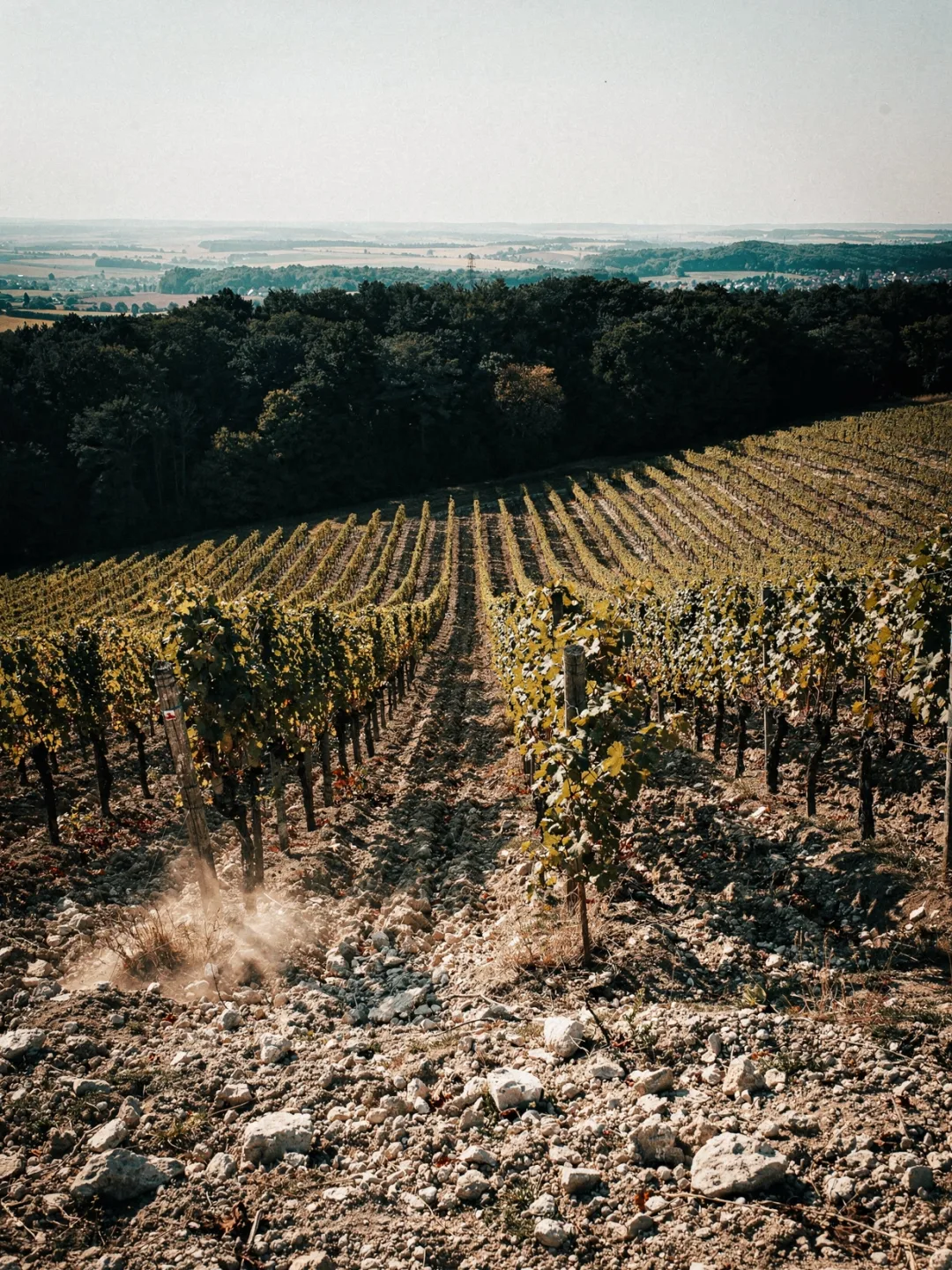
The Thermenregion owes its name not to the weather but to the water underground. Its climate comes from a different direction entirely: Pannonian-subcontinental, with hot, dry summers and dry autumns, plus around 1,800 hours of sunshine a year — more than in almost any other Austrian wine region.
Rainfall is scarce, averaging around 550 millimeters a year, barely more than in some semi-deserts. For late-ripening varieties like Zierfandler and Rotgipfler, this is nonetheless a blessing, since they need a long, dry autumn to build aroma and sugar without rot spoiling the harvest.
Nights, however, cool down markedly. Cool air flows from the Vienna Woods and the foothills of the Alps into the vineyards, noticeably lowering the temperature. This preserves the acidity in the berries that would otherwise evaporate during the day. This shift between hot days and cool nights keeps Rotgipfler from seeming heavy-handed despite its high alcohol.
Add to that constant air movement. The location on the eastern edge of the Vienna Woods, open toward the Pannonian Plain, creates a steady draft that quickly dries grapes after dew or rain showers. Where air stands still, thin-skinned berries rot quickly. Here, it rarely does.
For St. Laurent and Blauburgunder, this same warmth means something different: enough sun to ripen the thin skins to red and bring the tannins to full maturity. The grapes hardly ever scorch, though, since the proximity to the Vienna Woods cuts off the worst heat peaks. Precisely in this middle ground between steppe and forest lies the reason why two otherwise little-known white grape varieties have survived here.