Zierfandler & Rotgipfler
Grape Varieties
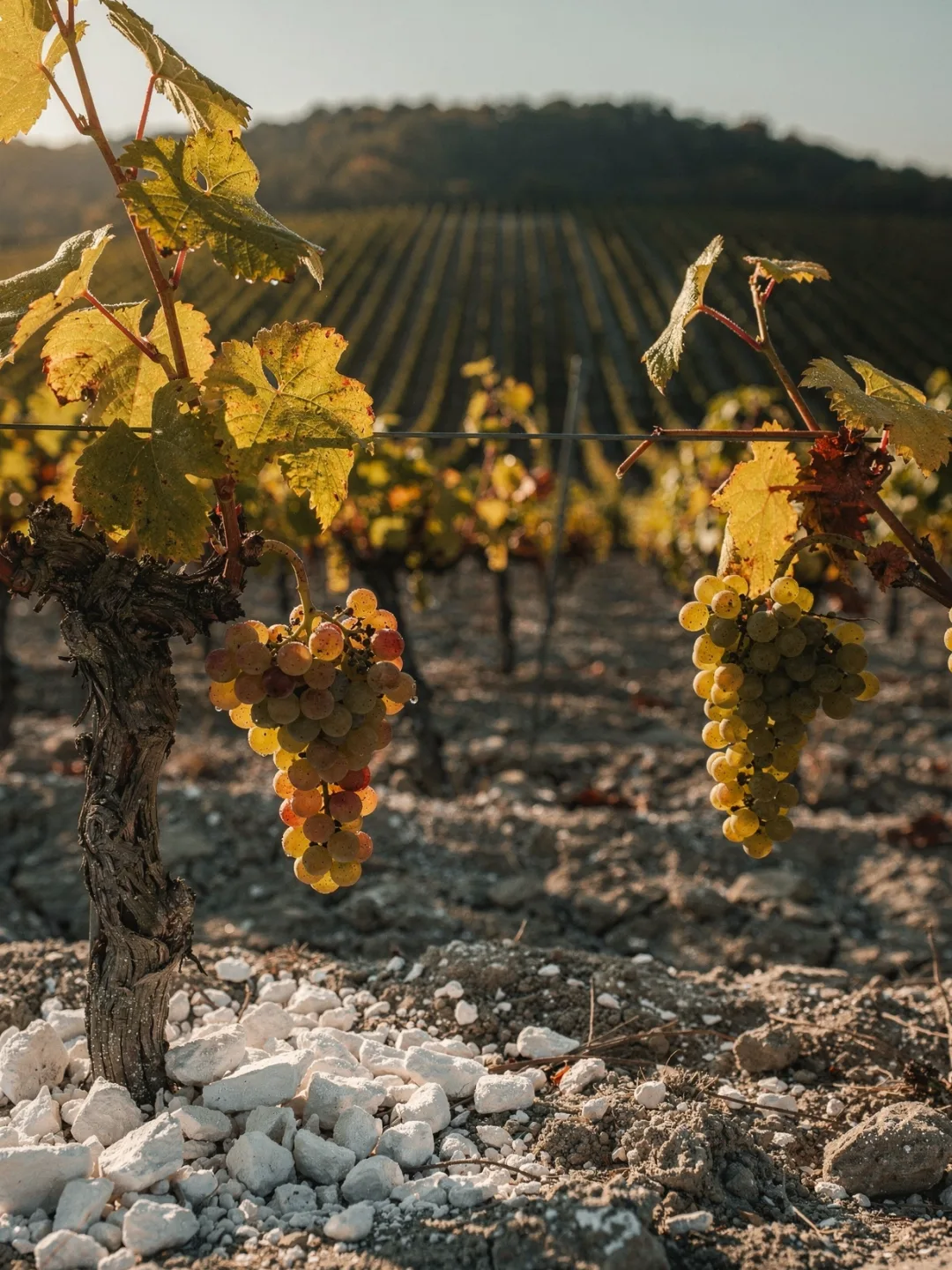
Two white grape varieties exist in meaningful quantity almost nowhere else in the world: Zierfandler and Rotgipfler. Both are considered natural crossings of Traminer and Roter Veltliner, both ripen late, and both carry their nicknames for good reason. Zierfandler is popularly called Spätrot, because its berries turn reddish shortly before harvest. Rotgipfler owes its name to the red tips on its young leaves.
Zierfandler was first mentioned in 1777 by the Viennese wine writer Helbling, and Goethe noted its arrival in the Thermenregion in the early 19th century. Rotgipfler first appears in 1837, in a text by the Styrian Johann Burger, and has since grown almost exclusively around Gumpoldskirchen. Together, they form Spätrot-Rotgipfler, a blend that, until the 1970s, was known far beyond Austria under the name Gumpoldskirchner.
In the glass, Zierfandler feels light and lively, with fine acidity and a nutty note of pistachio and almond. Rotgipfler, by contrast, brings power: high alcohol, plenty of extract, little acidity. Only together do the two complement each other into a wine that combines the elegance of one variety with the body of the other — which is why they have remained a pair for over two centuries.
Among the red varieties, St. Laurent dominates, named after the feast day on which its berries begin to ripen. It was first planted around 1860 at Klosterneuburg Abbey. Genetic testing shows Pinot Noir, known in German as Blauburgunder, as one of its parents, likely paired with the nearly extinct French variety Savagnin. Together with Blaufränkisch, St. Laurent is also one of the two parents of the new crossing Zweigelt.
Blauburgunder itself also grows in the region, often on the same limestone soils that shape Zierfandler and Rotgipfler. The regulation for Thermenregion DAC permits a total of ten grape varieties for the simplest regional wine, plus grapes from plots registered as Gemischter Satz — several varieties planted and harvested together, as has been customary here for centuries.