Pannonian Meets Alpine
Climate
The Traisental sits at a crossroads you won't find on any road map: between the Pannonian lowlands to the east and the Alpine foothills to the south and west. Both climate zones send their air into the same narrow valley, and neither ever gains permanent control.
During the day, the east usually wins out. Warm air flows in from the Pannonian plain and pushes summer temperatures noticeably higher, giving the grapes plenty of warmth to ripen. Grüner Veltliner owes its fullness to this.
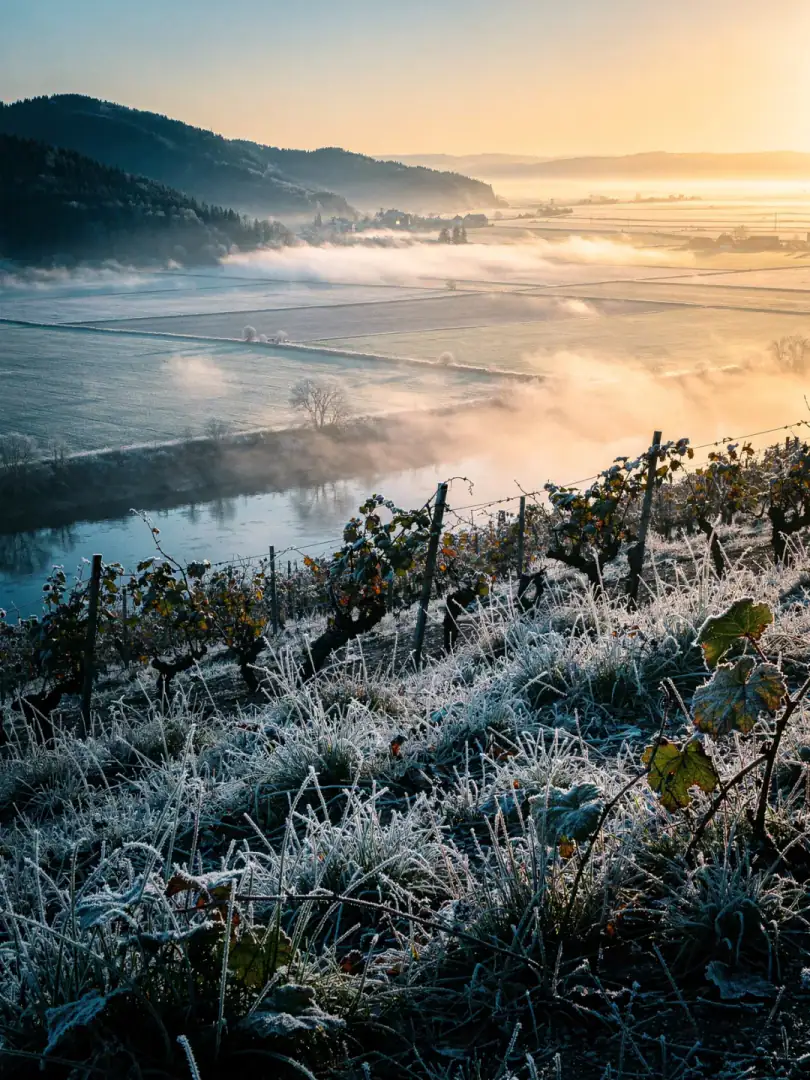
At night, the picture flips. Cool air pushes down from the Alpine foreland. Add to that a northerly wind that practically sweeps the heat away, and the gap between daytime highs and nighttime lows in the Traisental turns out notably larger than in warmer regions further east. This very swing locks acidity into the grape while flavors still ripen.
This pincer position is no accident of geography — it's the reason wine grows here at all, rather than just grain. A valley without cooling nights would produce flat, tired wines. The Traisental gets both. Warmth delivers ripe flavor, coolness delivers the freshness that makes its wines famous.
Climate change is now shifting even this balance. Harvest today begins on average earlier than just a few decades ago, and winegrowers pay closer attention to shade-giving canopy so the grapes don't accumulate too much sugar and too little acid too quickly. The cool nights from the Alpine foreland remain the most important ally the valley has.