Grüner Veltliner & Riesling
Grape Varieties
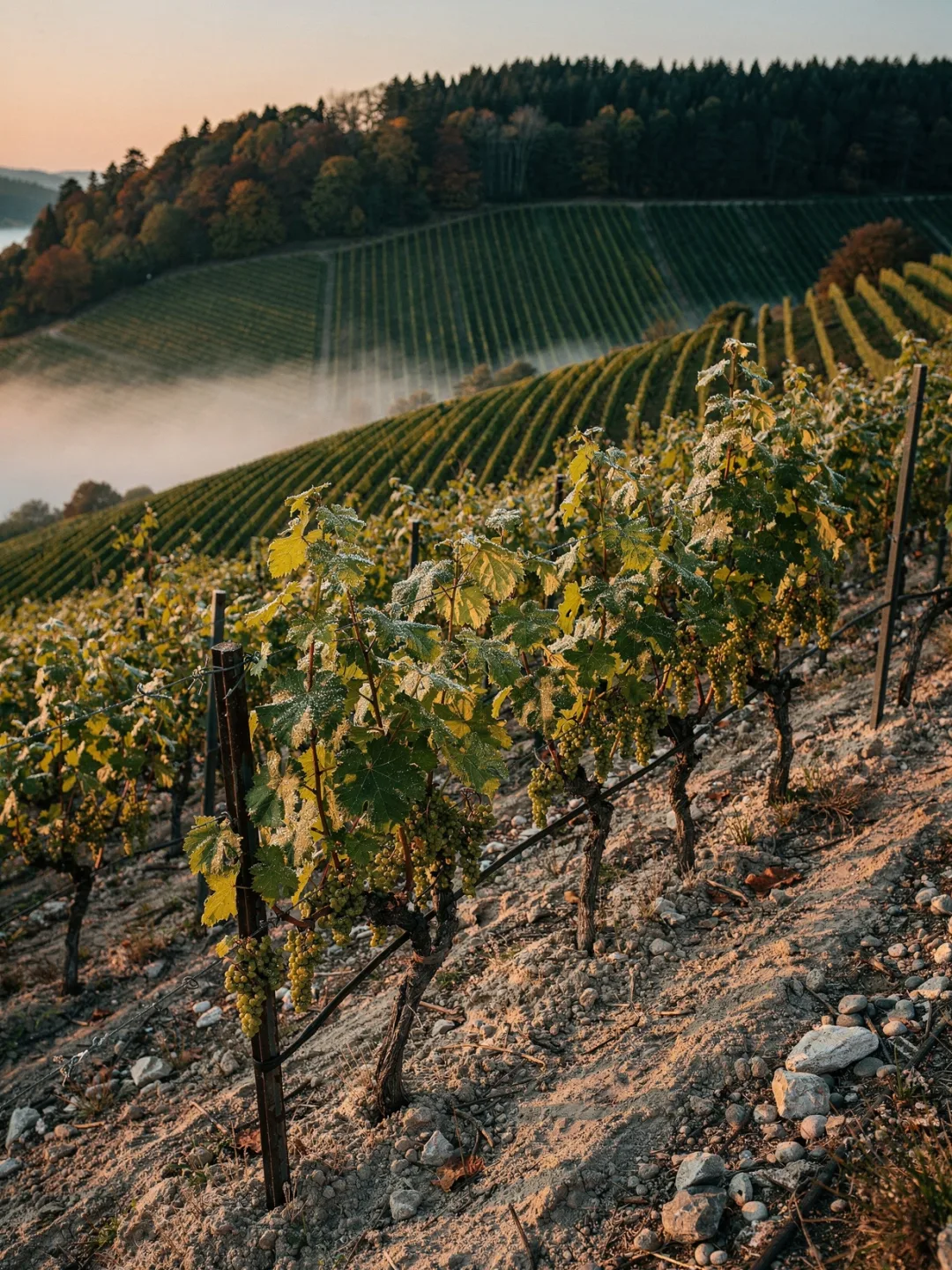
One variety dominates the valley more than anywhere else in Austria. Grüner Veltliner accounts for over 60 percent of the vineyard area in the Traisental, the highest share of any Austrian wine region. Drive through the vineyards here, and you'll see practically only this one variety, row after row, until the slope ends.
Alongside it, smaller in area but just as important, stands Riesling. Since the 2006 vintage, both varieties have jointly carried the Traisental DAC seal, the only grape varieties permitted across the entire region. A wine made from Zweigelt or Chardonnay may be as good as it likes; it still won't get the label.
Grüner Veltliner rightly carries its nickname: Pfefferl, or "little pepper." In the glass, white pepper announces itself first, followed by green apple and sometimes a hint of freshly cut vegetables. The same aroma compound responsible for the heat in black pepper is at work here; it's simply present in an amount the nose detects long before the tongue notices any spiciness.
Riesling tastes heartier in the Traisental than in warmer growing regions. Acidity takes center stage, backed by stone fruit and a stony, almost dusty note that comes from the soils rather than the cellar. It's practically never sweet in this region: the DAC rule permits only dry styles.
The rule still allows some leeway. Up to 15 percent of other white quality grape varieties may be blended in, as long as Grüner Veltliner or Riesling remains recognizable in taste and on the label. Most producers in the valley skip this entirely. Why blend when your own variety already brings everything you need?