Big for Ripeness
Glassware
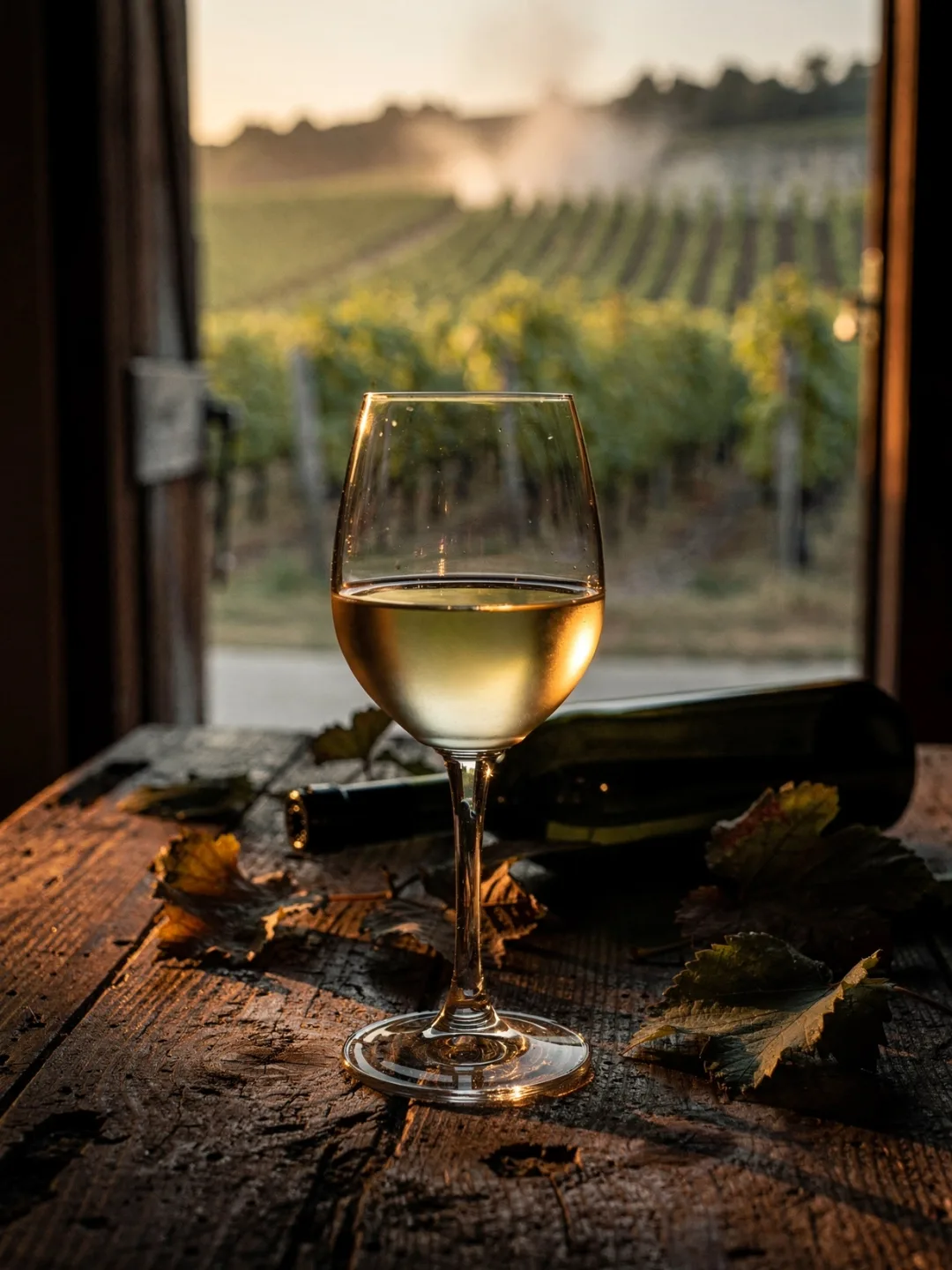
Grüner Veltliner from Wagram calls for a different glass than its peppery relative from Kamptal or the Wachau. The Pannonian warmth and the heat-retaining loess let the grapes ripen more here. Peppery notes fade into the background, while ripe stone fruit and a hint of honeydew melon step forward. A glass that's too narrow and tall concentrates precisely those sharp edges this wine barely has, making it feel tight. A medium-sized, rounded tulip glass with a wide opening works better, giving the warm fruit notes room to expand.
With Roter Veltliner, the logic reverses. This variety naturally brings more color, more extract, and a nutty side reminiscent of ripe apple and quince. Its full depth only reveals itself after a few minutes in the glass. That takes time. A glass with a large bowl and plenty of surface contact with air helps enormously. Just like an aged white Burgundy, this wine needs oxygen to unfold its nutty side instead of hiding it behind freshness.
Both wines share one rule, though: temperature. Served too cold, at eleven or twelve degrees, both Grüner and Roter Veltliner from Wagram shut down almost completely, because cold numbs precisely those ripe, warmth-carried aromas first. Cold kills aroma. Taken out of the fridge ten minutes before pouring and served at just under fourteen degrees, both suddenly show what the loess terrace is really about. Fullness instead of sharpness.
A third glass belongs in the region too, even if it's used less often. Riesling from Wagram, usually from the warmest edge sites of the terrace, calls for a slimmer glass that focuses the acidity rather than diluting it. This is a legacy of its cooler relatives from the Wachau, which survive here only in small quantities.