Press House in the Loess
Production
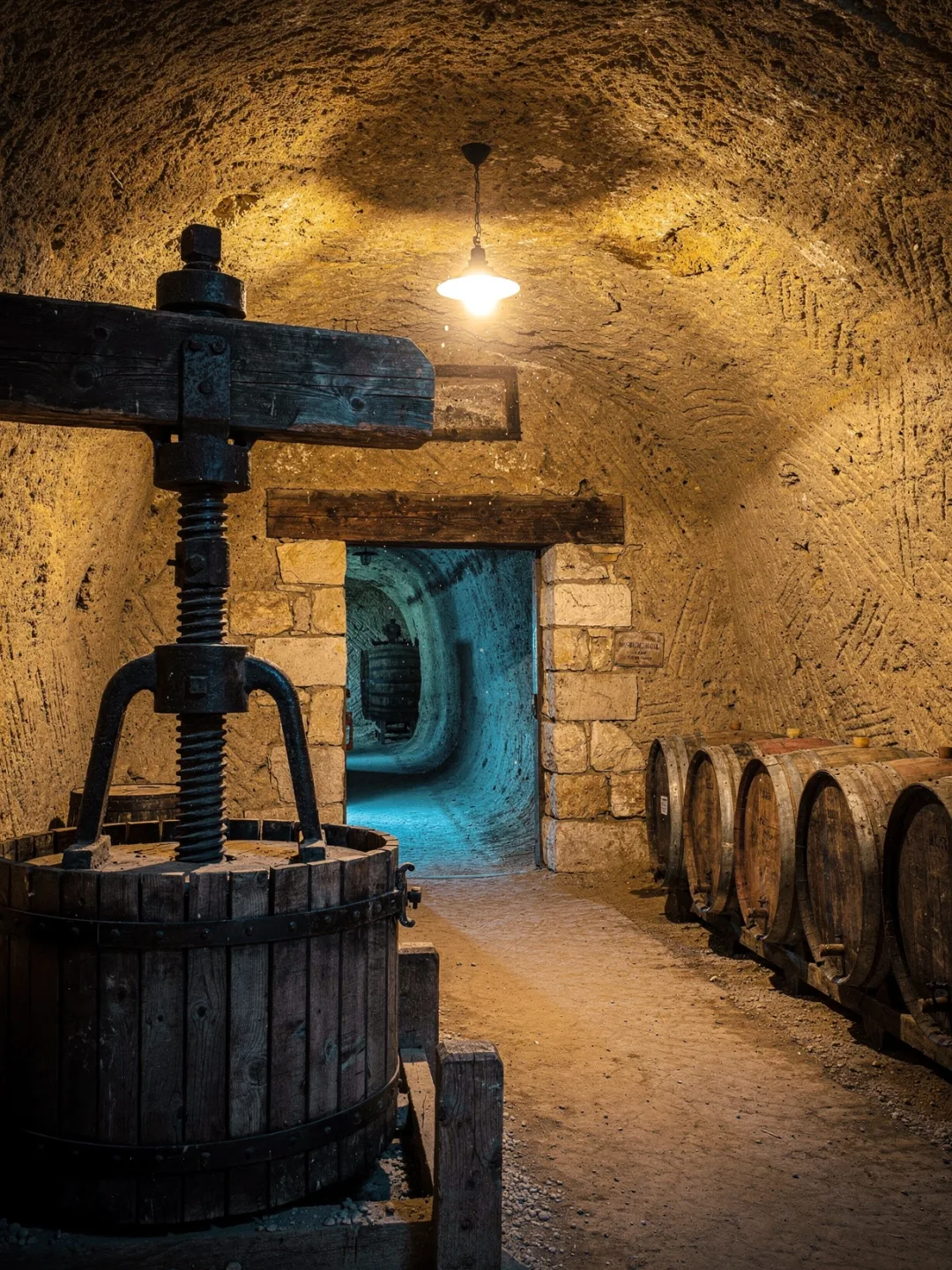
Anyone wanting to understand how wine was once made at Wagram is best off descending into the ground. Around Fels am Wagram, several Kellergassen (cellar lanes) wind through the landscape, named after the fields they cut through, such as Dorner or Steinagrund. The oldest of their press houses were already dug directly into the soft loess by monasteries and landowners back in the fourteenth and fifteenth centuries. That practice continues to this day.
Loess makes this possible because it combines two properties that would otherwise seem contradictory. Freshly dug, it can be cut with simple tools like firm cheese. But exposed to air, its surface quickly hardens into a stable wall that lasts for centuries even without supporting walls. A press house dug into loess also stays cool year-round, usually between ten and thirteen degrees Celsius, with no electricity or cooling technology at all. That's exactly the temperature wine needs to slowly mature over months.
The harvest itself still follows a number invented at Wagram. Before a winegrower decides whether the grapes are ripe enough, they measure the sugar content with the Klosterneuburger Mostwaage. It was developed more than one hundred sixty years ago at the wine school in Klosterneuburg. Only once the reading is right does the harvest begin, by hand and in small crates, so the berries arrive at the foot of the terrace uncrushed.
In the press house, the paths then split depending on the variety. Grüner Veltliner and Riesling are usually pressed quickly, gently, and at cool temperatures to preserve their freshness, then fermented in stainless steel tanks. Roter Veltliner, by contrast, often gets more time on the skins and afterward matures longer in large wooden barrels, sometimes a full year, because only that rest brings out its nutty notes. That takes patience. Two varieties, two completely different paths in the same cellar.