Forest, River, Wind
Climate
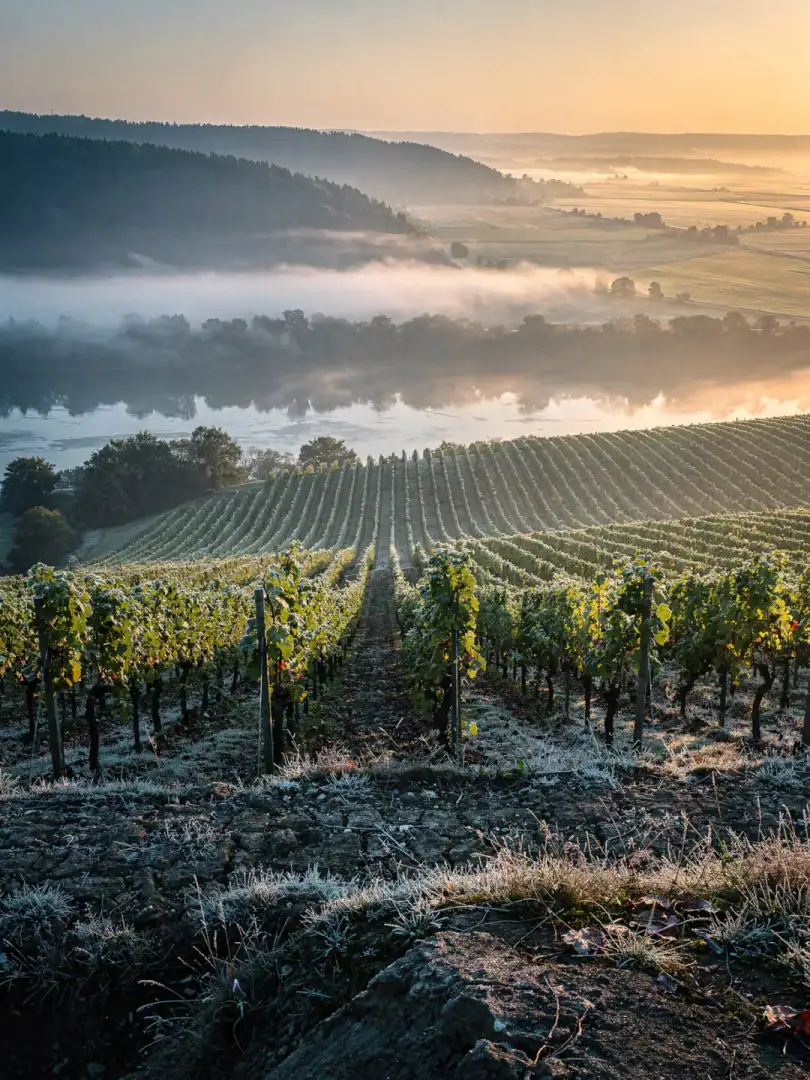
Wagram sits in a climatic bind, and that's exactly what makes its wine special. From the north, the Waldviertel sends cool air down from dense forests. From the east blows warm, dry wind across the Pannonian lowlands, the same wind that shapes the Weinviertel and Burgenland. In between lies the Danube, which buffers heat in summer and softens frost in winter.
These three forces collide directly on the terrace edge. During the day, the Pannonian wind often pushes temperatures above thirty degrees Celsius, and the grapes ripen quickly. At night, that flips. Cool air flows down from the Waldviertel, and the thermometer often drops by more than fifteen degrees. For the vine, this is a gift. It builds sugar and aroma during the day and barely loses acidity at night, because the cold slows down all the processes that would otherwise break acidity down.
The loess itself plays a role too. It stores daytime warmth like an oven made of fine sand and slowly releases it in the early hours of the night. This keeps the vines warmer for longer than the air above them, extending the grape's usable day by an hour or two. Wine from the loess terrace therefore often tastes rounder and riper than wine from neighboring sites on leaner rock.
Rain is rarely the problem at Wagram; drought, on the other hand, can be. Loess stores a lot of water, but in hot summers that's not always enough to last until harvest. Young plantings are therefore now more often given drip irrigation, something that was still the exception twenty years ago. Climate change has noticeably pushed harvest forward, from early October to often as early as mid-September, and winegrowers are once again planting more often on higher-lying parcels, where it cools down earlier in the evening.