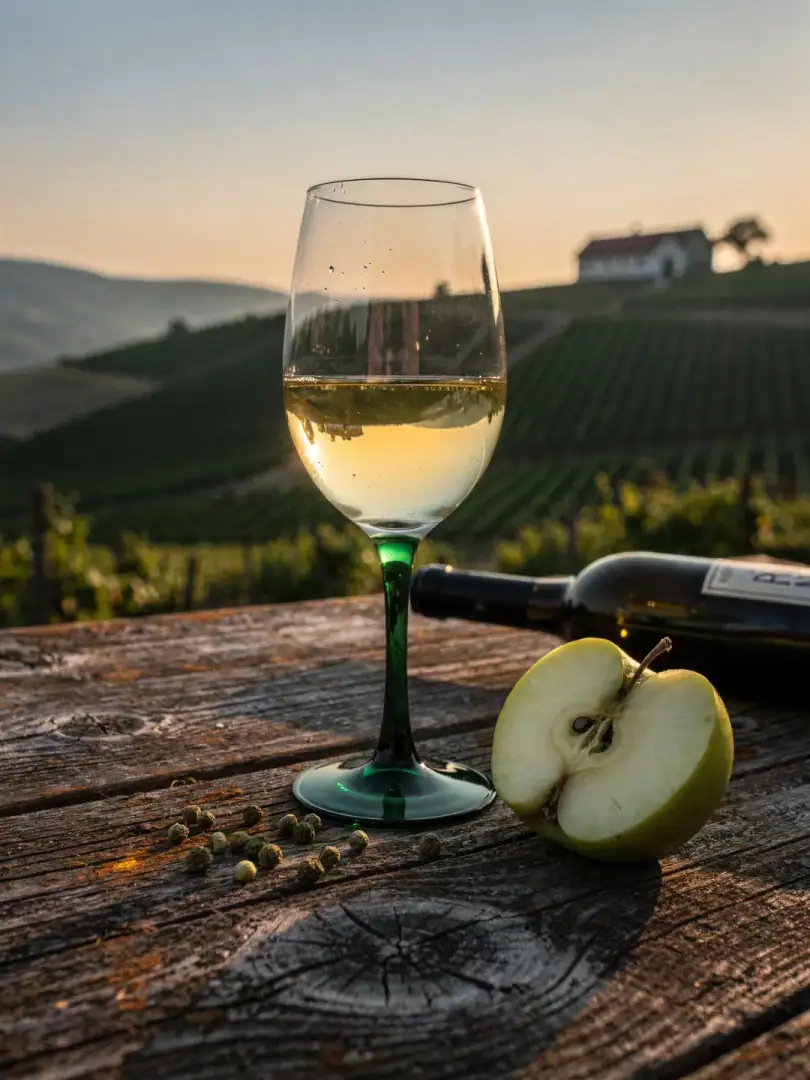
Narrow, green, cool
Glasses
A glass decides how much of the pepper and fruit actually reaches the nose at all. With Grüner Veltliner from the Weinviertel, this is especially delicate, since the peppery note is only ever a whisper to begin with. A well-known glassmaker designed a glass specifically for the variety — slender, with a stem tinted green, a nod to old Weinviertel drinking glasses.
The narrow shape, tapering slightly toward the top, is no mere design flourish. It concentrates the volatile aromas above the opening rather than letting them dissipate in a wide bowl, which matters because the aroma compound behind the peppery note, called rotundone, is present in the air only in minute quantities to begin with. A glass that's too open loses almost all of it.
As for temperature: cool, but not icy. Eight to ten degrees Celsius suits a dry Weinviertel DAC Klassik. Too cold, and the acidity turns harsh. Too warm, and the pepper note recedes. A Reserve with some oak contact can take one or two degrees more, allowing its rounder, denser fruit to open up.
Anyone who doesn't detect any pepper on the first sniff needn't worry. Around one in five people cannot perceive rotundone at all, no matter how good the glass is. For everyone else, the concentration in some Weinviertel Veltliners reaches up to seventeen times the perception threshold — at that level, even a simple glass will do the job.
Decanting is rare, and when it happens, it's brief. A young Klassik needs no air; a few minutes suffice for a mature Große Reserve that still seems somewhat closed after its long cellar aging. Pour as with any white wine, up to the widest point of the bowl, no higher. The rest is space left for the nose, which has plenty of work to do with this variety anyway.