Austria's Driest Corner
Climate
Ask about rain gear in the Weinviertel, and you'll usually find you don't need it. The region is considered Austria's driest wine-growing area. In Retz, its western heartland, average annual rainfall is just under 450 millimeters — making Retz the driest place in the entire country. On the Laa Plain in the northeast, conditions are barely different: under 600 millimeters, year after year.
Behind this lies a borderline position. The Weinviertel sits at the seam between the hot, dry Pannonian climate flowing in from the east and the cooler, continental climate of Central Europe. Summers turn hot, winters bitterly cold, with barely a mild transition in between.
Around Schrattenthal in the Retz district, the count reaches up to 1,980 hours of sunshine a year — more than anywhere else in the region. That's enough to reliably ripen Grüner Veltliner. Even when the wind shifts, the region doesn't seem especially warm at first glance.
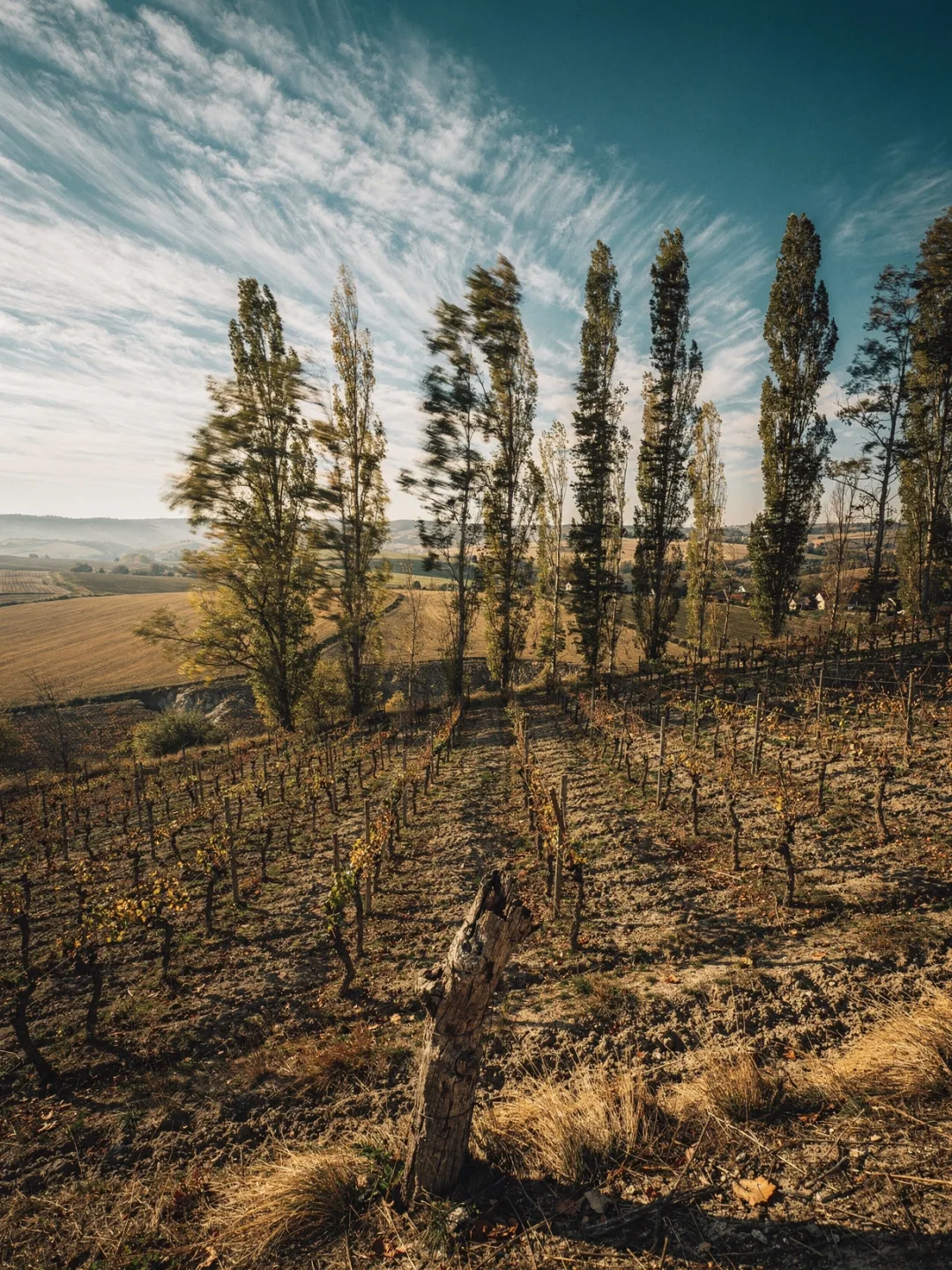
And the wind shifts often. Cool downslope winds from the north sweep across the open hills, especially in autumn, producing cold nights after hot days. This day-night swing slows acid degradation in the ripening berries. Some winemakers are convinced this very shift also sharpens the Pfefferl spice note — unproven so far, but observed for generations.
The wind serves a second purpose too: it quickly dries the grapes after rain. That keeps rot and fungal disease in check, which matters greatly in such open, hilly terrain. Climate change is now pushing the harvest earlier here as well; in some years it starts as early as late August instead of the traditional early October.