A chord in the glass
Glassware
A Gemischter Satz in the glass is never a single note. It's a chord made up of three, sometimes four grape varieties at once. A glass built to emphasize only one variety would distort exactly what makes this Viennese wine what it is. So what's needed isn't a specialized glass for the Grüner Veltliner from the Nussberg or the Riesling from the Kahlenberg, but one that lets several voices speak at equal volume.
A medium-sized, slightly tulip-shaped white wine glass does this best. The bowl gives the wine enough surface area for all the aromas to release. The slightly narrowing opening then gathers them back together before they scatter into the room. A glass that's too narrow, on the other hand, traps individual notes — like the peppery spice of the Grüner Veltliner — and lets only the loudest variety through.
When it comes to temperature, restraint pays off. Eight to ten degrees Celsius suits a young, uncomplicated Gemischter Satz from the entry level — colder than a heavier Weißburgunder, warmer than a sparkling wine. An Ortswein or Riedenwein with a stated origin can handle one or two degrees more, since it carries more structure that simply won't show at too cold a temperature.
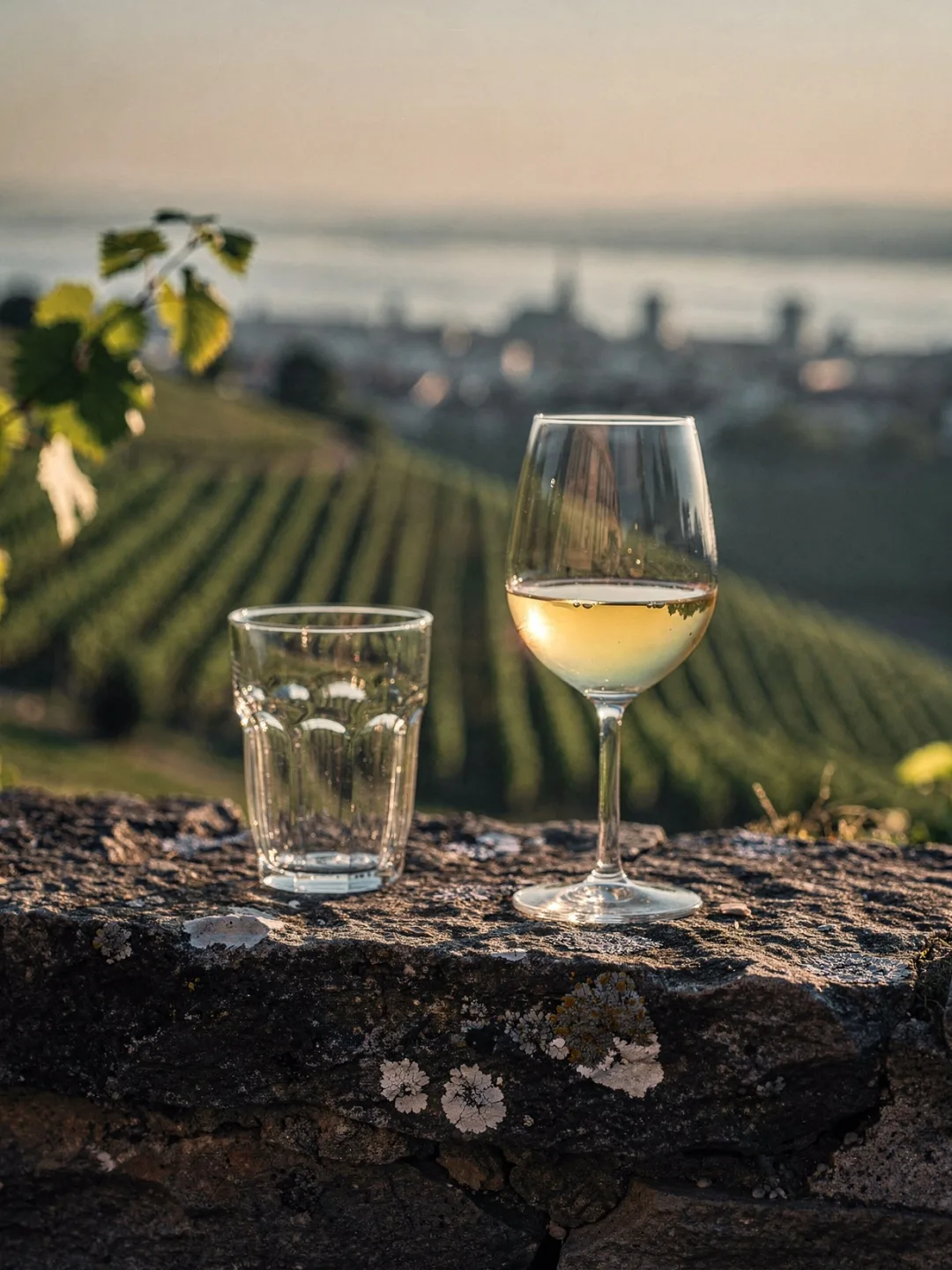
Traditionally, none of this mattered at the Heuriger. There, wine was served in a simple, thick-walled eighth- or quarter-liter glass, without a stem, poured straight from a carafe at the buffet. Practical for a place where you sit for hours in the garden — but it doesn't show the wine at its best. Today, many Viennese Heurigen have proper stemmed glasses alongside the old quarter-liter tumblers.
Even so, pours stay modest. A white wine glass is filled to its widest point, which comes to about one hundred twenty milliliters. The rest stays empty for the aroma. For a wine made up of several varieties, that empty space matters even more — it's where the individual notes sort themselves out before the nose perceives them as a whole.