Gemischter Satz
Grape Varieties
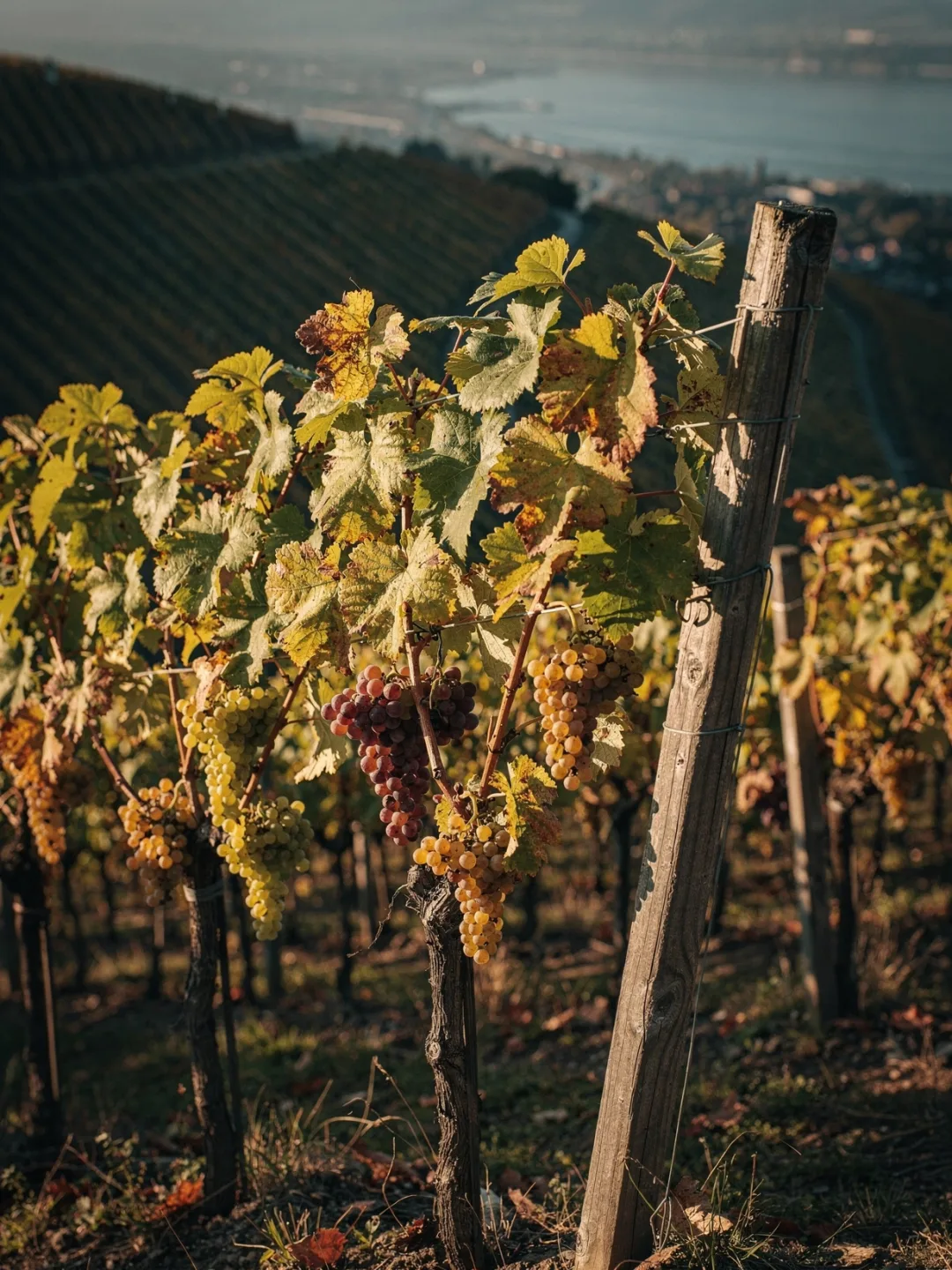
In most wine regions, a single grape variety defines a region's reputation. In Vienna, it's a method. Wiener Gemischter Satz blends at least three white grape varieties within a single vineyard, planted row by row or even vine by vine in a jumble. And that's exactly how they're harvested and pressed in autumn too — all together.
The rules behind it have been set out in the DAC regulation since 2013. The dominant variety may make up at most half of the vineyard, a third variety must account for at least ten percent, and everything goes into the press together. That's what sets Gemischter Satz apart from a cuvée. With a cuvée, the cellar master blends finished wines to taste in the tank; with Gemischter Satz, it's the vineyard itself that decides how much of each variety ends up in the bottle — and that decision was already made at planting time.
Four varieties show up in nearly every blend. Grüner Veltliner brings freshness and a spicy, sometimes peppery note, Weißburgunder rounds things out without ever getting loud itself. Riesling supplies the acidity and a hint of citrus. The old, nearly forgotten Neuburger lays down a nutty breadth underneath that keeps the wine lingering on the palate. On the Nussberg, for instance, there's a notably high share of Neuburger, while the Bisamberg leans more toward Grüner Veltliner. Traminer, Sylvaner, and Frühroter Veltliner join in too, depending on what's been growing in that particular vineyard for generations.
Around 41 percent of Vienna's vineyard area now grows Gemischter Satz. Alongside it are single-variety vineyards: Grüner Veltliner alone covers about sixteen percent of the area, Riesling just under eight percent, and Weißburgunder and Chardonnay around four percent each. Four out of five Viennese vines carry white grapes. Only a fifth is red wine, led by Zweigelt with a good five and a half percent and Blauburgunder with just over three percent.
What makes Gemischter Satz special only becomes clear in the glass. Because the varieties ripen at different speeds but are harvested on the same day, every bottle captures a vintage no cellar master could ever exactly repeat. Sometimes the Grüner Veltliner is already fully ripe while the Riesling still carries a touch of green; other times it's the other way around. This very fuzziness is exactly what winegrowers set out to protect in 2013, not smooth over.