Heat & Altitude
Climate
The Alentejo is considered the hottest and driest wine region on mainland Portugal. In July and August, average highs reach around thirty-three degrees Celsius. During heat waves, they climb to forty to forty-two; rain falls mainly in autumn and winter. Over the year, much of the plain receives only five hundred to six hundred millimeters, less than almost any other region in Portugal. There simply isn't more rain to be had.
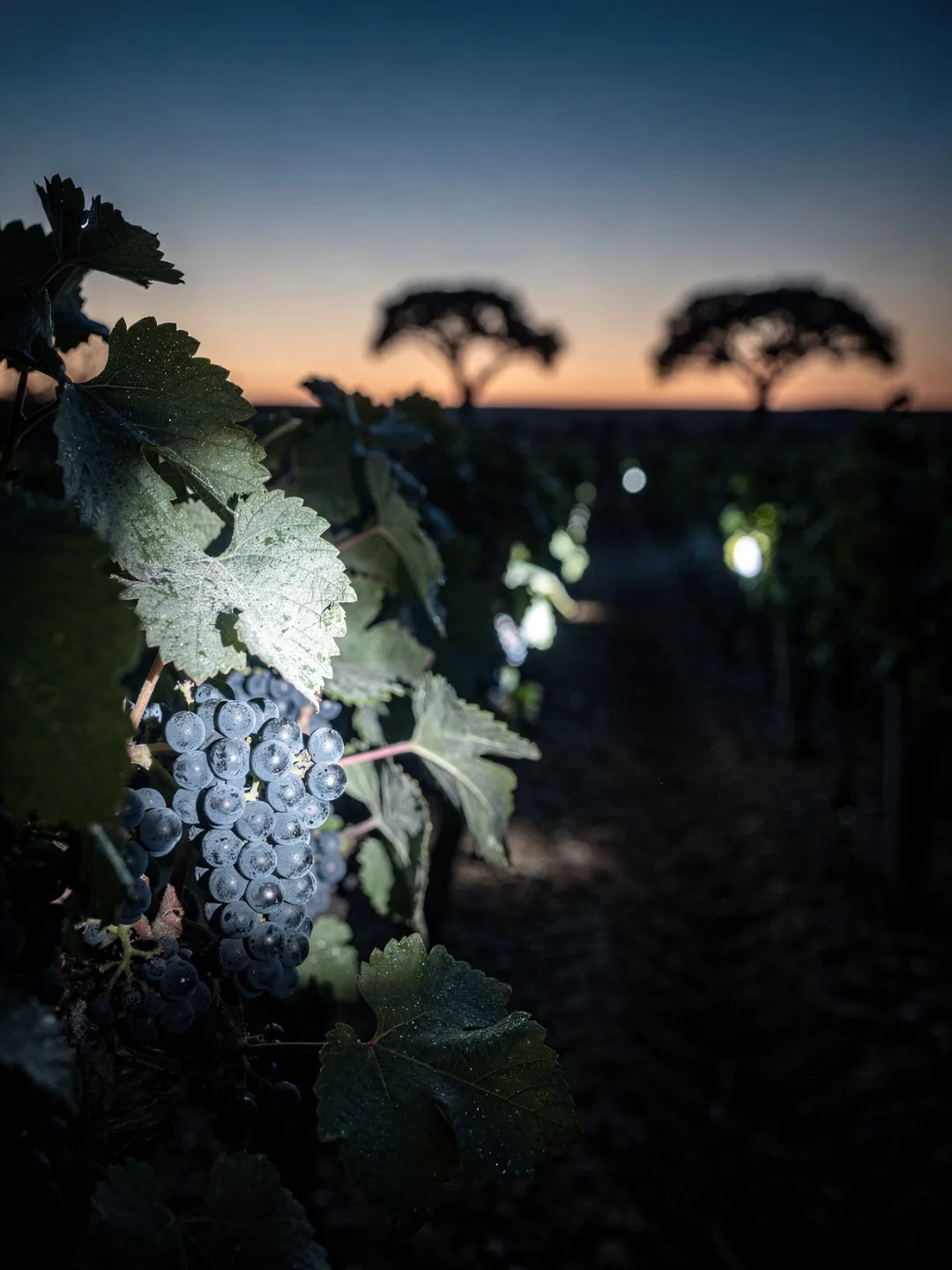
This heat is no longer a scenario for the future; at Herdade dos Servas, harvesting has therefore been done at night as standard practice since 2025. An initial trial in 2024 had already gone well; with daytime highs of thirty-five to thirty-eight degrees, the grapes are picked with headlamps while the night still cools them. For a few weeks each year, the workers completely reverse their rhythm. There's no other way anymore.
Only in the north is it cooler. The Serra de São Mamede reaches a height of 1,025 meters near Portalegre, the highest point in Portugal south of the Tagus. The vineyards at its foot lie well above the plain. At night, temperatures there drop noticeably lower than further south; this coolness preserves an acidity that you can taste immediately in wines from Portalegre: leaner, tauter, with less of the ripe warmth that otherwise resonates throughout the Alentejo. You taste it right away.
For the vines, the dryness means above all one thing: roots that must go deep; there's nothing left to find near the surface in summer. Old, unirrigated plantings often cope better than young, widely spaced rows with shallow root systems. That's why old vineyards in the Alentejo now hold a special status. They learned to make do with less long before the term climate change became an issue in the region.