A Bowl Against Tannin
Glassware
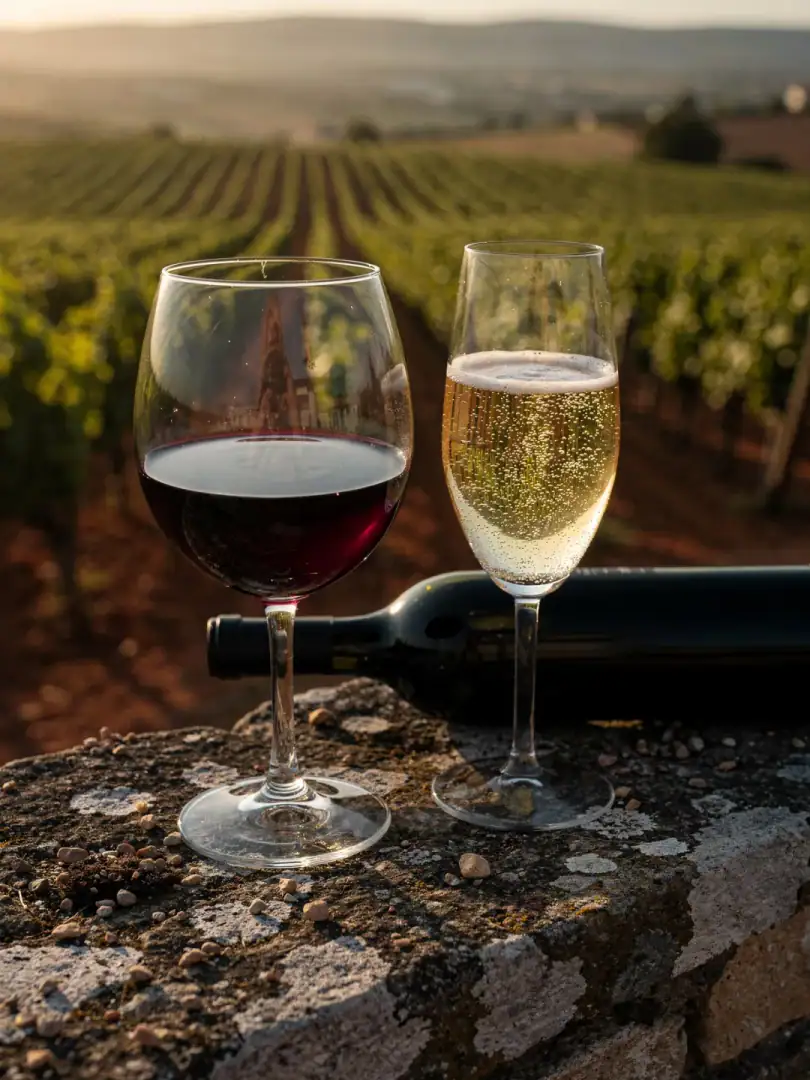
Sommeliers recommend the same style of glass for Bairrada's red wines as for Barolo or Burgundy: a large, bowl-shaped glass with plenty of air inside. The wide bowl gives the wine surface area for alcohol to evaporate off, and that's exactly what softens the sharpness of tannin and acidity before either reaches the tongue. With a tannic wine like Baga, this shape can be the difference between a harsh glass and an approachable one.
Even more important than the glass, for young Baga wines, is often the decanter. Thirty to forty minutes of air is usually enough for a wine under eight years old to smooth out its roughest edges. For especially powerful vintages from Anadia or Cantanhede, an hour and a half might be warranted. Pour straight from the bottle instead, and you're drinking a wine that's all sharp edges. Same grapes, just without the time to settle.
For espumante, the opposite applies: slender rather than bowl-shaped. A tall, narrow tulip glass keeps the fine bead together that forms through the second fermentation in the bottle. It channels the bubbles toward the nose, where most of the aroma sits. A flat coupe, the kind you remember from old films, lets the bubbles vanish within minutes. For a wine that has taken pride in exactly this method since 1890, that would be a waste.
When it comes to temperature, Bairrada is unforgiving: served too warm, Baga turns immediately alcoholic and the tannin dusty and drying. Sixteen to eighteen degrees Celsius is right for the red wine. A cooler ten to twelve suits the fresh white wines made from Bical or Maria Gomes. Espumante belongs in the glass at six to eight degrees, cold enough that the bubbles don't escape too quickly, but not so cold that you can't smell anything.