Atlantic, Fog, Rain
Climate
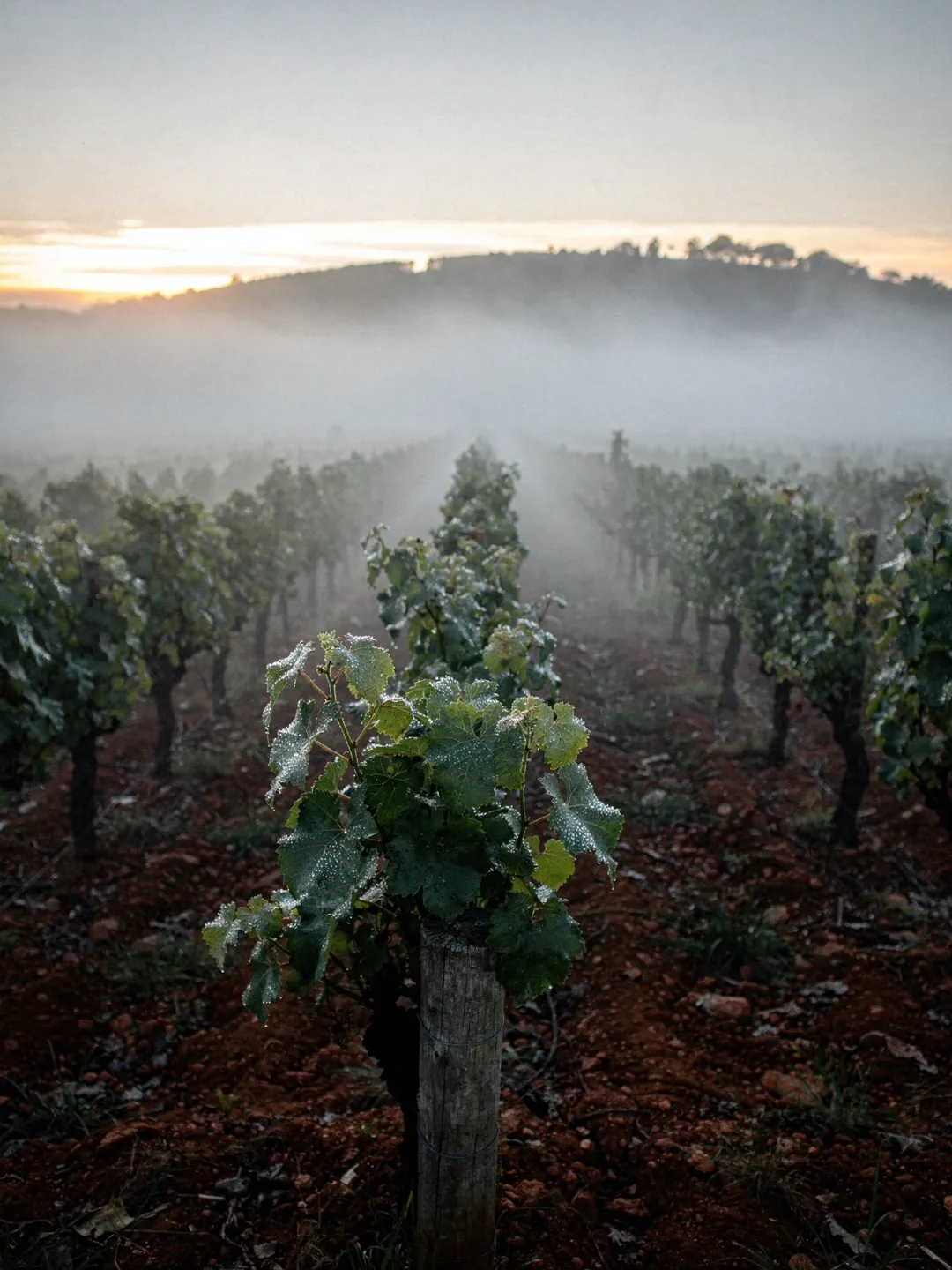
The Atlantic lies just ten kilometers from the first vineyards and shapes nearly everything here. On summer mornings, fog often drifts in from the sea. Temperatures stay moderate, averaging between twelve-and-a-half and fifteen degrees Celsius over the year, and even in August it rarely gets oppressively hot. Anyone expecting a Mediterranean wine region will find Bairrada surprising.
Heading east, the land grows hillier until, after nearly fifty kilometers, the Serra do Buçaco and Serra do Caramulo mark the region's boundary. In between, the land is almost entirely flat, with barely any vineyard rising above a hundred and twenty meters. This flatness lets the sea wind sweep through unimpeded, and it's exactly this wind that keeps the grapes dry whenever there's a brief lull between downpours.
Rain is really the defining feature. Between eight hundred and sixteen hundred millimeters fall each year, considerably more inland than along the coast. Most of the rain arrives in autumn, right when Baga is still hanging on the vine. The Vouga marks the region's northern boundary, the Mondego its southern one, and both rivers are a reminder of just how much water actually flows through here.
For a late-ripening variety like Baga, this is a real challenge. Wait too long into October for optimal ripeness, and you risk rot from the first autumn rains. Pick too early, and you get a wine that's barely drinkable for all its acidity and tannin. Winemakers have therefore learned to choose their sites carefully: sandier, warmer soils for earlier ripening, heavier limestone-clay soils for grapes that can handle more time. The climate here forces decisions that winemakers elsewhere never have to make.