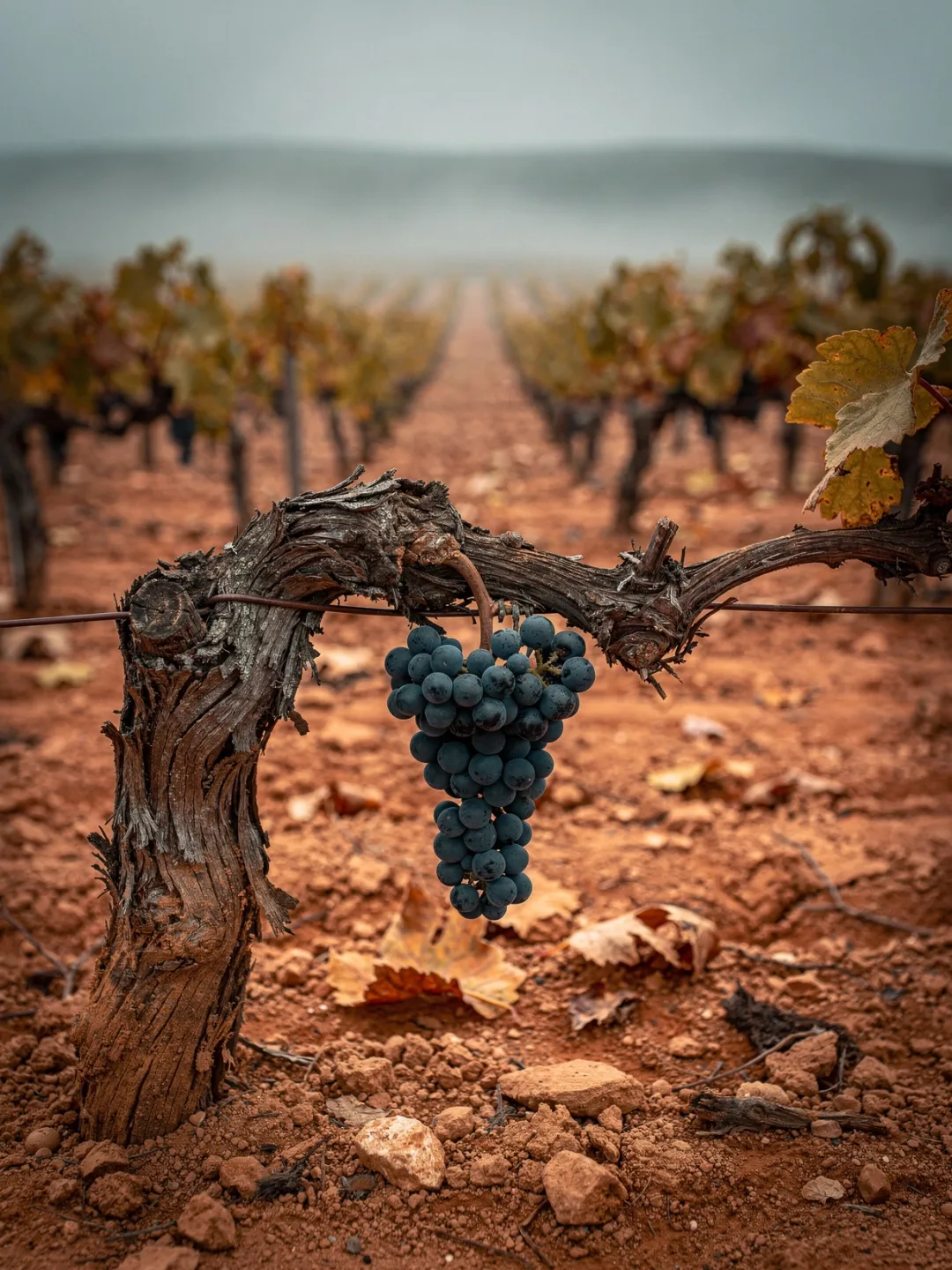
Baga and Its Relatives
Grape Varieties
Nearly one in every two vines in Bairrada is Baga. The law even enshrines this dominance: at least half of a red wine must come from it, often considerably more. The grape ripens late, around two weeks after the widely planted Castelão, and grows in medium-sized, cone-shaped clusters with dark blue berries. Its skin is thick enough to resist rotting immediately in damp autumn weather. And it often rains here in October.
It's precisely this skin that makes Baga such a powerhouse. A high skin-to-juice ratio means plenty of color, plenty of tannin — that rough coating you feel on your gums after a sip — plus generous acidity. Picked too early, the wine tastes hard and green. Left to fully ripen, it produces dark, long-lived red wines once underrated but now compared to Barolo.
Under other names, Baga is also known as Tinta Bairrada, Tinta Fina, or Poeirinha, depending on which village you ask in. Alongside it, the law permits other red varieties: Castelão, Moreto, and Tinta-Pinheira are among the recommended ones, while Alfrocheiro-Preto, Bastardo, or Trincadeira are only allowed as supplementary grapes. None of them, however, come close to Baga. Over ninety percent of the red vineyard area is planted exclusively with it.
Among the white varieties, the star is Maria Gomes, known elsewhere as Fernão Pires but cultivated here under its own name. Together with Arinto, Bical, Cercial, and Rabo de Ovelha, it must make up at least eighty percent of a white Bairrada. Bical is regarded by connoisseurs as the most interesting of them all: it delivers firm acidity and ages surprisingly well, though it usually stands in the shadow of red Baga. Chardonnay is also permitted, but it plays only a minor role.