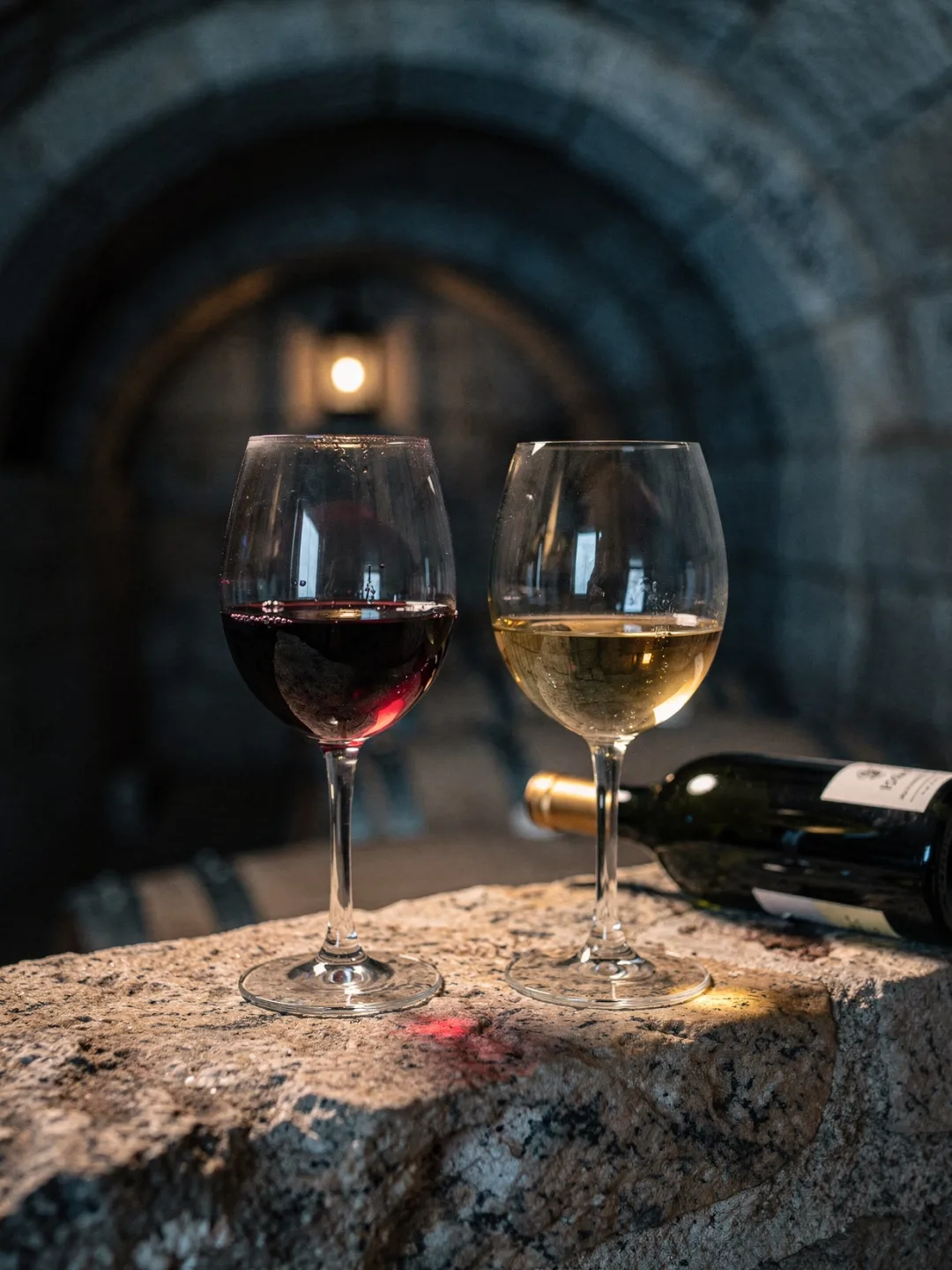
Wide for Encruzado
Glassware
Two very different wines in the Dão call for two very different glasses. A red Dão made from Touriga Nacional is floral and dense at once, with fine rather than coarse tannin. It needs a medium-sized glass that tapers slightly inward, gathering the scent of violets without pushing the alcohol into your nose.
Encruzado, by contrast, is a white with real stature, fuller and denser than most Portuguese whites. A narrow glass would smother it. A wide bowl helps instead. It recalls white Burgundy, with a round belly, and the large surface lets enough wine meet the air so citrus, white blossom, and — with some age — hazelnut can come through.
Temperature is where the most common mistake happens with Encruzado. Served too cold, straight from the fridge at four degrees Celsius, it loses exactly the texture that defines it and ends up tasting like nothing but acidity. Ten to twelve degrees is right: cool enough for freshness, warm enough to let the body show.
With red Dão, the right temperature is sixteen to eighteen degrees Celsius, noticeably below the room temperature of today's homes. Warmer, and the tannin suddenly turns rough, with the fine violet notes vanishing behind alcohol fumes. A quarter hour in the fridge is enough to rescue a wine that's been stored too warm.
A Garrafeira — aged at least two years in wood, plus years in bottle — almost always throws sediment. Decanted into a carafe half an hour before serving, the wine separates from the deposit, and the closed-up aromas finally get time to open. A young, simple Dão doesn't need this detour.