Three Mountains, One Basin
Climate
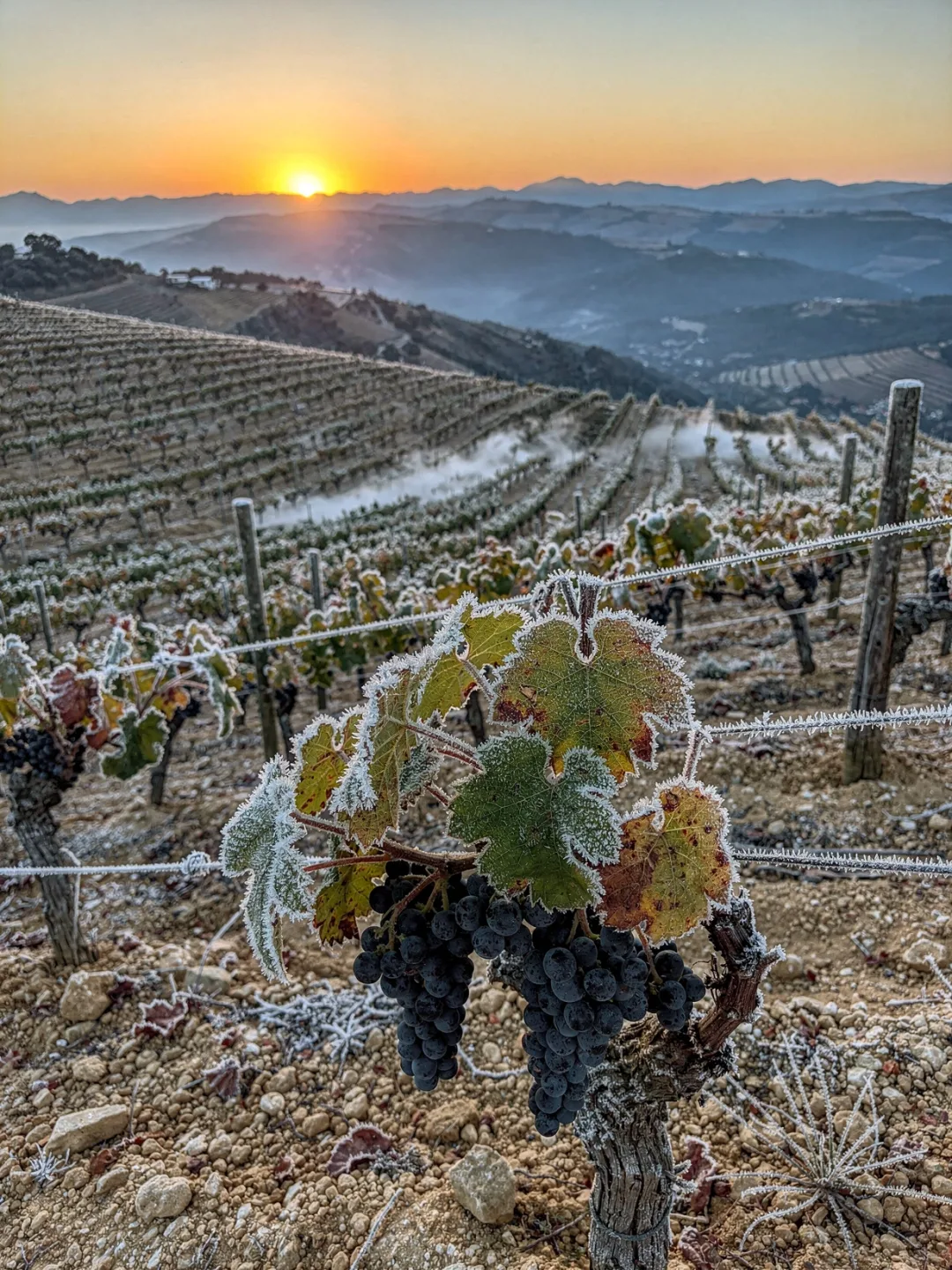
The Dão sits in a granite basin, and three mountain ranges keep the lid on. To the southeast, the Serra da Estrela blocks the dry heat coming from inland; to the west, the Serra do Caramulo shields against rain and wind off the Atlantic. To the north, the Serra da Nave seals things off further. The result is a climate that feels more continental than any coastal region of Portugal.
This position turns rainfall into a distribution problem. In the west, closer to the Caramulo, over fourteen hundred millimeters can fall in a year, while eastern sites in the rain shadow of the mountains sometimes get only eight hundred millimeters. Almost all the rainfall comes in autumn and winter — summers stay dry, hot, and decisive for ripening.
At night, the real advantage of elevation shows itself. Between daytime heat and nighttime cool, summer differences often exceed twenty degrees Celsius. This gap locks in the acidity of the berry while sugar and aromas ripen during the day. Without this swing, the wines would taste flat, however powerful Touriga Nacional otherwise makes them seem.
Elevation matters in two ways here. Most vineyards sit between four hundred and five hundred meters, with individual parcels climbing as high as eight hundred. Planting higher means a later, cooler harvest; staying lower risks overripe grapes with little freshness.
Winter provides the counterpart to the dry summer. Cold and wet, it fills the soils with water that the vines draw on throughout the following summer. Irrigation is barely used in the traditional sites. A winter with too little rain therefore only shows up months later, right in the middle of ripening, when the vines suddenly find no water left.