Tulip Glass for Port
Glassware
The Douro produces two very different wines from the same grapes, and each needs its own glass. A dry Douro red made from Touriga Nacional and Touriga Franca calls for an open bowl like a full-bodied Bordeaux glass — only then can tannin and fruit fully unfold. A Port, by contrast, arrives in the glass more concentrated, sweeter, and considerably more alcoholic — which calls for less space, not more.
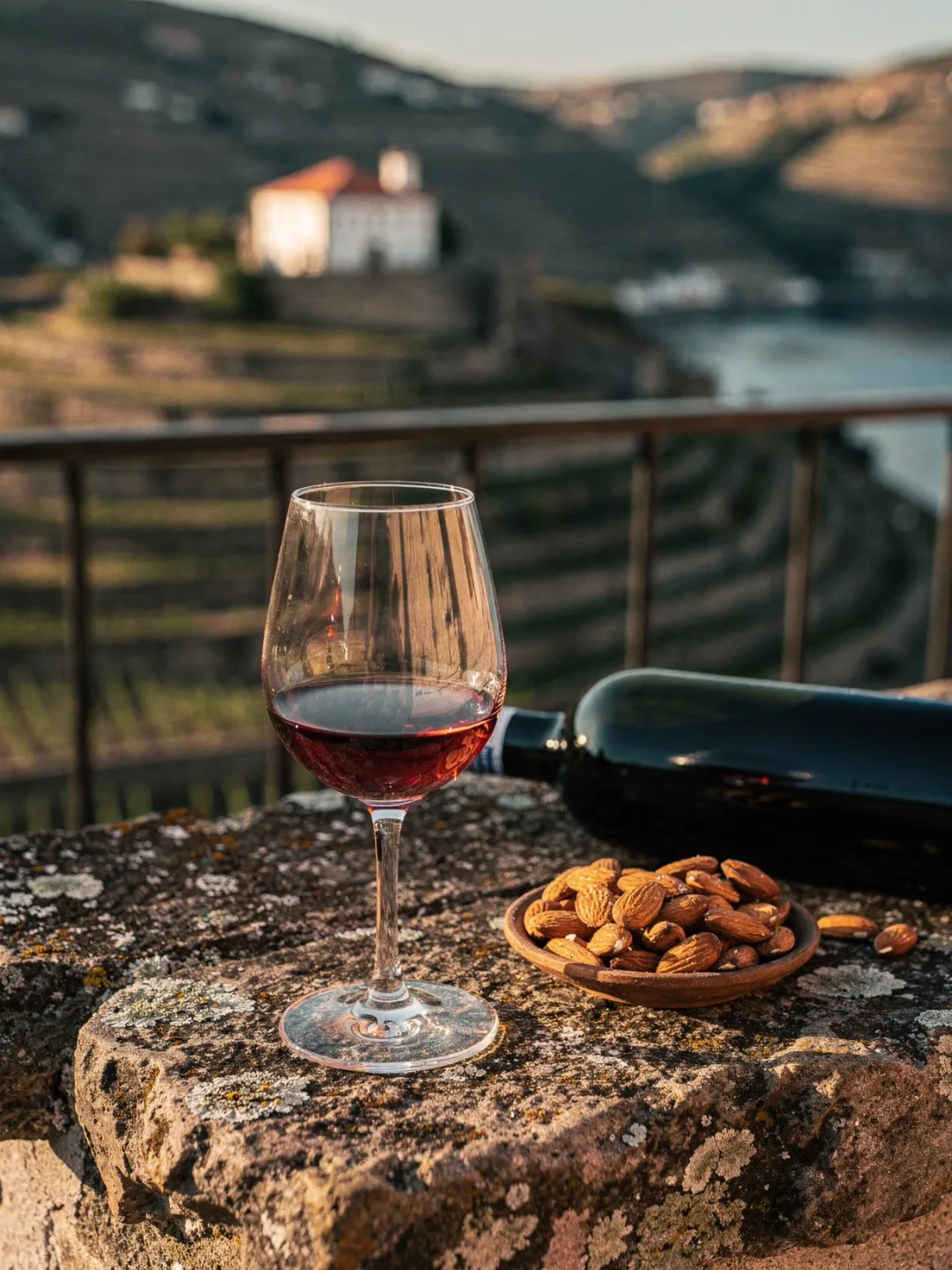
A small, tulip-shaped glass with a narrow rim concentrates exactly the aromas a twenty-year-old Tawny or a young Vintage brings to the table, while also reining in the alcohol, which sits between nineteen and twenty-two percent. Only about seventy milliliters are poured at a time. A bowl-shaped wine glass would spread that same Port wide across the tongue until only the alcohol remains.
Serving temperature varies significantly by style. A Vintage or Ruby tastes best at fifteen to eighteen degrees Celsius, barely cooler than a robust red wine. A mature Tawny, on the other hand, prefers it a touch cooler, twelve to fourteen degrees. Otherwise the alcohol turns brash and the delicate nutty notes disappear. White Port belongs in the fridge, served at six to eight degrees, often topped with tonic water — the way it's drunk on hot afternoons in the Douro Valley itself these days.
A Vintage Port almost always needs a decanter. It ages in the bottle rather than the barrel, throwing off a firm sediment known as crust — drink that along with the wine, and you get bitter grit instead of pure wine. A Tawny, by contrast, has already clarified in the barrel, through years of slow evaporation and racking from cask to cask. It doesn't need a decanter — a swirl in the glass is enough.
If you don't own a dedicated Port glass, a regular smaller white wine glass works well, as long as it's narrow at the rim. What matters most is that the glass and the pour match. A finger's width of Port in a large red wine glass lets the alcohol evaporate faster than the nose can catch the aromas.