Acidity Meets Tannin
Glassware
Three utterly different wines from this region call for three utterly different glasses, and swapping them changes the taste more than most people realize. Ramisco from Colares is pale in color yet brimming with acidity and tannin. Arinto from Bucelas is sharp with citrus freshness. Carcavelos, finally, is sweet, fortified, and powerful, closer to a Sherry than to an ordinary wine. Three glasses, three rules.
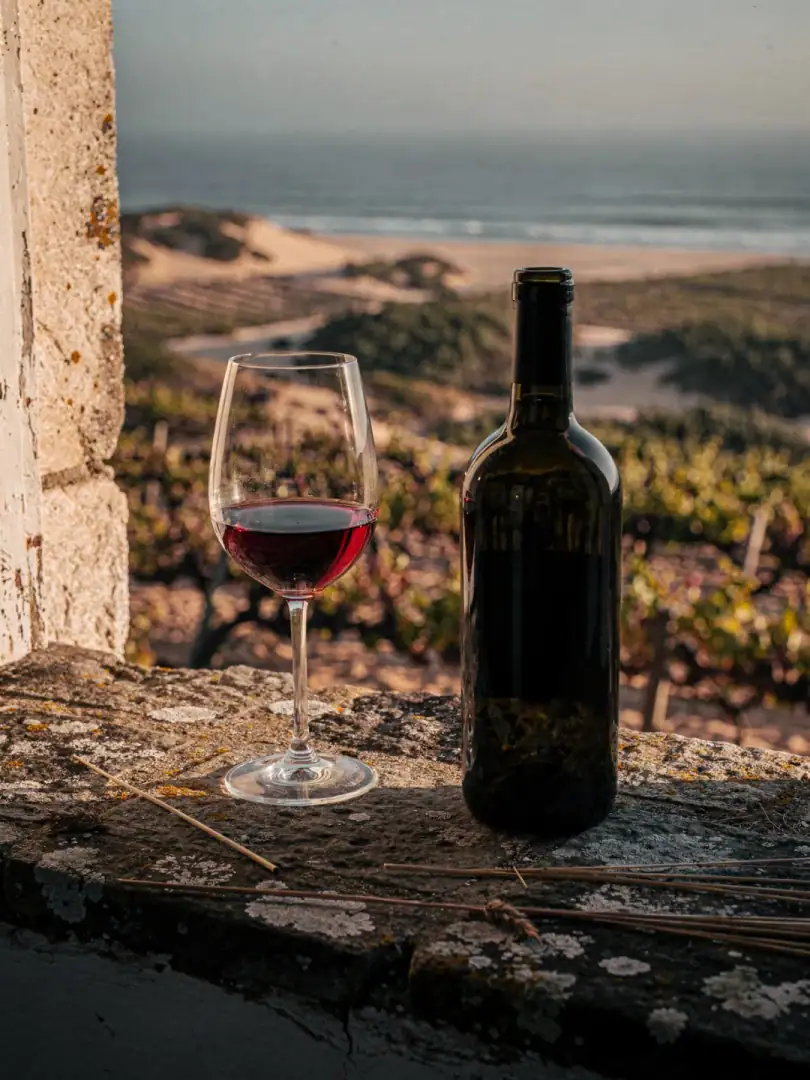
Ramisco needs room, but not width. A tall, moderately rounded glass with a slightly narrowed rim directs the wine toward the middle of the tongue, where acidity and tannin sting the least. A rounded Burgundy glass would spread both across the sensitive edges of the tongue, making an already lean wine feel harsh. It's served cool, around fourteen degrees Celsius, because at only eleven percent alcohol by volume, warmth forgives nothing.
Arinto from Bucelas wants the opposite: a narrow, tall glass with a tight rim that concentrates the citrus aromas before they escape. Cold preserves the freshness. At eight to ten degrees Celsius, notably cooler than most white wines, its acidity comes across as crisp rather than aggressive. Served too warm, it loses exactly the tension that made it worth exporting to England for centuries.
Carcavelos belongs in a small glass, barely larger than a sherry copita, poured to perhaps fifty milliliters. A single sip lasts a long time. At seventeen to twenty-two percent alcohol by volume and plenty of residual sugar, a little goes a long way in filling both nose and palate. At room temperature it comes across as cloyingly sweet; at twelve degrees Celsius it instead reveals almond, caramel, and a long, almost salty finish.
A glance at the three glasses side by side already tells half the region's story: a tall glass for low alcohol and plenty of structure, a narrow glass for acidity, the smallest glass for the greatest power. Reach for the wine without first choosing the right glass, and you'll miss exactly what sets these three wines apart.