Cova & Aguardente
Production
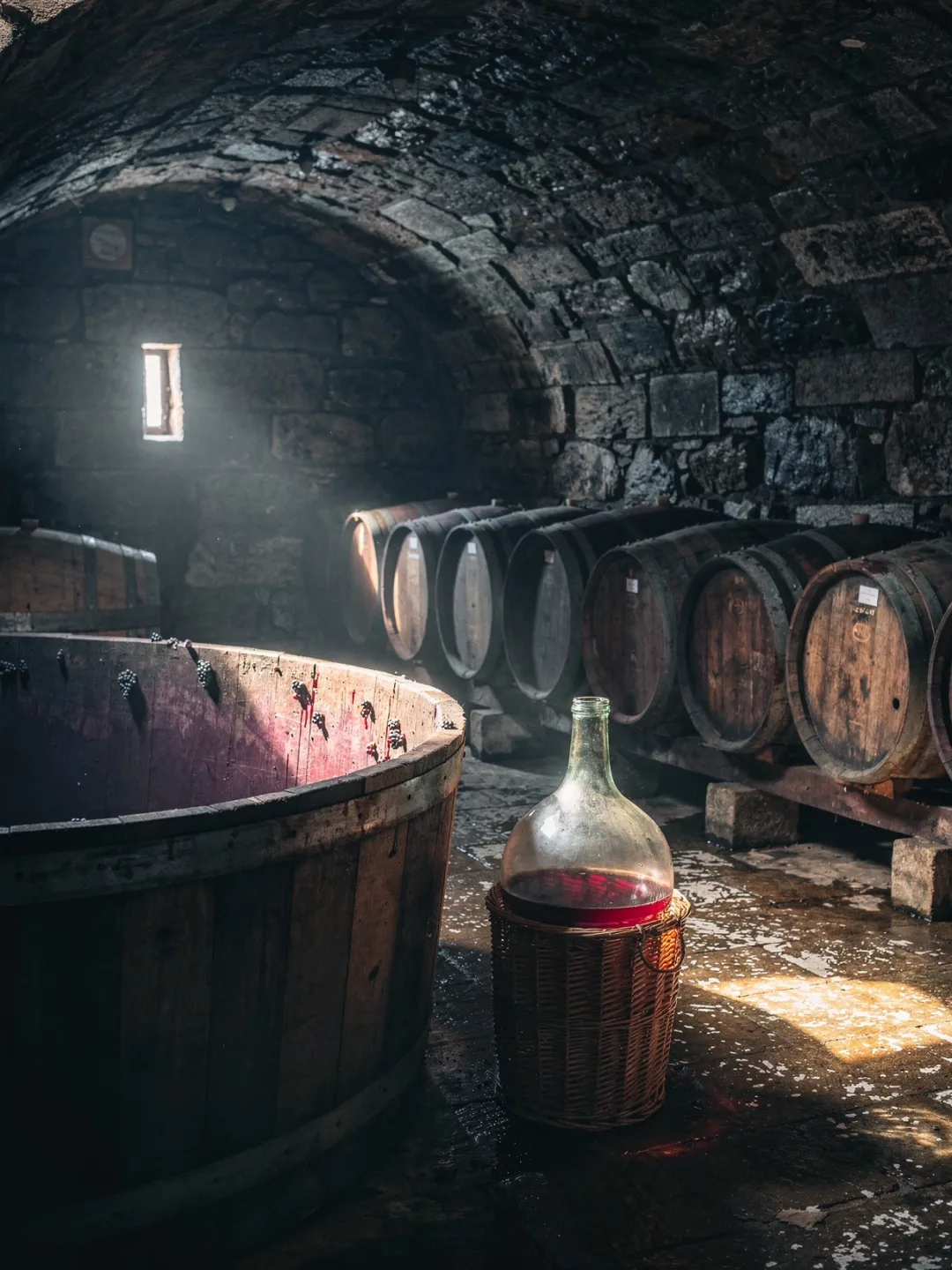
In Colares, the work begins in an open vat. The grapes ferment there with their skins, briefly punched down rather than pressed at length, and it's exactly this short maceration that delivers the abundant tannin that makes Ramisco so distinctive. Skin contact makes the difference. Afterward, the wine moves into old barrels, often made from Brazilian tropical wood, a legacy of the old colonial trade routes.
The law requires a minimum of eighteen months of aging for Colares from dune sand, but only six months for Colares from the harder Chão rijo. Patience is part of the process. Traditionally, the sand wines were bottled, while wines from the firmer soil went into large glass demijohns, known as garrafões, where they continued aging in the cellar for years. Serious producers today still wait six to ten years before selling a Ramisco at all.
Carcavelos takes a completely different path. Fermentation is stopped early by adding brandy, the same technique used to make Port. None of this is accidental. The alcohol kills the yeast before it can break down all the sugar, leaving behind a sweet, powerful wine at seventeen to twenty-two percent alcohol by volume. The brandy used for this doesn't come from just anywhere: it comes from the Aguardente DOC Lourinhã, the only region in Portugal officially demarcated for brandy.
Afterward, Carcavelos ages for years in Portuguese and French oak, often a full decade, until color and aroma shift from pale gold to dark amber and notes of almond, caramel, and dried fruit emerge. Time remains the most important ingredient. The law requires a minimum of two years in wood and six months in bottle, though in practice it almost always takes longer.
Bucelas takes the opposite path. No wood, no long wait: Arinto usually ferments in stainless steel, cool and fast, to preserve its citrus freshness. Between a Bucelas that's bottled within months and a Carcavelos that spends a decade in barrel lies the entire range of this coastline.