Small but Strong
Glassware
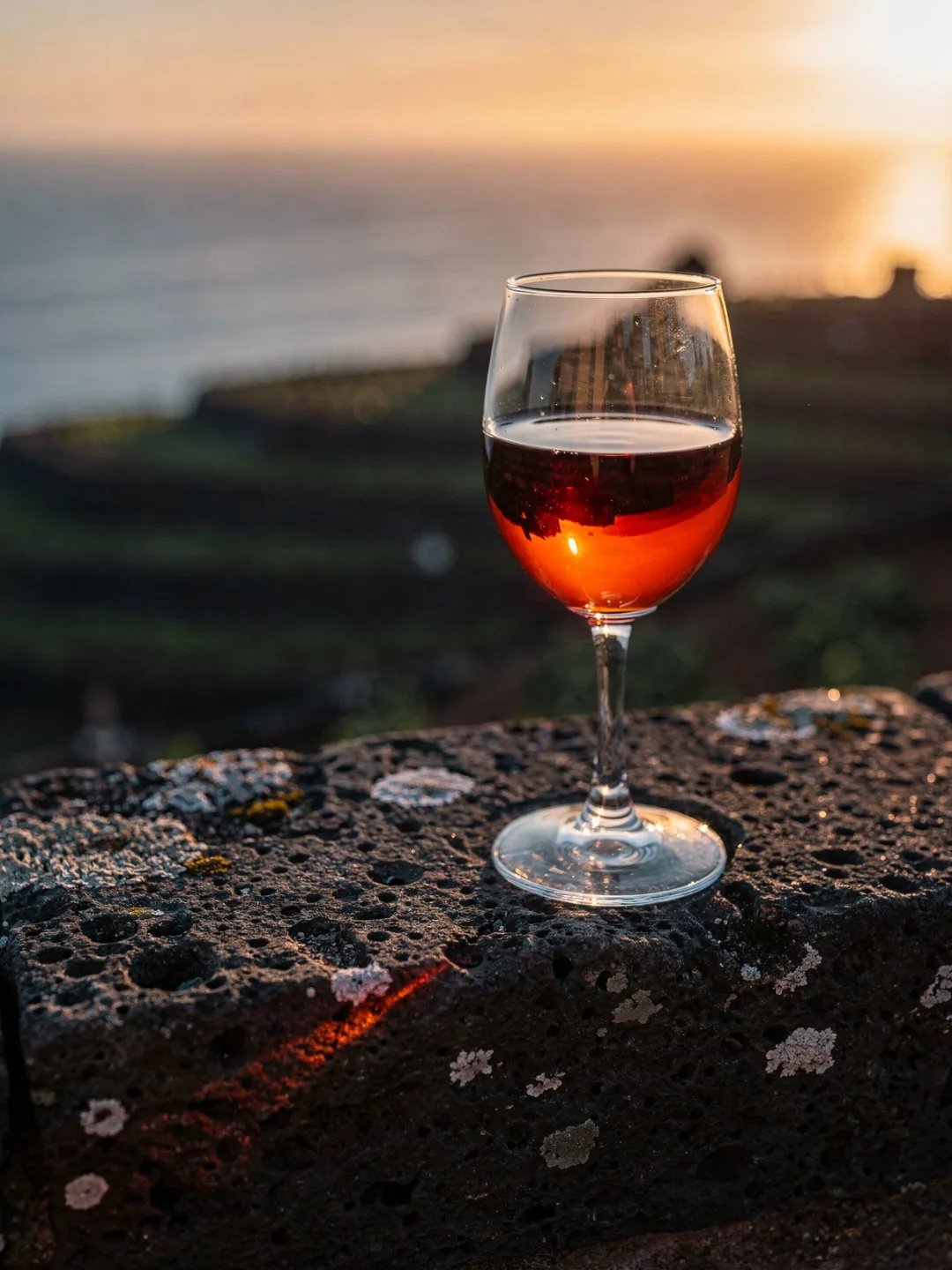
A Madeira doesn't need a large glass. At seventeen to twenty-two percent alcohol, and after years of deliberate oxidation, the wine is extremely concentrated. A standard red wine glass would overwhelm it. A small, tulip-shaped glass, barely bigger than a sherry glass, is all you need: it focuses the aroma without flooding the nose with alcohol vapor.
Serving temperature follows sweetness. Sercial and Verdelho, the drier styles, taste best lightly chilled, between twelve and fourteen degrees Celsius. That's colder than red wine and warmer than white wine straight from the fridge. Boal and Malvasia should stay a bit warmer, around fifteen to eighteen degrees, so the caramel and dried-fruit aromas can open up. Serve a sweet Malvasia ice-cold, and all you'll taste in the end is alcohol and sugar.
Pours are small: five to six centiliters is enough, less than a third of a standard wine glass. That's not stinginess—it's intensity. A Sercial with its knife-sharp acidity, or a Malvasia dense with roasted aromas, quickly becomes tiring in large gulps. In small sips, though, it stays interesting for a full hour.
And then there's a quality that makes any glass you might buy specifically for storage seem pointless: an open Madeira barely spoils. Because the heat of Estufagem and the later barrel aging have already oxidized the wine about as far as it can go, a little extra oxygen no longer does it any harm. That's as true in the glass as it is in an already-opened bottle. Weeks, sometimes months later, it still tastes almost like the first day.