Heat & Barrel Aging
Production
Red wine gets its color from the skin; Madeira becomes what it is through heat. After fermentation, or partway through it, depending on the desired sweetness, the cellar masters add grape spirit. It's ninety-six percent alcohol and virtually neutral in flavor. This halts the yeasts immediately, and whatever residual sugar remains in the wine at that point stays there forever. The earlier the stop, the sweeter the resulting wine.
For the simple, young wines, Estufagem follows next. The wine goes into stainless steel tanks and is held at forty-five to fifty degrees Celsius for at least ninety days, monitored by the IVBAM authority. Afterward, it rests again for the same length of time at room temperature. In just over three months, the wine goes through an artificial aging process that would once have taken a full year at sea on a sailing ship.
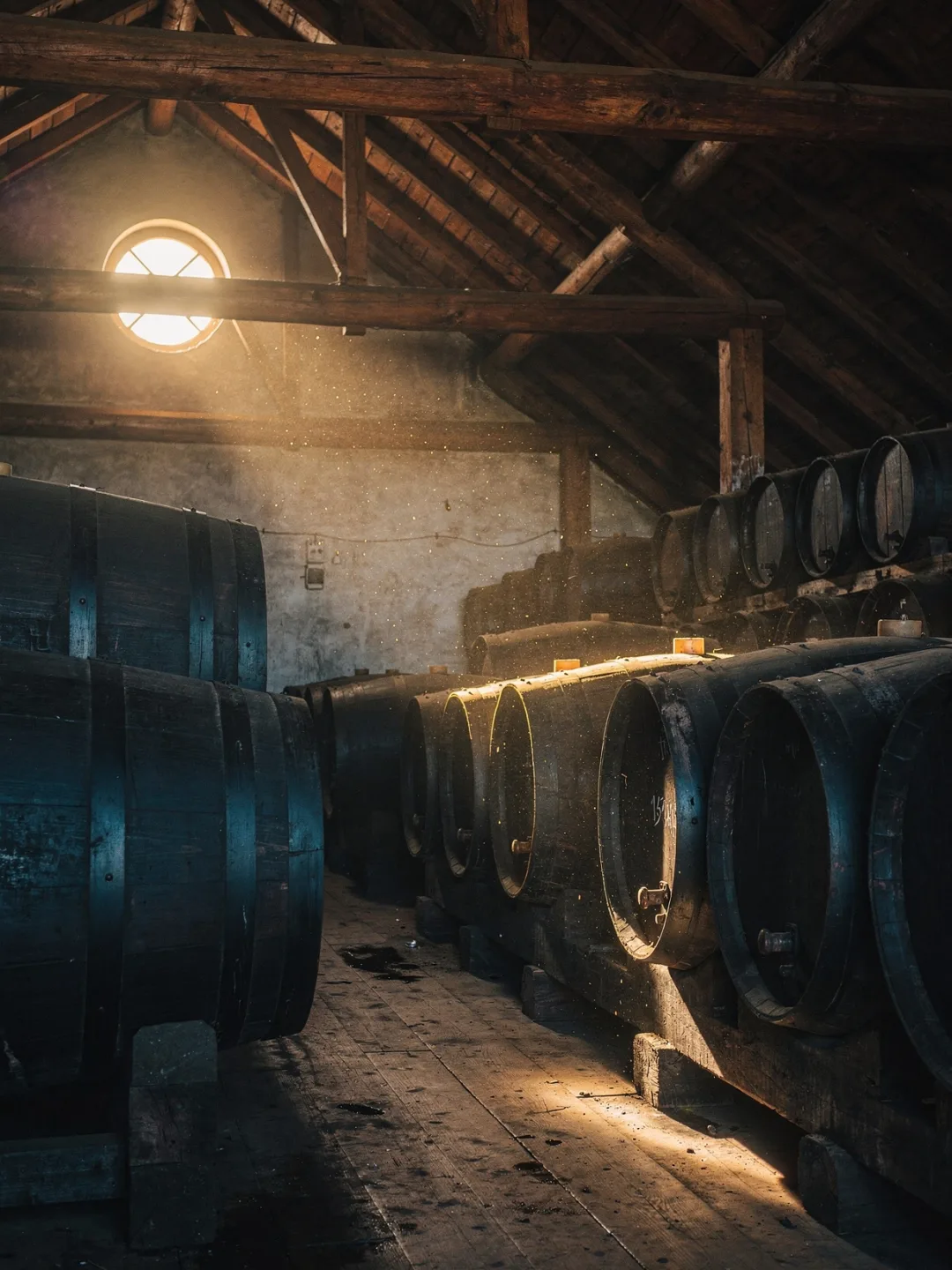
Better wines instead age through the Canteiro method: with no heating tank at all, simply in wooden barrels, stacked under the roofs of the old wine lodges in Funchal, where summer heat alone provides the necessary warmth. It takes longer, but the result tastes fresher and fruitier in the end. A wine that must spend at least five years in barrel to be called Reserva almost always matures this gentler way.
The categories follow age. Three years for the basic tier, usually from Tinta Negra. Five years for Reserva, often already made from one of the four noble varieties. Ten years or more for Special Reserve. A Colheita comes from a single harvest year and ages at least five years in wood before it may be bottled. A Frasqueira, the vintage Madeira, requires twenty years in the same barrel, with no blending across vintages.