Dry to Sweet
Tasting
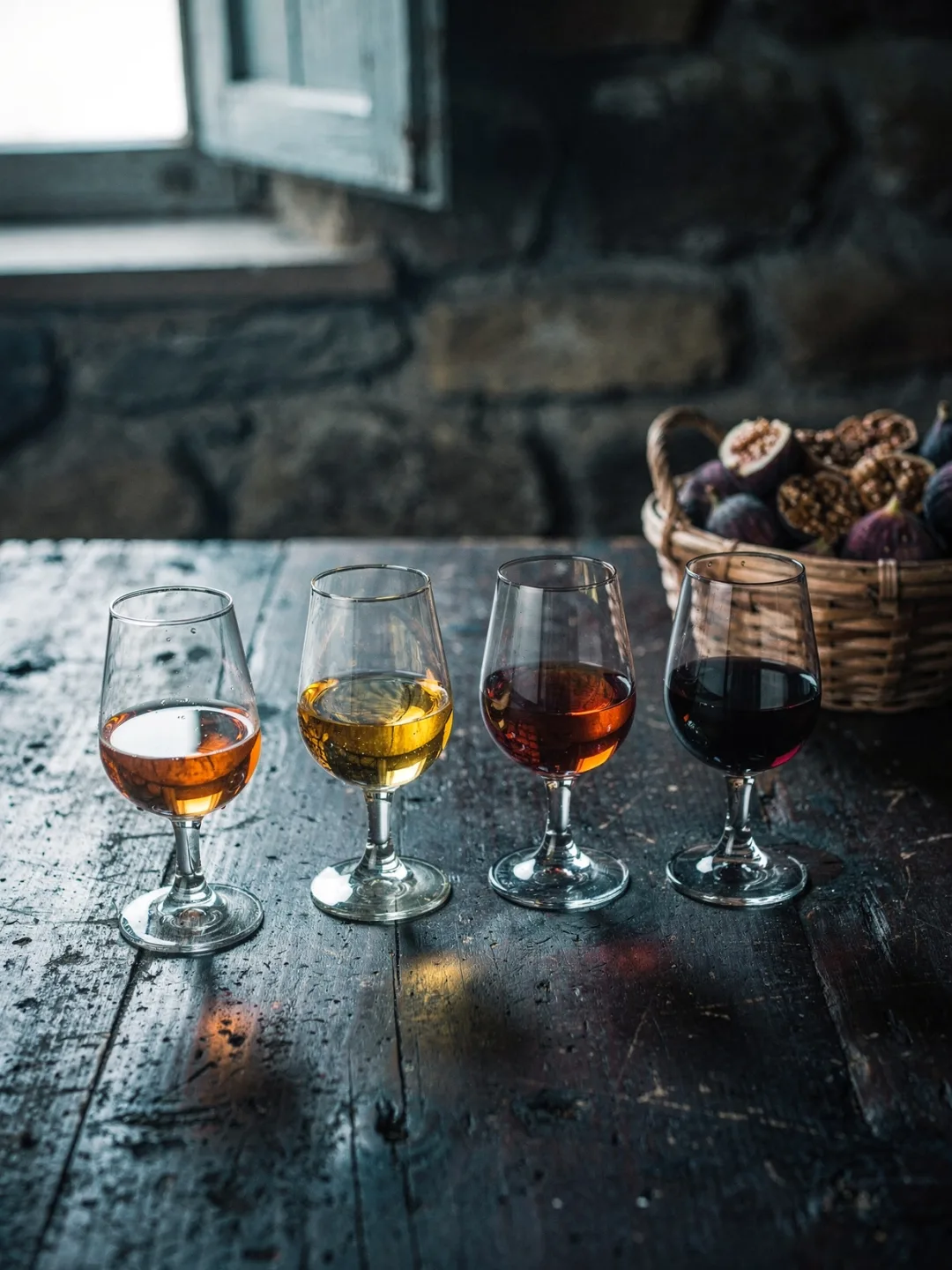
Madeira is best tasted as a lineup of four glasses: first Sercial, then Verdelho, then Boal, and finally Malvasia. In just a few minutes, you move through the island's full range, from knife-sharp dry to thick, syrupy sweet. Along the way, you notice just how much a single grape variety can shift the level of sweetness.
Even the color reveals the order: a young Sercial glows pale amber, almost like strong tea. An old Malvasia, by contrast, pours deep mahogany-brown into the glass, almost black at the rim. Between the two lies every conceivable shade of gold and copper, and here, color depends more on barrel age than in almost any other wine in the world.
On the nose, the same basic framework appears almost every time: toasted walnut, caramel, dried fig, plus a trace of orange peel that still shines through even in the sweetest Malvasia. This comes from Estufagem and long barrel aging—not from the grape alone. A wine that has deliberately spent years exposed to heat and oxygen simply smells like nothing else.
What holds a good Madeira together is its acidity. Normally, heat ruins a wine, because it breaks down exactly this acidity. With Madeira, oddly enough, the opposite happens. Grapes from high, cool slopes naturally bring so much acidity that even decades in a warm barrel can't fully dissolve it. This acidity keeps the sugar in a Malvasia in balance, rather than letting it feel cloying. It's also responsible for a finish that, in old Frasqueiras, can easily last a full minute.