Mountain versus Plain
Climate
Two climate zones, barely ten kilometers apart. Down below, between the Tejo and the Sado, it's clearly Mediterranean: hot, dry summers and mild, rainy winters. Rainfall averages 550 to 750 millimeters a year, with almost none falling between June and August. Up above, everything is different.
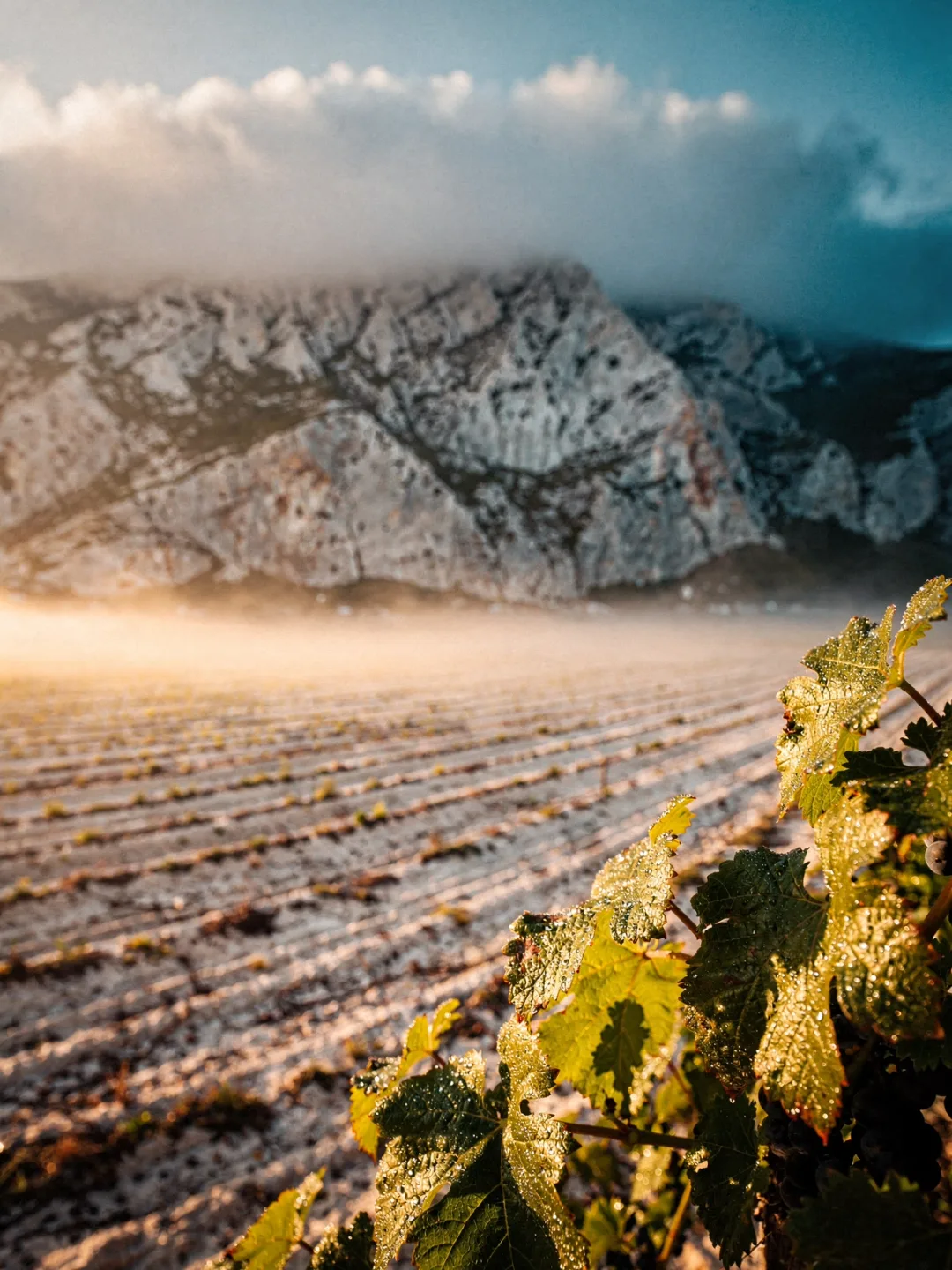
The Serra da Arrábida rises above five hundred meters. The plains around Palmela, by contrast, stay between thirty and a hundred meters above sea level. That difference in elevation alone is enough to give Atlantic winds something to catch on and cool against. Up in the hills, the wind blows harsher.
The region gets over two thousand two hundred hours of sunshine a year, with more than three hundred in the summer months alone. For Moscatel Graúdo, that's almost too much: its delicate aromatic compounds evaporate in blazing heat faster than the vine can replace them, which is why the best parcels lie where the Arrábida offers a bit of shade and cool.
Castelão needs none of that. It ripens late and shrugs off drought with ease. It's precisely in the shimmering heat of the Palmela plain that it develops more sugar and riper tannins than anywhere else on the peninsula, while the same sun would already be too much for Moscatel up on the mountain. Humidity helps both.
Average annual humidity sits at 75 to 80 percent, noticeably higher than in the drier interior, because the Tejo, the Sado, and the Atlantic all push moisture in from three sides. Add to that a steady wind from the north, northwest, or west, which dries the grapes quickly after rain and keeps fungal disease at bay — a particular advantage for the thin-skinned Moscatel Graúdo.