Glass by Soil
Glassware
A glass determines above all how much wine comes into contact with air and where the aroma rises, and with the Tejo, given its three very different soils, that matters a great deal.
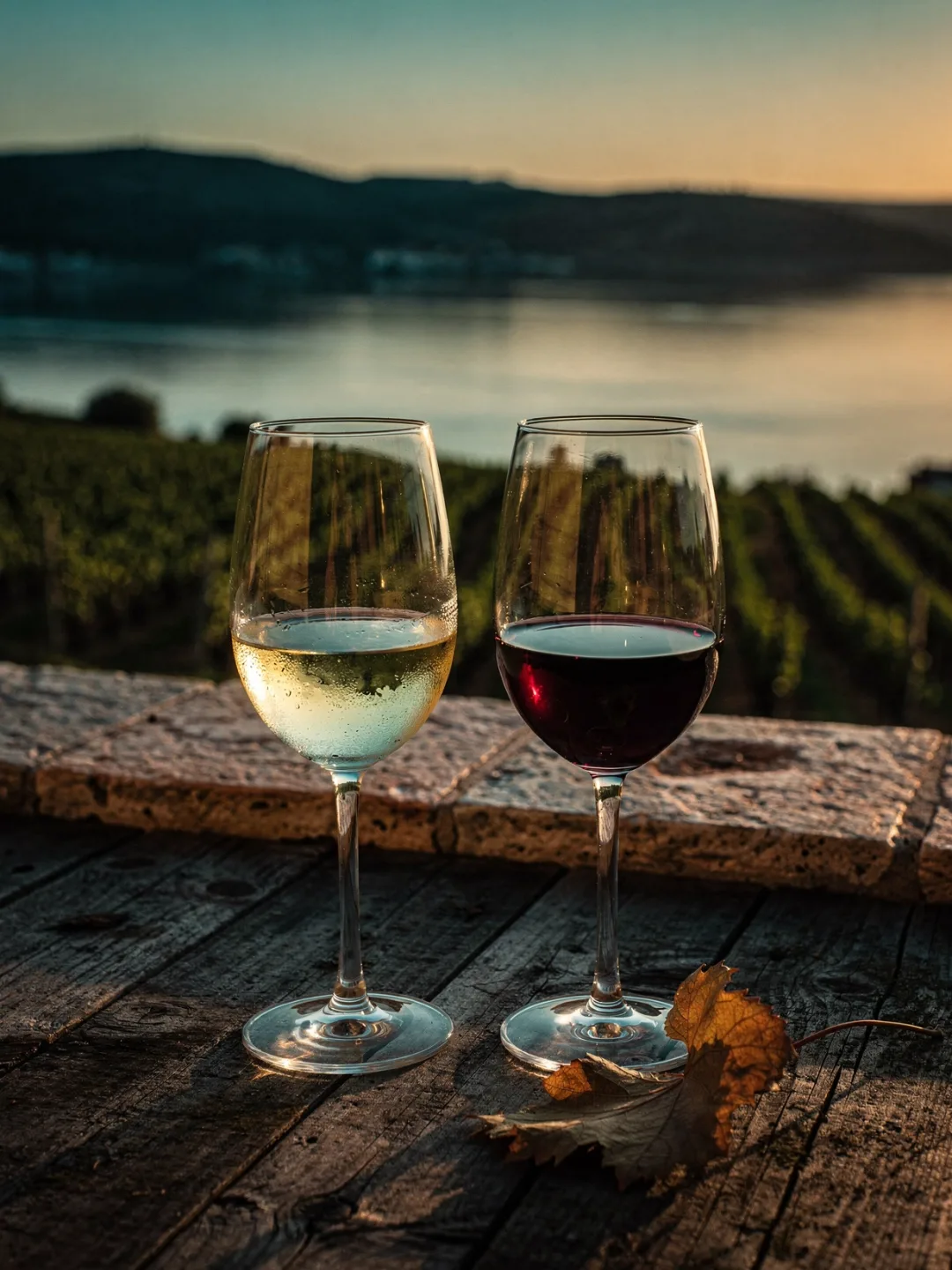
For a Fernão Pires from the Campo, a slender white wine glass that tapers slightly toward the top works well. The variety has an intense aroma of ripe pear and exotic fruit, almost floral, and a glass that's too wide would let exactly these aromas escape before the nose can catch them. A narrower rim holds the scent together and directs it concentrated toward the nose, keeping the variety's rather restrained acidity in balance.
A Castelão from the Charneca in the south behaves quite differently. It brings firm tannin and often higher alcohol, since the heat there packs more sugar into the berries. A rounder glass with a wide opening gives this wine room to unfold. It softens the impression of alcohol and tannin, which would feel much harsher in a narrow glass.
A Castelão from the fruitier Campo, on the other hand, needs less space. It's lighter, more fruit-forward and drinks well young, so a medium-sized glass is entirely sufficient, without unnecessarily inflating the wine. Serving both wines side by side in the same large Bordeaux glass would instantly put the more delicate one at a disadvantage.
When it comes to temperature, a simple rule of thumb applies in the Tejo: the more sun packed into the wine, the cooler it should be served. A Fernão Pires from the Campo tastes best at eight to ten degrees Celsius, fresh and floral. A concentrated Charneca Castelão, on the other hand, can handle sixteen to eighteen degrees, since anything colder would cause tannin and fruit to fall apart instead of working together.