Grasă & Co.
Grape Varieties
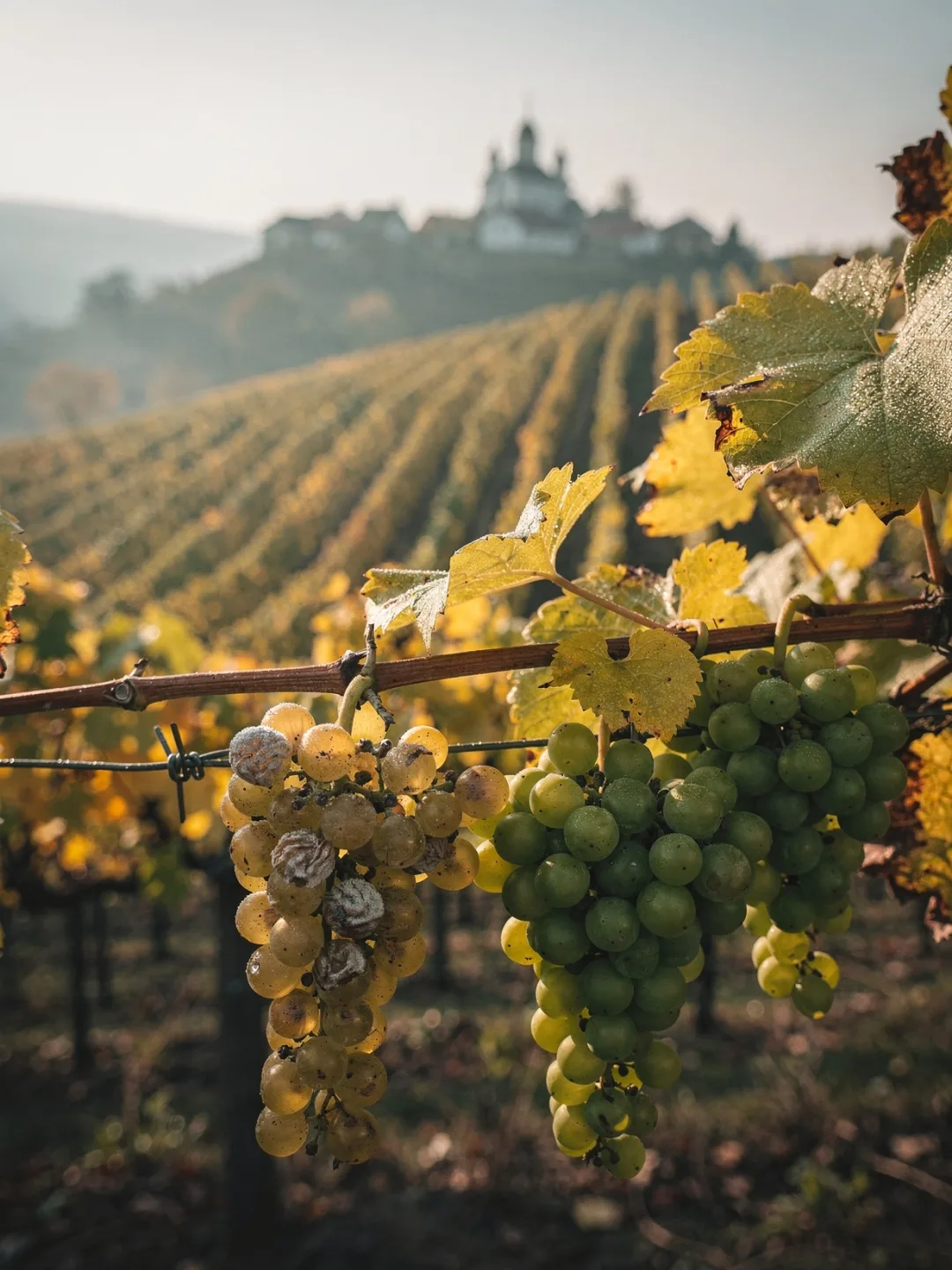
Four varieties define Cotnari. Grasă de Cotnari translates as “the fat one of Cotnari,” named for its plump berry with thin skin. That very thin skin makes it vulnerable to Botrytis cinerea, the fungus that, as noble rot, shrivels the berries and sharply raises their sugar content.
Fetească Albă provides the counterpart. It ripens earlier than Grasă, buds reliably, and on its own makes a rather plain wine with notes of apple and hay. In the blend, though, it keeps the acidity high, because without it the sweet wine would taste flabby, almost like syrup.
Frâncușă grows higher and cooler. The name sounds French, but the variety is now considered native and already stood in these very hills in the time of Petru II. Its fresh, slightly green acidity balances the sweet blend when the other three varieties bring too much richness.
Tămâioasă Românească carries fragrance in its name. Tămâie means incense in Romanian, and the variety belongs to the large Muscat family, closely related to Muscatel. It brings floral and citrus aromas to the blend that none of the other three varieties provide. It has been grown here for over two thousand years, with roots reaching back to ancient Greece.
Two more varieties round out the DOC zone. Busuioacă de Bohotin, named after a village in Iași County, produces a spicy rosé with the same Muscat fragrance as Tămâioasă. Fetească Neagră provides the region's rare red wine, and both remain in the shadow of the four great whites that carry Cotnari's sweet heritage.