Grape Must, Barrel, Gravity
Winemaking
Like any red wine, Blauburgunder ferments on the skins, so that color and tannin — the rough sensation you feel on your gums after a sip — actually make it into the wine. In German-speaking Switzerland, this rarely takes longer than two or three weeks, since the grapes naturally provide enough structure already. Wait too long, and you risk trouble: a wine that's too harsh to drink in its youth.
What happens afterward is regulated differently here than almost anywhere else in Europe. Since 2019, an AOC wine is technically no longer allowed to be sweetened with grape must. Technically — because the federal law only applies "unless the canton decides otherwise." Nine cantons in German-speaking Switzerland, including Schaffhausen, Graubünden, and Thurgau, have done exactly that. They still permit the addition, as long as it amounts to no more than four percent alcohol by volume and is recorded in the cellar book. In French-speaking Switzerland, the same practice has long been frowned upon.
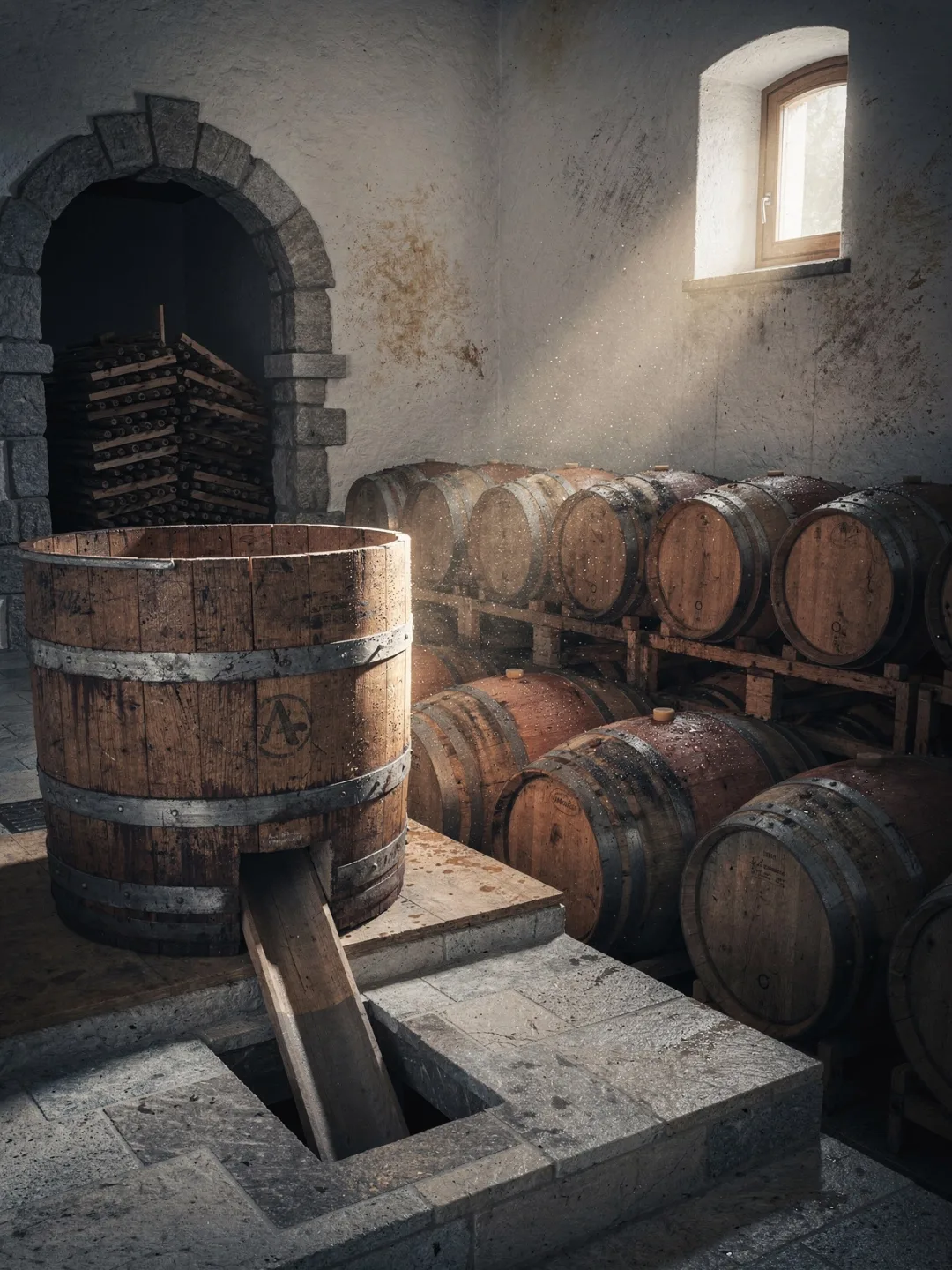
Just how little of that addition is actually needed can be seen in the Bündner Herrschaft. This has been evident since the 1980s. Daniel Gantenbein built his winery in Fläsch in 1982 so that the grapes never pass through a pump, since gravity alone moves must and wine from level to level, more gently than any machine could. The approach was unusual enough at the time to draw international attention, and it turned a peripheral region into a fixed name on wine lists around the world.
Opinions on barrels diverge here just as they do everywhere Pinot Noir grows. Traditionally, Blauburgunder ages in large, old wooden casks that impart almost no flavor but let the wine breathe slowly. Small new French oak barrels, known as barriques, have become common since the 1990s. They add noticeable vanilla and toasted notes — a matter of taste that varies from estate to estate.
Completer follows an entirely different path. The grapes hang on the vine well into November, often the last to be picked in the whole Bündner Herrschaft. The wine then ages for several years in already-used wooden barrels, which impart almost no new flavor but let in enough air to slowly transform it. This is how its nutty, honeyed character develops, prized by the few remaining producers. Chief among them are a handful of estates around Malans, where the variety was first documented over seven hundred years ago.