Föhn Wind, Not Latitude
Climate
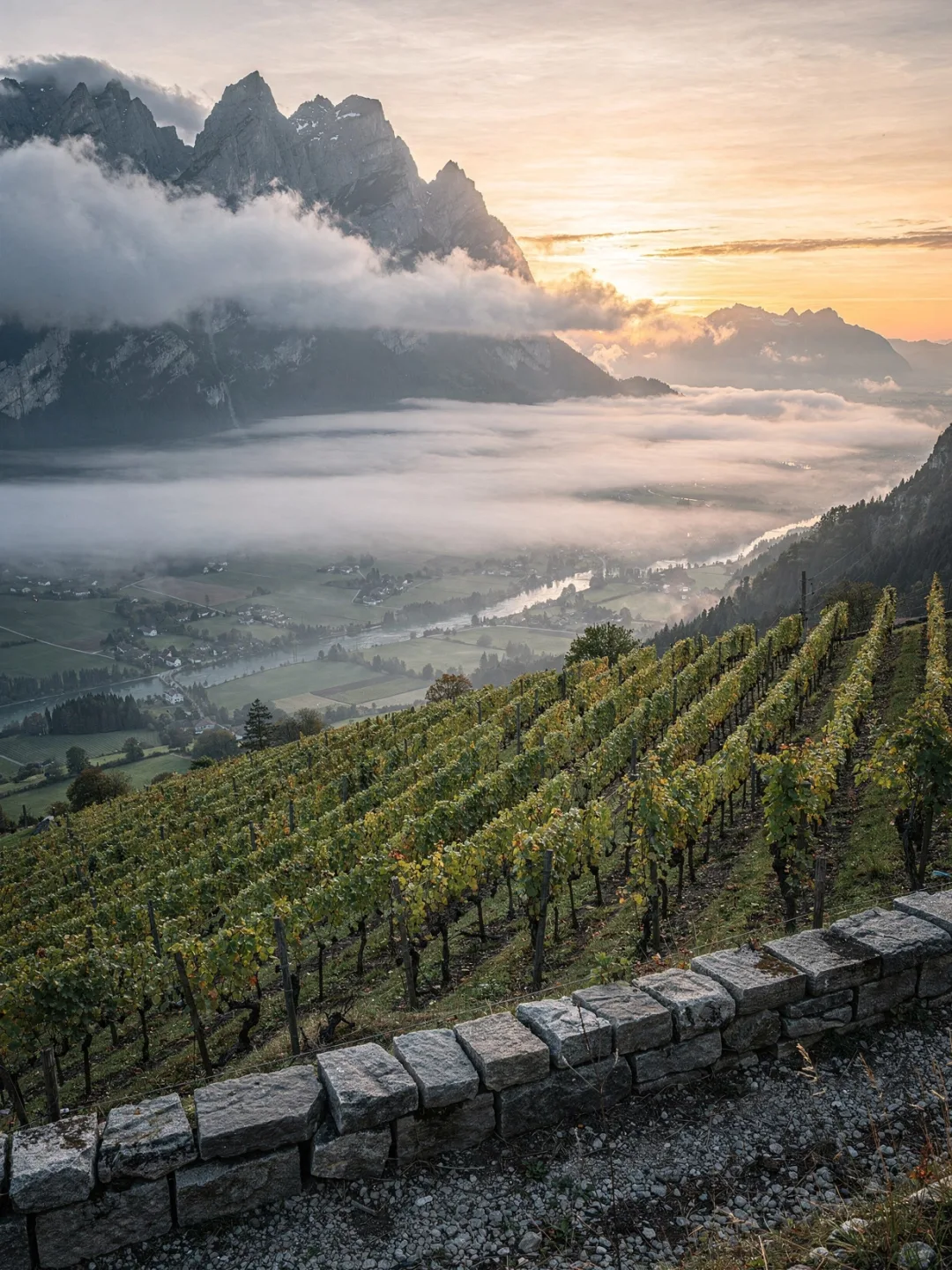
On a map, German-speaking Switzerland sits at the same latitude as southern Germany, well north of any recognized red-wine region in Italy or Spain. That serious Blauburgunder still ripens here at all is something the Bündner Herrschaft owes chiefly to a single wind.
In autumn, it descends from the Rätikon massif almost daily, sweeping into the Rhine Valley between Fläsch, Jenins, and Malans. In local dialect, it's simply called the Traubenkocher — the "grape cooker." It's warm and bone-dry. It drives moisture out of the grapes before rot even has a chance to take hold, and heats the limestone soil so intensely that it releases warmth well into the night. That's why the Bündner Herrschaft is considered the warmest wine region in all of German-speaking Switzerland, even though its vineyards sit at around five hundred meters.
Around Lake Zurich and Lake Constance, water takes on this role instead. Both lakes store summer heat. In autumn, they release it slowly, extending the growing season by weeks and making early frosts less likely. In Thurgau, Lake Constance lies right on the doorstep. The vineyards around Ottenberg benefit directly from this, while just a few kilometers inland, nights are noticeably cooler.
In the Klettgau near Schaffhausen, there's neither lake nor Föhn wind, and yet Blauburgunder still ripens on sixty percent of the vineyard area. The answer lies in the open plateau itself. It catches sunlight all day long, without the mountain shadows that darken valleys elsewhere in German-speaking Switzerland. What the region lacks in raw heat, the landscape makes up for through sheer hours of sunshine.
Climate change is now being felt across the entire country. In 2026, harvest began roughly three weeks earlier than usual. Even in the Bündner Herrschaft, many estates now pick before the Föhn wind reaches its strongest phase in October. In the past, such a wine turned out tough and sour, because the grapes never fully ripened in the cool autumn sun. Today, for the first time in its history, the same wine is no longer a compromise — it's a deliberate choice.