Blauburgunder & Co.
Grape Varieties
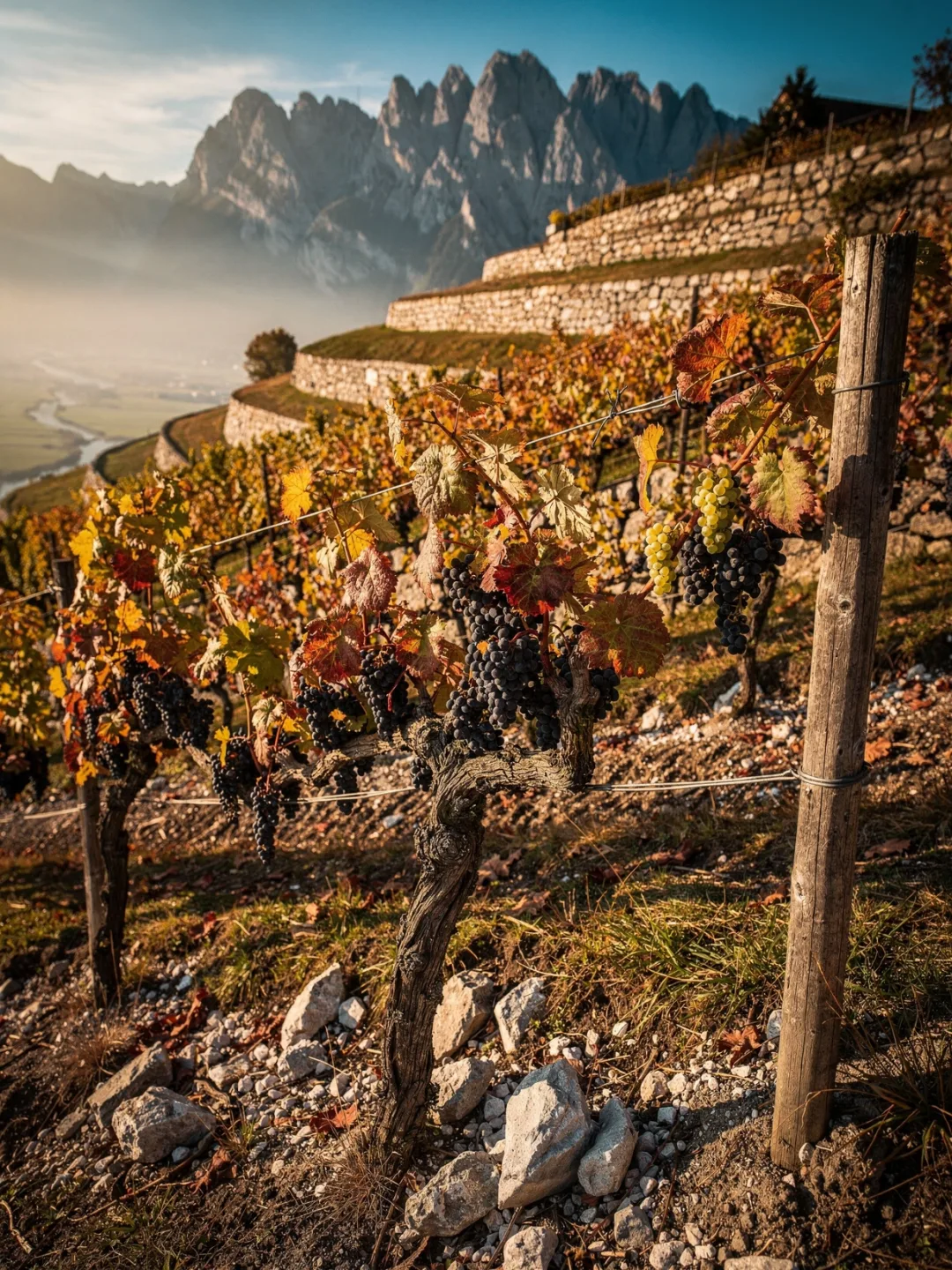
One color defines German-speaking Switzerland, and that surprises many who picture a cool north producing pale wine. Blauburgunder, as Pinot Noir is called here everywhere, covers a good two-thirds of the entire vineyard area. It's the default variety from Basel to Malans. Sometimes it's light and fruity, sometimes serious and built to age, depending on the slope.
For a long time, a completely different variety held the top spot among white wines: Müller-Thurgau. In 1882, Hermann Müller, from Thurgau, crossed it in Geisenheim. For almost a hundred and twenty years, it was believed to be a cross of Riesling and Silvaner. Only a genetic analysis in 2000 revealed that the second parent was actually the nearly forgotten variety Madeleine Royale. The wrong name stuck anyway, as so often happens in agriculture.
Alongside it, around Lake Zurich, a much older and far more stubborn variety survived: Räuschling. It's thin-skinned and temperamental in yield. It tastes of citrus and wet stone, with an acidity that forces the winegrower to keep a constant eye on it. Around 1960 it nearly disappeared entirely. Today just twenty hectares remain in all of Switzerland, almost all of them around Lake Zurich, saved by a handful of estates who refused to give up in the 1980s.
A third, even rarer variety first appears in a document from Malans in 1321: Completer, the oldest native grape of Graubünden. Monks from Pfäfers Abbey likely brought the vines with them, since genetically Completer is related to the Italian variety Marzemino. The name comes from Compline, the final evening prayer, after which the canons of Chur were permitted a glass — in silence, of course. Only around five hectares remain in all of Switzerland today, mostly in the Bündner Herrschaft, producing a wine strong in alcohol, with pronounced acidity and aromas of ripe apple, quince, and honey.