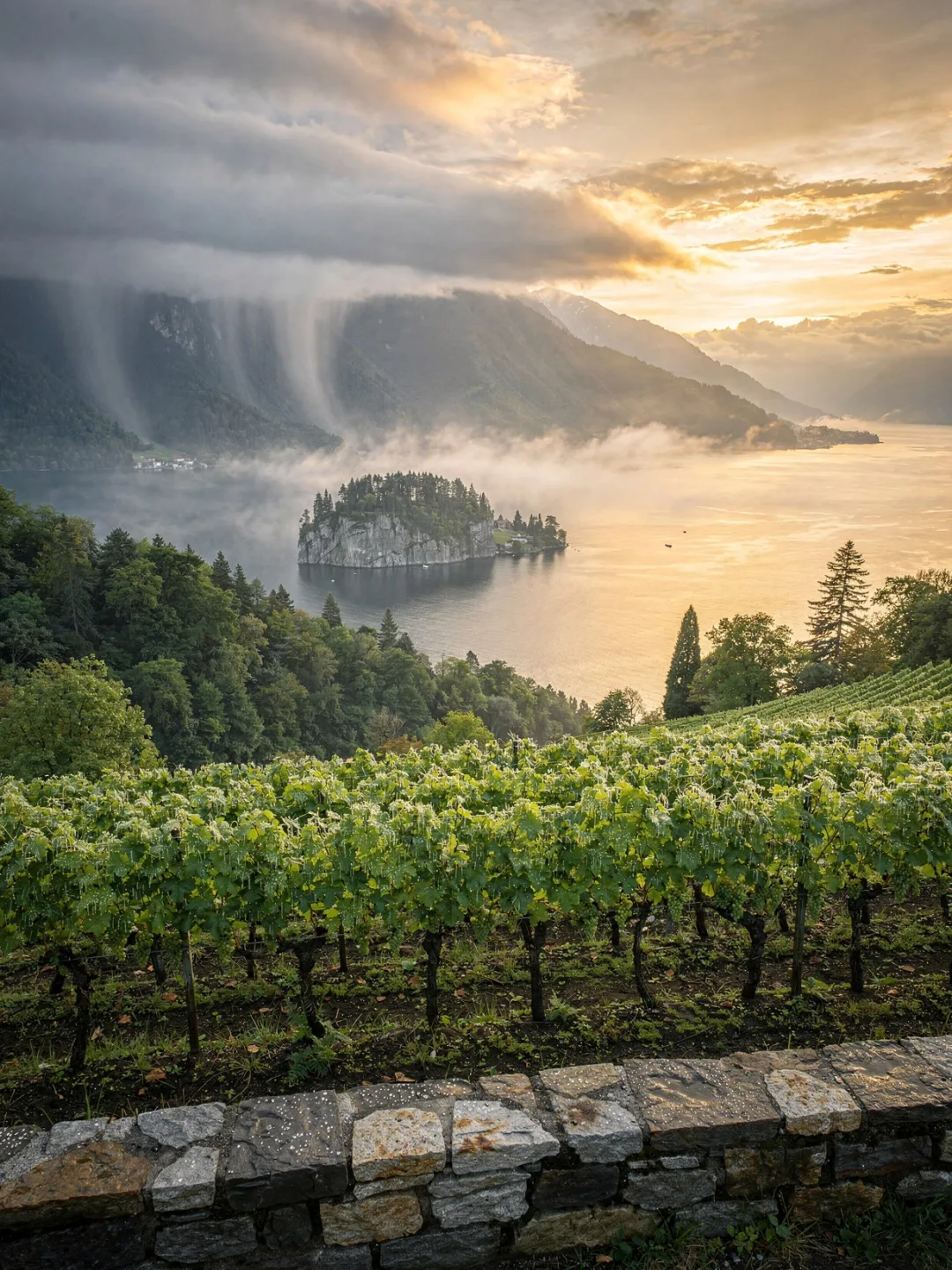
Föhn, Sun, Rain
Climate
On average, the sun shines in Ticino around 2,200 hours a year, more than in any other canton north of the Alps, earning it the nickname the Sunny Parlor of Switzerland. At the same time, nowhere in Switzerland does it rain as much as here, between 1,500 and 2,200 millimeters a year depending on the valley, and being both sunny and rainy at once is rare, making Ticino's climate a case all its own. That shapes every vintage.
Warm, moist Mediterranean air hits the mountains at the southern edge of the Alps and dumps its rain, often hard and brief rather than long and steady. Climatologists call this an insubric climate, the humid, warm transitional climate of the southern Alpine flank. The large lakes soften the extremes. Lago Maggiore and Lago di Lugano store summer warmth and release it slowly in autumn, which keeps frost rare along their shores, and that's exactly why the warmest vineyards lie right there, on the slopes around Ascona, Locarno and Lugano.
But the humidity comes at a price. Fungal diseases like downy mildew love warm, wet leaves. Ticino winemakers must therefore work their vineyards more often than their colleagues in the dry Valais. Rows are spaced further apart here than elsewhere, so wind and sun can dry the leaves quickly. Many vines are also trained on wire trellises rather than grown as dense bush vines, so the grapes get enough air.
Two climate zones divide the canton. Between Sopraceneri and Sottoceneri lies a noticeable difference, even though barely forty kilometers separate the two areas. North of Monte Ceneri, in the valleys around Bellinzona, the Leventina and the Vallemaggia, it stays cooler and the grapes ripen later. South of it, around Lugano and in the Mendrisiotto, the Föhn, a warm downslope wind off the Alpine ridges, warms the slopes further. Harvest there often starts a week earlier. The south is where the more powerful Riserva wines grow; the north yields the fresher, lighter Merlots.