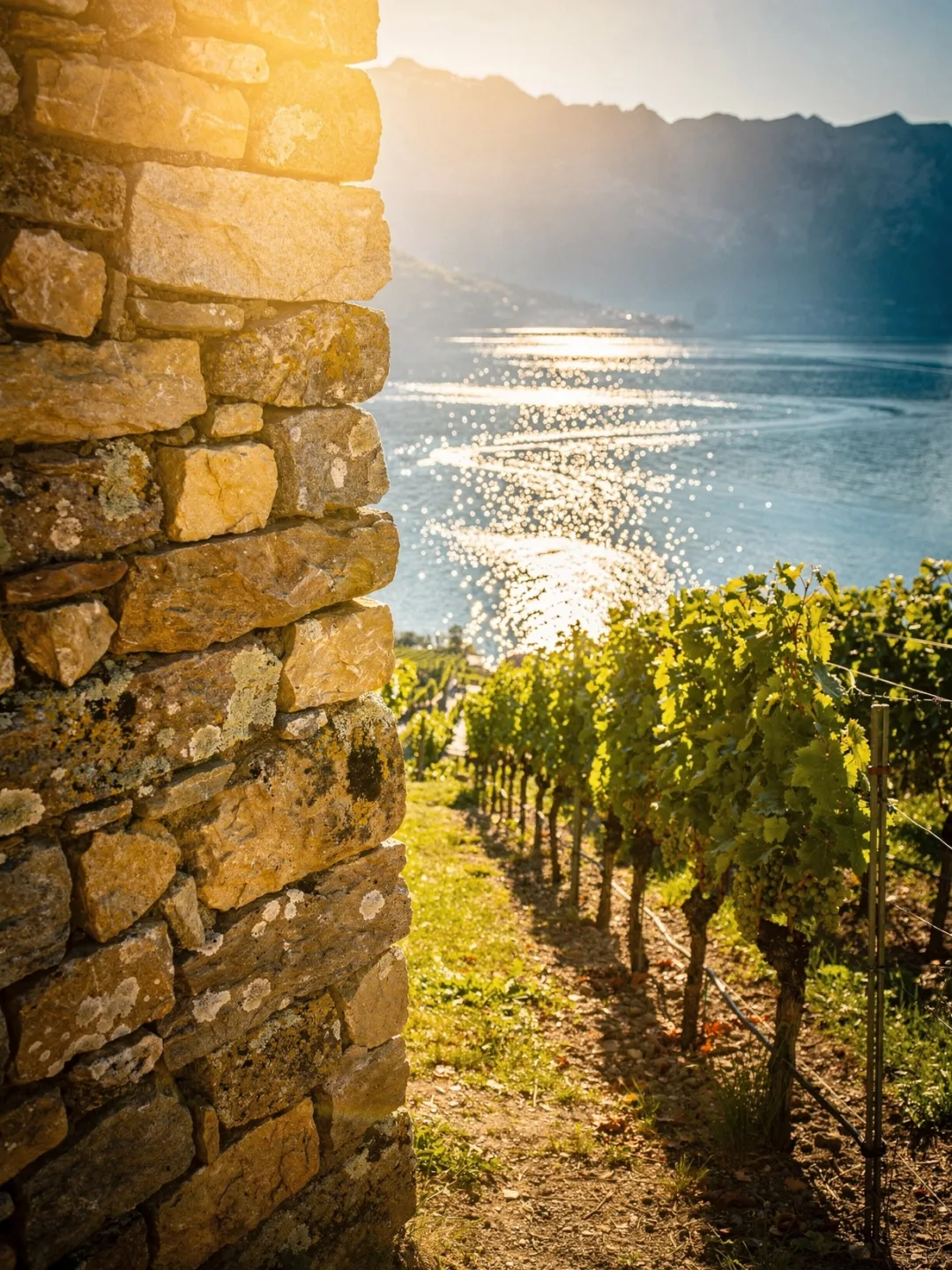
Lake, Walls, Foehn
Climate
At 580 square kilometers, Lake Geneva is the largest lake in Western Europe, and it does more than just look beautiful. In winter it cools more slowly than the land, and in summer it warms more slowly—acting all year round as a buffer between the vines and weather extremes. Spring frost, a nightmare for many vineyards, is rare in the sites directly along the shore. For many winegrowers, that alone is reason enough.
In Lavaux, this effect goes even further, and the winegrowers have their own name for it: the three suns. The first shines directly from the sky. The second bounces back from the water, reflected off the lake's surface and thrown upward onto the grapes. The third sun is stored in the stones. The dry stone walls of the terraces absorb heat during the day and release it again at night, straight to the roots growing close beside them. Without these walls, Chasselas wouldn't ripen on the steepest slopes.
In Chablais, where Lake Geneva ends and the Alps begin, a different effect takes over: the foehn. This warm downslope wind falls from the Rhône valley, dries the grapes after rain, and carries extra warmth into the vineyards around Aigle and Yvorne. Without it, the altitude here would be a disadvantage. With it, the same Chasselas ripens here that would barely stand a chance at this elevation elsewhere.
La Côte, the largest of the three regions, knows none of these extremes. The slopes there rise more gently and open more broadly toward the lake. Air and light can spread more evenly there than on the narrow terraces further east. That makes the work easier, but the wines calmer, too: where Lavaux scores with tension, La Côte scores with approachability.