Granite and Limestone
Soils
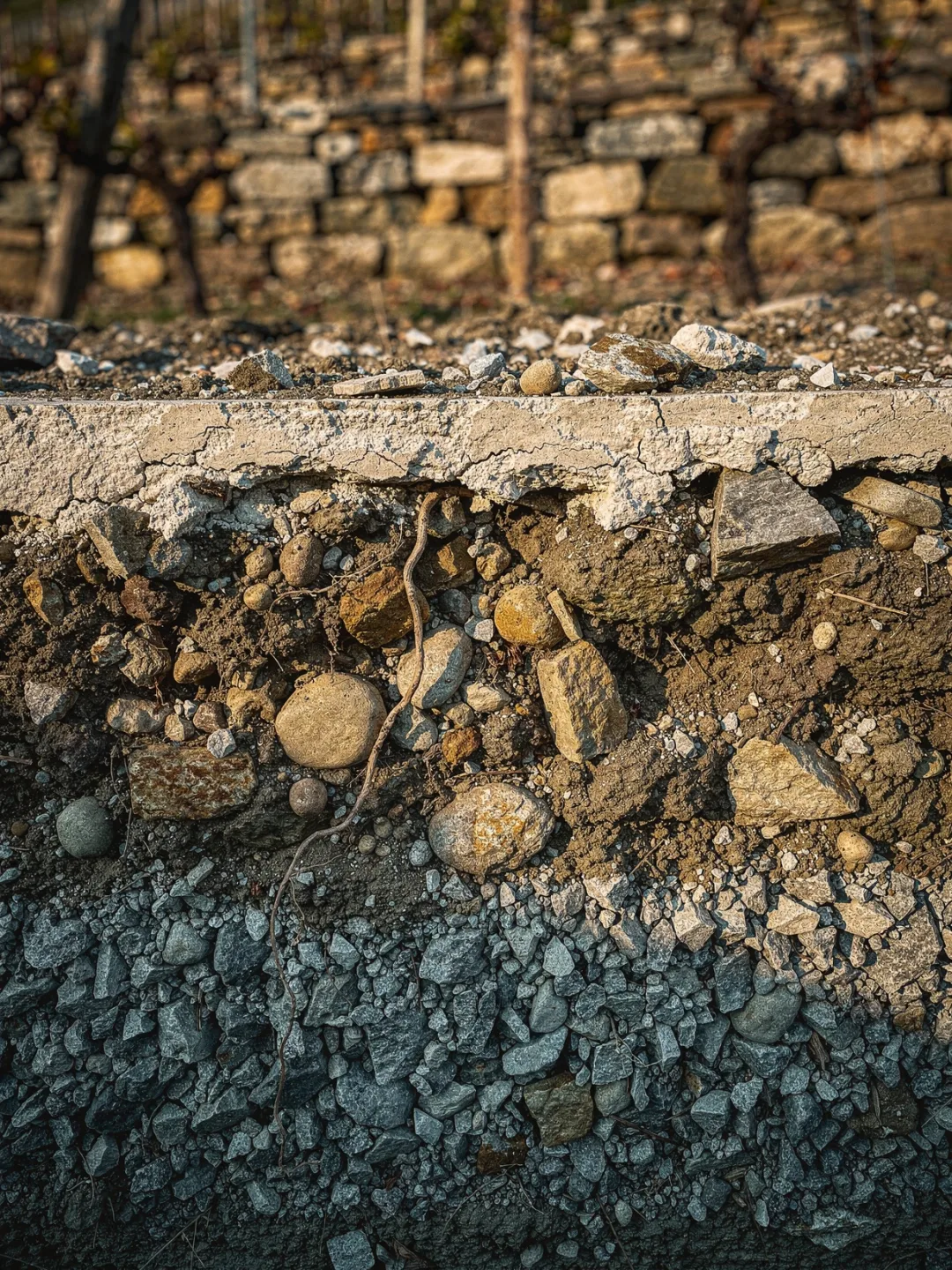
Dig a hole in a vineyard near Sion or Siders. After a hand's width of humus, you'll hit loose scree, then pale rock, brimming with limestone. What lies here is the legacy of a glacier that reached all the way to Lyon fifteen thousand years ago. It then slowly retreated, leaving behind everything it had ground down along the way.
In Lower Valais, between Martigny and Saillon, granite dominates. In places it's covered by loess, fine limestone dust carried in by the wind, and threaded with veins of limestone. Further up the valley, roughly from Sion and Siders onward, the soil grows so limestone-rich that it's called "active limestone," a type that extends well into Upper Valais.
In between lie mostly two other soil types: moraines, rock debris deposited by glaciers, and thin limestone and shale soils formed from compressed sediment layers. Because Valais is Switzerland's driest canton, vine roots here drive deep, often several meters, in search of water that has long since evaporated from the topmost meter.
A third soil type is the alluvial fan, built up over millennia by tributaries of the Rhône. The best-known lies in Chamoson, where the Losentze stream deposited coarse, extremely free-draining scree. Ideal for vines that dislike wet feet but must work hard for nutrients along the way.
The soil doesn't lie. In Salgesch, the sunniest wine village in Switzerland, a prehistoric rockslide left the soil especially rich in limestone and magnesium. Winemakers there like to call their wines mineral, even though the vine draws hardly any minerals directly from the rock. What really matters is how much water a soil holds and how much heat its stones store. That's why Gamay prefers granite, while Pinot Noir favors limestone. Two grapes, two soils, in the same canton.
A thin layer of humus and fine, wind-blown limestone dust. On the barren terraces, it's rarely more than a hand's width deep.
The root: This is where the fine roots sit. In the dry Valais summer, they're the first to run out of water.