Salt needs shape
Glasses
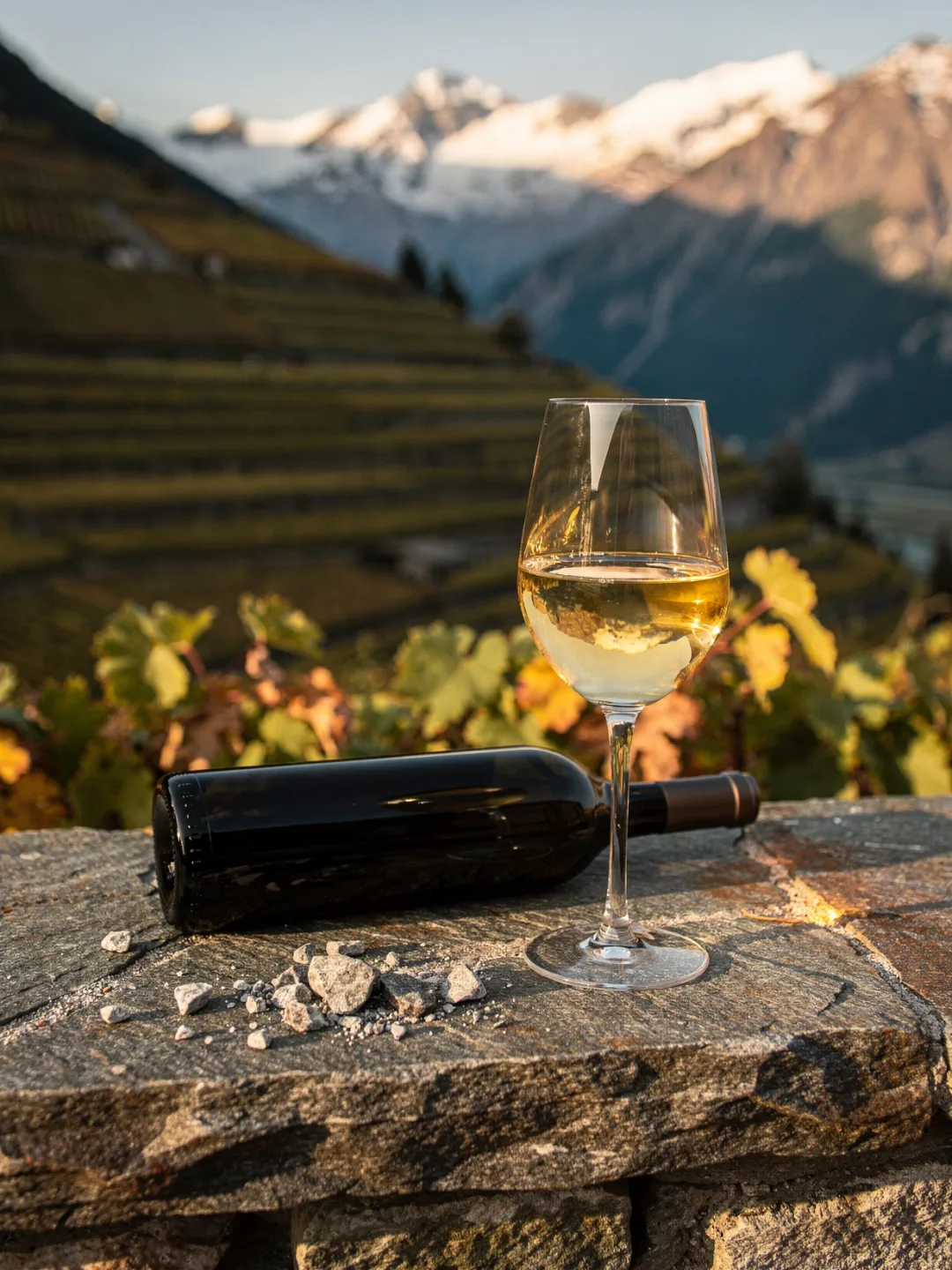
A glass changes how a wine tastes because it governs how much air reaches it and where the aromas rise. In Valais, this makes a particular difference with the white varieties. Many of them play with acidity and a salty undertone that the wrong glass will either amplify or completely swallow.
This shows most clearly with Petite Arvine. Its aroma of mango and grapefruit sits high in the glass, while its salty finish lands right on the palate, and a glass that's too wide lets the two drift apart. Better is a narrower glass with a slight inward taper, which gathers the aroma before it escapes. Serve it at ten to twelve degrees Celsius, cooler than most white wines, but not ice-cold, or you'll lose the salinity altogether.
Fendant needs the opposite. It's deliberately quiet, without much aroma, but honest to its soil. A large, bowl-shaped glass would only expose an emptiness that isn't really there. A simple, medium-sized glass at eight degrees Celsius is all it takes: cold enough for its freshness, not so cold that it falls silent.
With the red varieties, this flips again. Cornalin and the more powerful Syrah wines of Valais carry firm tannin, that rough grip you feel on your gums after a sip. They need a wider glass with more surface area, so the tannin can soften in contact with air. Serve them at sixteen to eighteen degrees Celsius. A young, still-angular Cornalin often gains more from half an hour in a carafe than from any amount of swirling in the glass.
A separate rule applies to Vin des Glaciers, the Valais glacier wine from the Val d'Anniviers. Because it's deliberately aged oxidatively, for years in half-empty larch casks high above the valley floor, it tastes of nuts, dried fruit, and slightly bitter peel rather than fresh berries, not unlike an old Sherry. Serve it in small glasses. A finger's width is enough, because this wine is meant to be sipped and savored.