Foehn Wind and Aridity
Climate
Valais sits deep in the Alps, yet its climate feels closer to the south. Experts call it a steppe climate: dry, sunny, with cool nights that balance out the heat of the day. With less than six hundred millimeters of rainfall per year, it's the driest canton in Switzerland, complemented by roughly two thousand hours of sunshine annually.
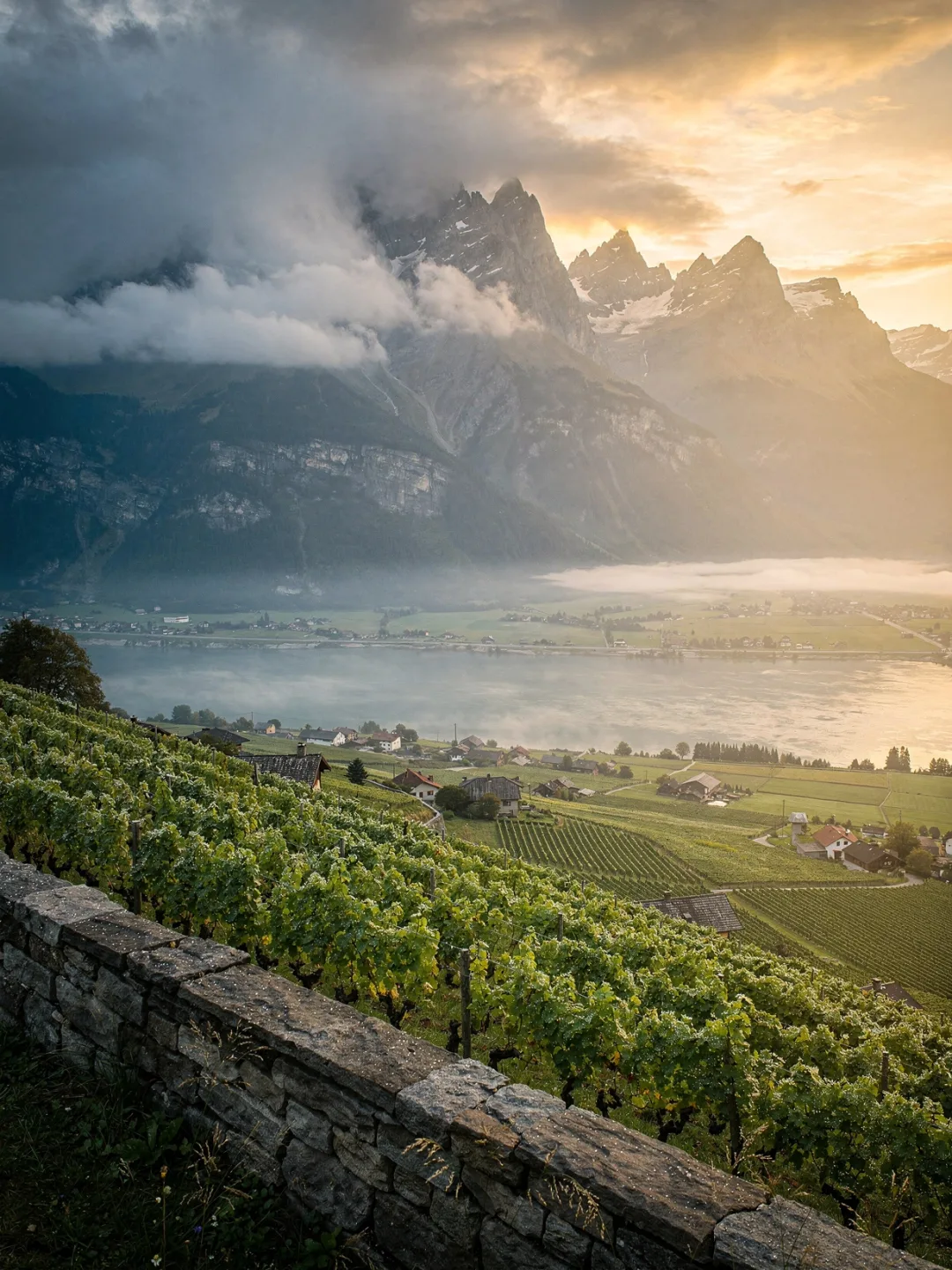
The mountains themselves are responsible for this. Peaks of four thousand meters and higher hold back the rain before it can reach the valley. And when clouds do manage to gather, the foehn sweeps them away. This warm, dry downslope wind blows through the Rhône Valley especially in autumn, drying out the grapes again after every rainfall. This keeps them safe from rot right up until harvest.
Even more crucial for flavor is the difference between day and night temperatures. During the day, the sun heats the steep slopes; at night, they cool down rapidly. It's precisely this shift that, toward the end of ripening, drives the aromas apart within the berry. A Valais wine therefore often tastes more concentrated than its alcohol content alone would suggest. The valley knows no middle ground.
Most vineyards lie between four hundred fifty and a good eight hundred meters above sea level, but Valais also has its extremes. In Visperterminen, vines grow up to eleven hundred fifty meters, sheltered within the foehn corridor of the Vispertal and still warm enough to ripen fully. It is the highest continuous vineyard in Europe.
This climate isn't entirely without risk, since the glaciers lie close by, and late spring frosts can wipe out entire harvests, sometimes overnight. In return, the dry, sunny late autumn with cool nights and morning dew often provides ideal conditions for sweet wines, with or without noble rot (Botrytis), a fungus that selectively draws water out of the grape and concentrates its aromas as if through a magnifying glass. Where summer still brings drought, controlled irrigation is now used.