Dôle and Solera
Production
The simplest production rule in Valais concerns Dôle, the traditional cuvée of Pinot Noir and Gamay, cuvée here simply meaning a blend of two varieties made according to fixed rules. Up through the 2020 vintage, the two varieties had to make up at least eighty-five percent of the blend. Since 2021, fifty-one percent suffices, as long as Pinot Noir remains the larger share. The rest may come from other Valais red varieties such as Syrah, Cornalin, or Humagne Rouge.
Stricter rules apply to the Grand Cru designation, which ranks above the standard AOC Valais. A Grand Cru must come from a tightly delimited zone within a single commune, pressed from varieties suited to that exact parcel. It's monitored throughout the entire production process. At the end comes an official tasting panel, which either approves the wine or rejects it, and without passing, there's no label.
For sweet wines, a dedicated charter has existed since 1996, Grain Noble ConfidenCiel, to which around thirty estates belong. Only six traditional white varieties are permitted, including Petite Arvine, Amigne, and Heida, planted on vines at least fifteen years old. The must must reach at least one hundred thirty degrees Oechsle, a measure of sugar content, and may not be enriched. The wine then ages for at least twelve months in oak.
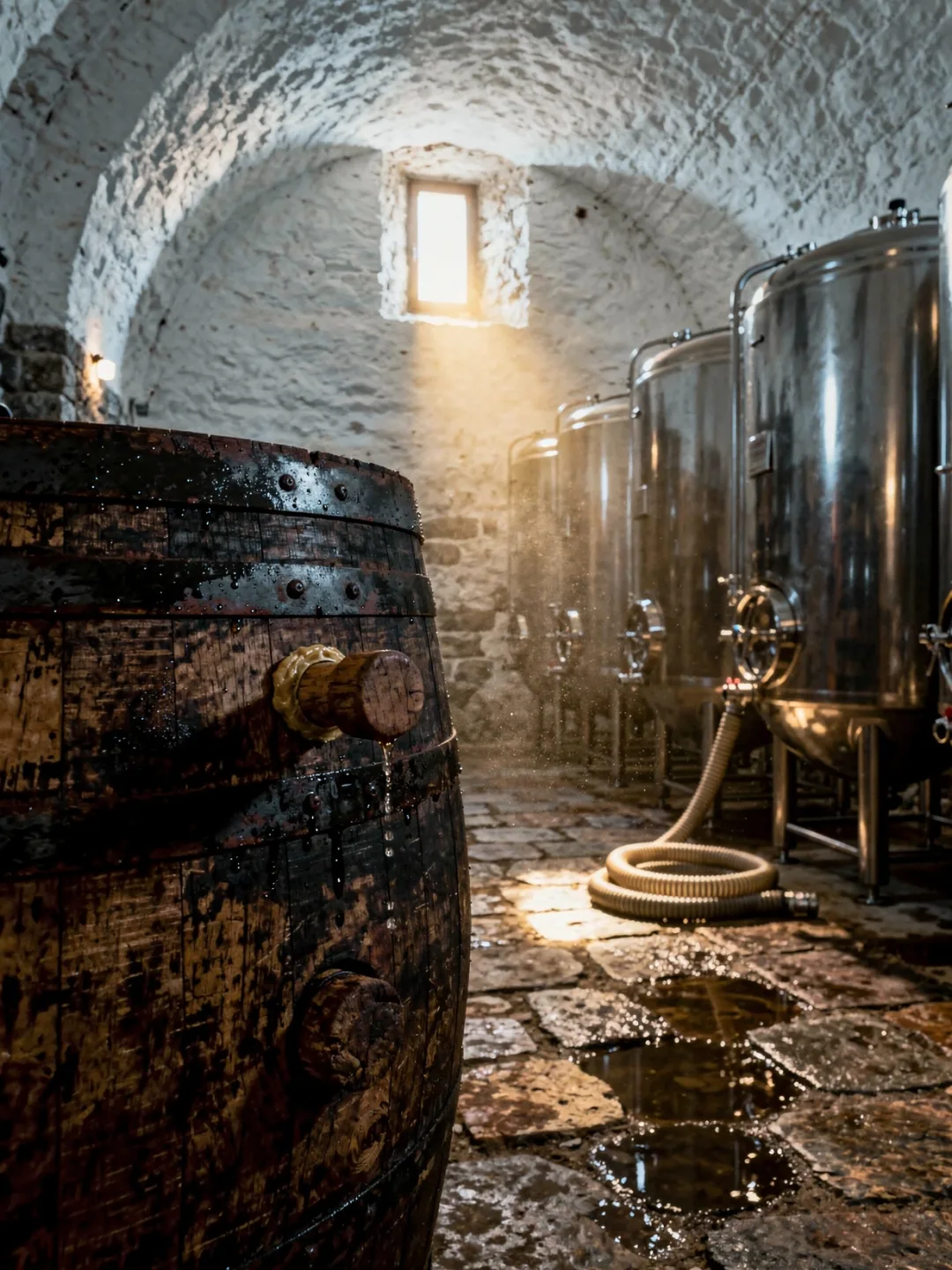
The longest production process belongs to Vin des Glaciers in the Val d'Anniviers. The wine ferments down in Siders, is then carried up the valley in larch casks toward the glaciers, and ages there oxidatively, for years, sometimes decades. The casks are never fully emptied. Each year, new wine is added to the old, following a principle similar to the Spanish solera system, and the oldest drops in some casks are over a hundred years old.
Before a single grape ever ferments, the real handiwork of Valais winemaking begins in the vineyard itself. The narrow terraces on the steep slopes are still planted and tended by hand today, since no tractor fits between the tight stone walls. Production here starts with pruning, not in the cellar.