Slender or Rounded
Glassware
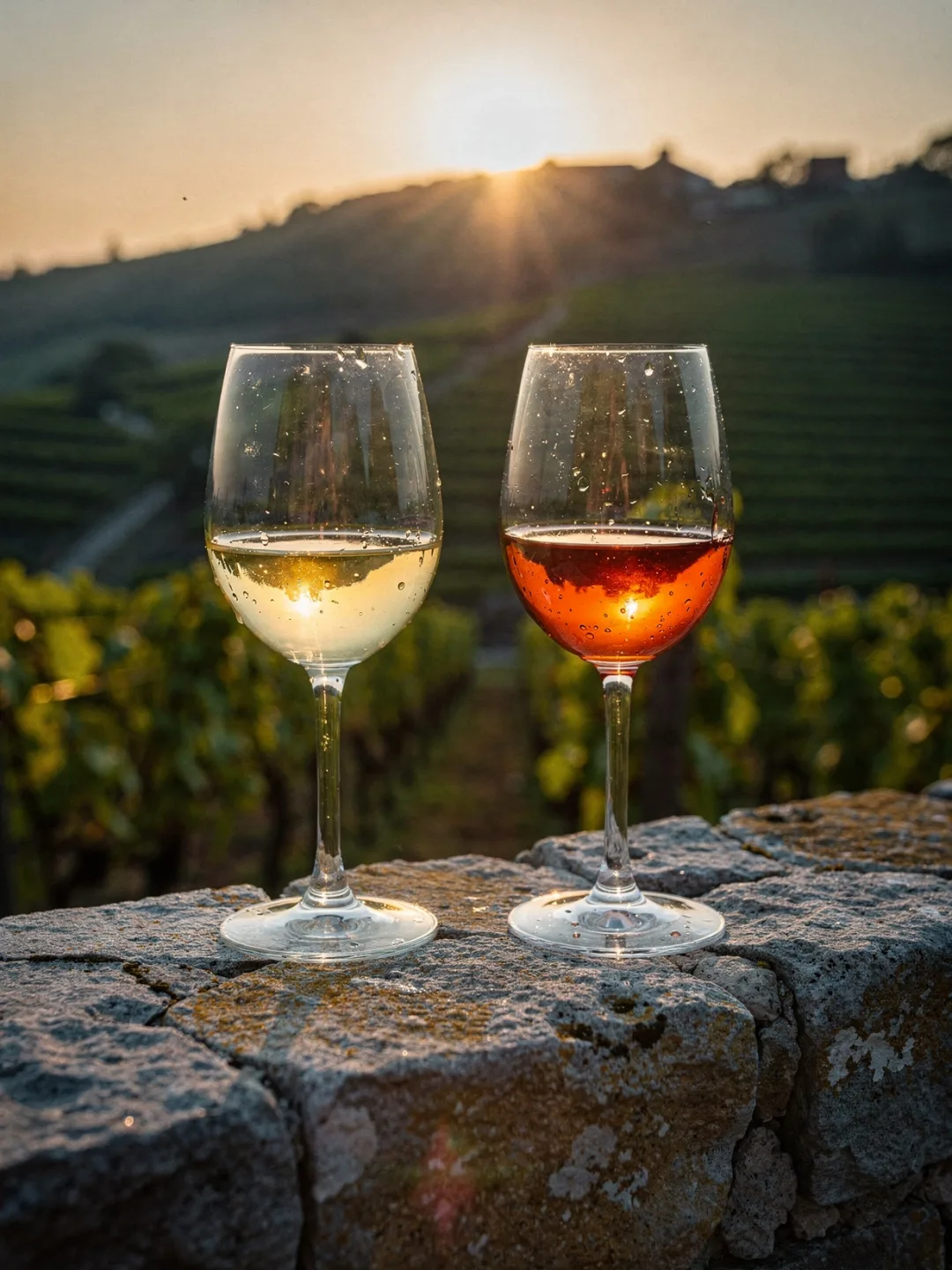
With Rebula, the choice of glass matters more than it does for most other white wines. That's because the variety ends up in the glass in two completely different styles. Classic, stainless-steel-aged Rebula is lean and fragrant with apple and citrus peel. A medium-sized, slightly tapered white wine glass suits it well, concentrating the delicate aroma instead of letting it dissipate in an overly open bowl.
The second style calls for the opposite. A Rebula given weeks of skin contact, like the one the Movia estate in Ceglo bottles under the name Lunar, carries tannin, much like a red wine. For that, it wants a rounder glass with plenty of headspace. A narrow glass compresses the phenolic notes and makes the wine seem harsh, when really it just needs room to breathe.
Temperature splits the two worlds apart again. Classic Rebula belongs in the glass at 50–54°F (10–12°C), cool enough to keep the acidity in check. The orange wine, on the other hand, can handle two or three degrees more, since its honey and dried-apricot aromas otherwise never fully open up in the cold.
The red wines made from Merlot and Cabernet Sauvignon, grown on these same Opoka hills, call for a classic, generously proportioned Bordeaux glass with a wide opening, served at 61–63°F (16–17°C), since their tannin is firmer than Rebula's and needs the extra room to round itself out in the glass rather than landing harshly on the tongue.
Entirely different rules apply to Pikolit, the rare sweet wine grown at the edges of the Rebula hills. Only a handful of Brda winegrowers still cultivate it at all. Much of its blossom never gets pollinated, which keeps the yield correspondingly meager. It's served, accordingly, in small glasses barely bigger than a thimble, chilled to 46–50°F (8–10°C). Pour more than the glass calls for, and you only dilute the very concentration that makes this wine special in the first place.