In the Lee of the Hills
Climate
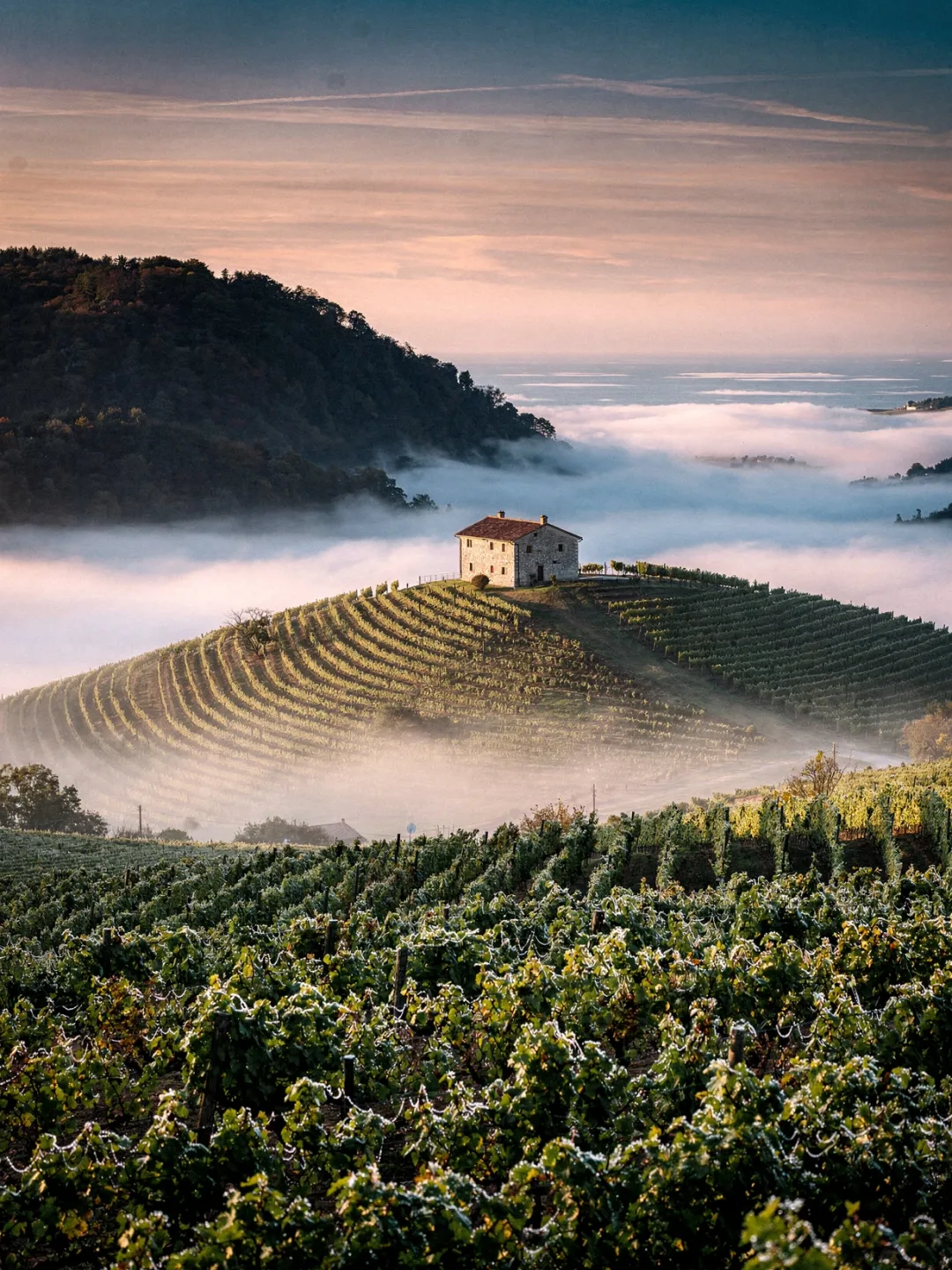
Just a few kilometers south of Brda, the Bora wind screams across the bare Karst plateau at over ninety miles an hour. Almost none of that reaches Brda. Sabotin to the north and the summit of Korada to the east, a good 812 meters high, block the cold wind almost entirely, leaving behind only a mild basin nestled between the mountains and the Adriatic.
Instead, what usually blows here is the Jugo, a warm, humid wind from the southeast that links the Adriatic coast with the interior. Winters are correspondingly mild, with average January temperatures hovering around three degrees Celsius. Frost is rare on the hills, settling at most in the shallow hollows between the terraces, where cold air sinks at night. Add to that plenty of sunshine: with around 2,400 hours a year, Brda ranks among the sunniest areas in Slovenia. At the same time, nearly 1,700 millimeters of rain fall over the course of the year.
Within the region, elevation alone makes a real difference. On the lower, flatter sites, harvest comes ten to fourteen days earlier than up on the cooler slopes, where the air warms up faster and cools down again just as quickly. It's precisely this swing between warm days and cool nights that locks acidity into Rebula while the flavors keep developing.
Climate change shows an unfamiliar face in Brda. Elsewhere, it usually means too much ripeness and too little acidity. Rebula, by contrast, often struggled to ripen fully in cooler years, and the rising warmth of recent decades — the growing season in the Primorska region has warmed by up to 1.7 degrees since 1991 — is, of all things, helping the variety more than it's hurting it. A vineyard that actually benefits from warming has become the exception in Europe by now.